
Shaykh Uthman Tries To TRAP Christian Lady But Gets DESTROYED!
A recent discussion between Muslim street preacher Shaykh Uthman Ibn Farooq and several Christians touched on some of the most common objections raised against Christianity.
Topics ranged from the reliability of Scripture and alleged Bible contradictions to the identity of Jesus, the crucifixion, the resurrection, and the doctrine of the Trinity.
Many of these objections sound persuasive at first, but a closer examination shows that they often rely on assumptions that history, Scripture, and even Islamic sources fail to support.
 The Missing Torah and Injeel Problem
One of the recurring claims in Muslim-Christian discussions is that Christians and Jews no longer possess the original revelation given by God.
Muslims often argue that God originally gave the Torah to Moses and the Injeel to Jesus, but that people corrupted both books over time. Yet those who make this claim cannot identify where these supposedly original books exist today.
The Torah consists of the first five books of the Bible—Genesis, Exodus, Leviticus, Numbers, and Deuteronomy. We possess manuscripts of these books from before Christ, during Christ’s lifetime, and after His ministry.
The discovery of the Dead Sea Scrolls further confirmed how faithfully scribes preserved the text across the centuries.
The New Testament stands on equally strong historical ground. Thousands of manuscripts, along with quotations from early Christian writers, allow scholars to verify its contents with remarkable confidence.
Yet the Qur’an repeatedly speaks as though the Jews and Christians possessed their Scriptures during Muhammad’s lifetime.
“Those who follow the Messenger, the unlettered Prophet, whom they find written in what they have of the Torah and the Gospel…” – Qur’an 7:15
This creates a serious challenge. If the Torah and Gospel were corrupted before Muhammad, why does the Qur’an tell people to consult them? If they were corrupted after Muhammad, where is the historical evidence?
The burden of proof remains on those who claim an original Torah and Injeel existed that were completely different from the Scriptures known throughout history.
 Did Paul Corrupt Christianity?
Another familiar accusation is that Paul changed Jesus’ message and disagreed with the original apostles.
The New Testament presents a very different picture.
Acts 15 records the Jerusalem Council, where Paul, Barnabas, Peter, and James gathered to address major doctrinal questions facing the early church.
Rather than opposing Paul, the apostles publicly affirmed the gospel being preached among the Gentiles.
“For it seemed good to the Holy Ghost, and to us…” – Acts 15:28
Far from contradicting Paul, the apostles stood alongside him. The council concluded that Gentile believers were not required to become Jews in order to become Christians.
The narrative of Acts repeatedly demonstrates unity among the apostles rather than division.
 Are Scribal Errors the Same as Corruption?
A common argument points to numerical differences within Biblical manuscripts.
One example involves the number of people connected to Jacob’s family entering Egypt. One passage references seventy people, while another mentions seventy-five.
Critics often assume this proves corruption.
Textual scholars have recognized for centuries that copyists occasionally made minor mistakes while reproducing manuscripts by hand.
Rather than weakening confidence in the Bible, these variations actually demonstrate the strength of the manuscript evidence.
Because we possess so many manuscripts from different places and time periods, scholars can compare them and identify where a copyist made an error.
The large number of surviving manuscripts allows researchers to detect and correct these minor variations with a high degree of confidence.
This situation differs significantly from the claim that an entire revelation vanished and that people later replaced it with a completely different message.
Ironically, Islamic sources face similar textual challenges.
 The Hadith Problem and King Jehoiachin
Muslim apologists often criticize the Bible while ignoring difficult passages within their own tradition.
For example, one hadith speaks about a woman who buried her daughter alive. The woman is condemned, which is understandable. However, the same report also raises questions about the fate of the child.
These kinds of issues demonstrate that difficult passages are not unique to Christianity. Every worldview must be examined honestly and consistently.
One objection raised concerned King Jehoiachin’s age.
“Jehoiachin was eighteen years old when he began to reign…” – 2 Kings 24:8
“Jehoiachin was eight years old when he began to reign…” – 2 Chronicles 36:9
Even if this reflects a copyist error, it would not undermine any Christian doctrine. The overwhelming manuscript evidence allows scholars to identify these variations openly.
The existence of a copying mistake is not the same thing as proving the Bible has been corrupted. Share on X The Crucifixion of Jesus, the Resurrection, and the Women at the Tomb
The crucifixion remains one of the most historically established events of the ancient world.
During the discussion, an attempt was made to argue that certain verses somehow show Jesus had not yet been crucified.
The problem is that the Gospel narratives clearly distinguish between Jesus being condemned, delivered over for execution, and eventually being nailed to the cross.
These are sequential events, not contradictions.
Virtually every serious historian—Christian, atheist, Jewish, or otherwise—accepts that Jesus was crucified under Pontius Pilate.
Another objection involved the resurrection accounts. One Gospel mentions Mary Magdalene arriving at the tomb and finding the stone already moved. Another account mentions an angel.
Some critics assume these details conflict. But eyewitness reports regularly emphasize different details while describing the same event.
John focuses primarily on Mary Magdalene. Other Gospel writers include additional details regarding the angelic appearance and the other women present.
This is not contradictory. It is exactly what we would expect from independent eyewitness testimony.
“The first day of the week cometh Mary Magdalene early, when it was yet dark…” – John 20:1
“And, behold, there was a great earthquake: for the angel of the Lord descended from heaven…” – Matthew 28:2
One writer focuses on Mary’s arrival. Another highlights what happened at the tomb. Together they provide a fuller picture rather than a contradictory one.
 Why John 1 Matters
One of the most important sections discussed was John 1.
Muslim apologists often attempt to redefine the Greek word Logos (“Word”) as merely God’s command.
However, John describes the Word as both distinct from God and fully sharing God’s nature.
“In the beginning was the Word, and the Word was with God, and the Word was God.” – John 1:1
A few verses later, John identifies this Word as Jesus Christ.
“And the Word was made flesh, and dwelt among us…” – John 1:14
The passage teaches two truths simultaneously:
- The Word is God.
- The Word became flesh.
This is one reason Christians affirm that Jesus is truly God and truly man.
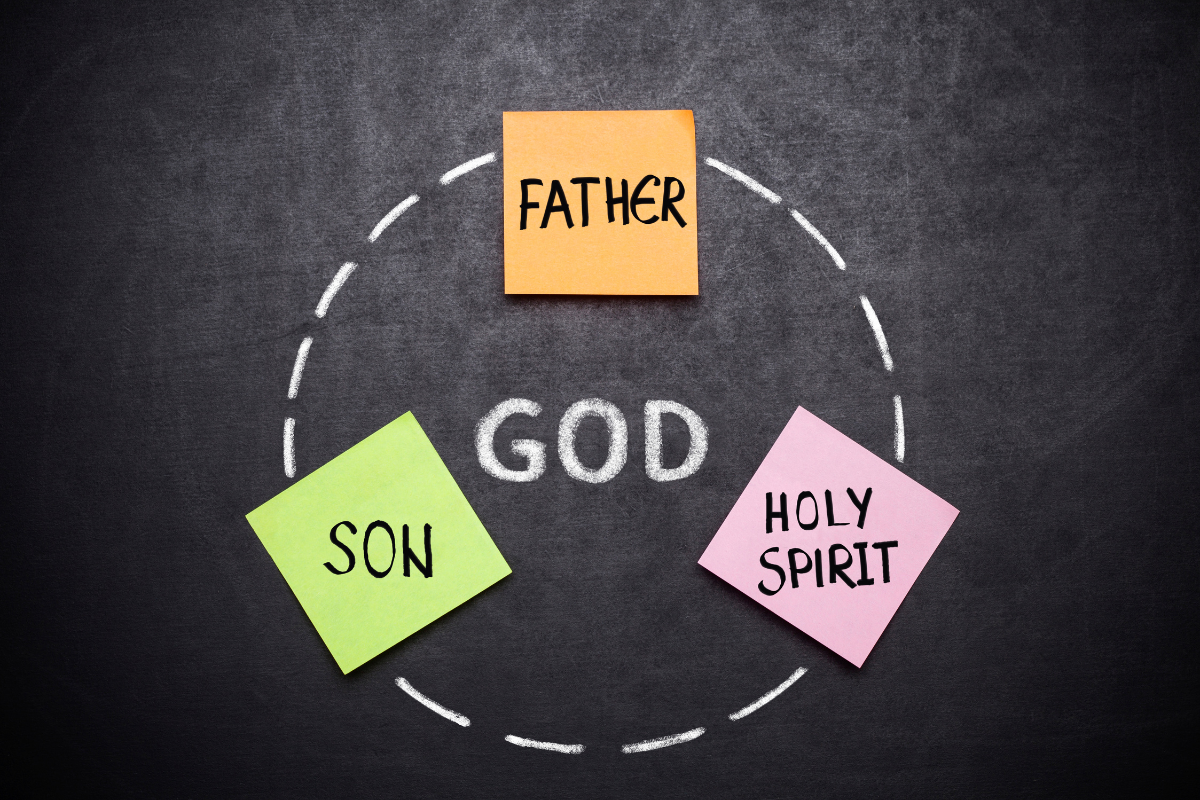
Muslim critics often misunderstand the Trinity as Christians believing in three separate gods. Biblical Christianity teaches one God who eternally exists as Father, Son, and Holy Spirit.
“Hear, O Israel: The LORD our God is one LORD.” – Deuteronomy 6:4
“I am God, and there is none else.” – Isaiah 45:22
Christians fully affirm God’s oneness. Yet Scripture also reveals distinctions within the Godhead.
“Let us make man in our image…” – Genesis 1:26
“I am the LORD, the God of all flesh…” – Jeremiah 32:27
The New Testament builds on these truths and identifies Jesus as sharing God’s divine nature.
“But unto the Son he saith, Thy throne, O God, is for ever and ever…” – Hebrews 1:8
Hebrews 1 is especially significant because the Father directly addresses the Son as God (more than once).
 What About Mark 13:32?
One of the most common objections asks how Jesus could be God if He said He did not know the day or hour of His return.
“But of that day and that hour knoweth no man, no, not the angels which are in heaven, neither the Son, but the Father.” Mark 13:32
The answer lies in the context (as I’ve discussed many times).
Truth matters because eternity matters. Share on X Final Thoughts
Many objections against Christianity sound compelling until they are examined carefully.
Claims about a lost Torah, a missing Injeel, contradictions in Scripture, or Jesus not being divine often rely on assumptions that collapse under scrutiny.
The Bible consistently presents Jesus as more than a prophet. He is the eternal Word made flesh, the crucified and risen Savior, and the divine Son of God who offers salvation to all who trust in Him.
“These are written, that ye might believe that Jesus is the Christ, the Son of God; and that believing ye might have life through his name.” – John 20:31
If you enjoyed this discussion, be sure to watch our related video on another encounter with the same Muslim when he approaches elderly Christians and the conversation takes some unexpected turns.
WATCH THE VIDEO














Recent Comments