
Muslim RUNS UP On ELDERLY Christian & Gets EXPOSED Again!
In many street debates, one of the most common tactics used against Christianity is the claim that the Bible contains contradictions.
These arguments are often presented with confidence, but when examined carefully, they tend to reveal more about misunderstanding than actual error.
What may sound convincing at first often begins to unravel the moment we slow down and read the text in context.
In this particular conversation, Shyakh Uthman Ibn Farooq attempts to challenge an elderly Christian by pointing out supposed inconsistencies in Scripture. However, what unfolds actually highlights something much deeper.
Rather than exposing flaws in the Bible, the discussion reveals how easily surface-level reading can lead to false conclusions. When Scripture is approached properly, the accounts don’t contradict; they complement one another.
 The Standard of “Perfect Preservation”
The conversation starts by making a strong claim about what God’s word should look like. It argues that divine revelation must be perfectly preserved with no variation at all. That may sound reasonable at first, but it raises an important question.
If we hold to that standard, how do we explain historical realities like the existence of different Qur’anic recitations, including the version associated with Ibn Masud?
This part of the discussion reveals a clear inconsistency. Shaykh Uthman applies a strict standard to the Bible while overlooking similar complexities elsewhere. That shows the real issue is not preservation itself, but how people apply the standard.
 The “22 or 42” Challenge Explained
One of the main objections raised in the conversation centers on the age of King Ahaziah. Two passages are brought forward:
“Two and twenty years old was Ahaziah when he began to reign; and he reigned one year in Jerusalem. And his mother’s name was Athaliah, the daughter of Omri king of Israel.” – 2 Kings 8:26
“Forty and two years old was Ahaziah when he began to reign, and he reigned one year in Jerusalem. His mother’s name also was Athaliah the daughter of Omri.” – 2 Chronicles 22:2
At first glance, these verses seem to give different ages for the same king. Because of this, some people claim the Bible contains a contradiction. But that conclusion comes too quickly and ignores how ancient texts were actually transmitted.
When we examine the issue more closely, we see that this reflects a scribal variation, not a contradiction. Scribes copied the Bible by hand across thousands of manuscripts over long periods of time.
During that process, small copyist differences sometimes appeared. These differences are not hidden or covered up. Scholars have identified, studied, and documented them openly.
More importantly, these variations do not change the message of Scripture. They do not affect any doctrine or alter any core teaching. Instead, they reveal a transparent transmission process that allows us to trace the text with confidence.
 The Resurrection Accounts: Contradiction or Complement?
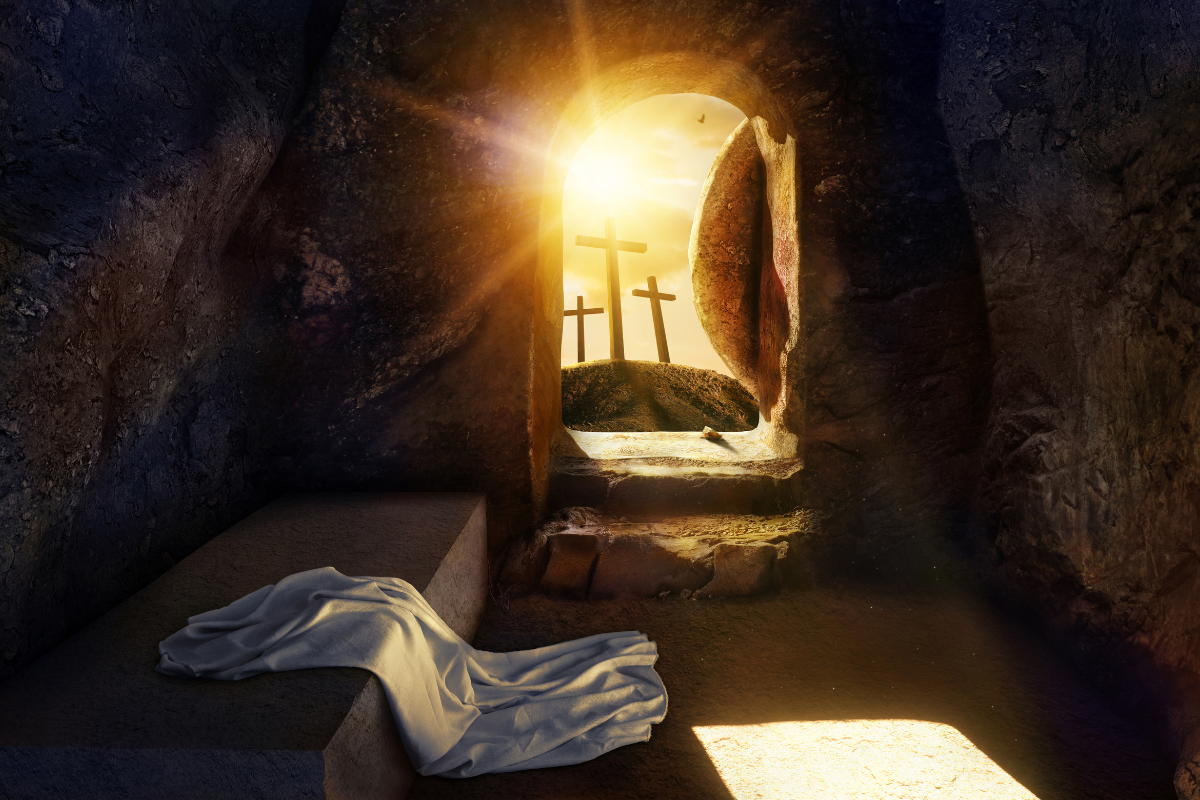
The conversation then shifts to the resurrection of Jesus, which is central to the Christian faith. Several Gospel accounts are compared, including Matthew, Luke, and John. Differences in detail are presented as proof that the accounts cannot all be true.
But this argument rests on a misunderstanding of how eyewitness testimony works.
“In the end of the sabbath, as it began to dawn toward the first day of the week, came Mary Magdalene and the other Mary to see the sepulchre. And, behold, there was a great earthquake: for the angel of the Lord descended from heaven, and came and rolled back the stone from the door, and sat upon it.” – Matthew 28:1–2
“Now upon the first day of the week, very early in the morning, they came unto the sepulchre, bringing the spices which they had prepared, and certain others with them. And they found the stone rolled away from the sepulchre. And they entered in, and found not the body of the Lord Jesus.” – Luke 24:1–3
“The first day of the week cometh Mary Magdalene early, when it was yet dark, unto the sepulchre, and seeth the stone taken away from the sepulchre.” – John 20:1
Each Gospel writer presents the same event from a different perspective. Matthew highlights the dramatic moment involving the angel. Luke emphasizes the group of women who came to the tomb. John focuses more closely on Mary Magdalene’s personal experience.
These differences are not contradictions. They are exactly what we would expect from independent witnesses describing the same event.
If every account were identical in wording and detail, that would actually raise suspicion. Real testimony includes variation in emphasis while remaining consistent in truth.
 Timing vs. Sequence: Interpretation vs. Assumption
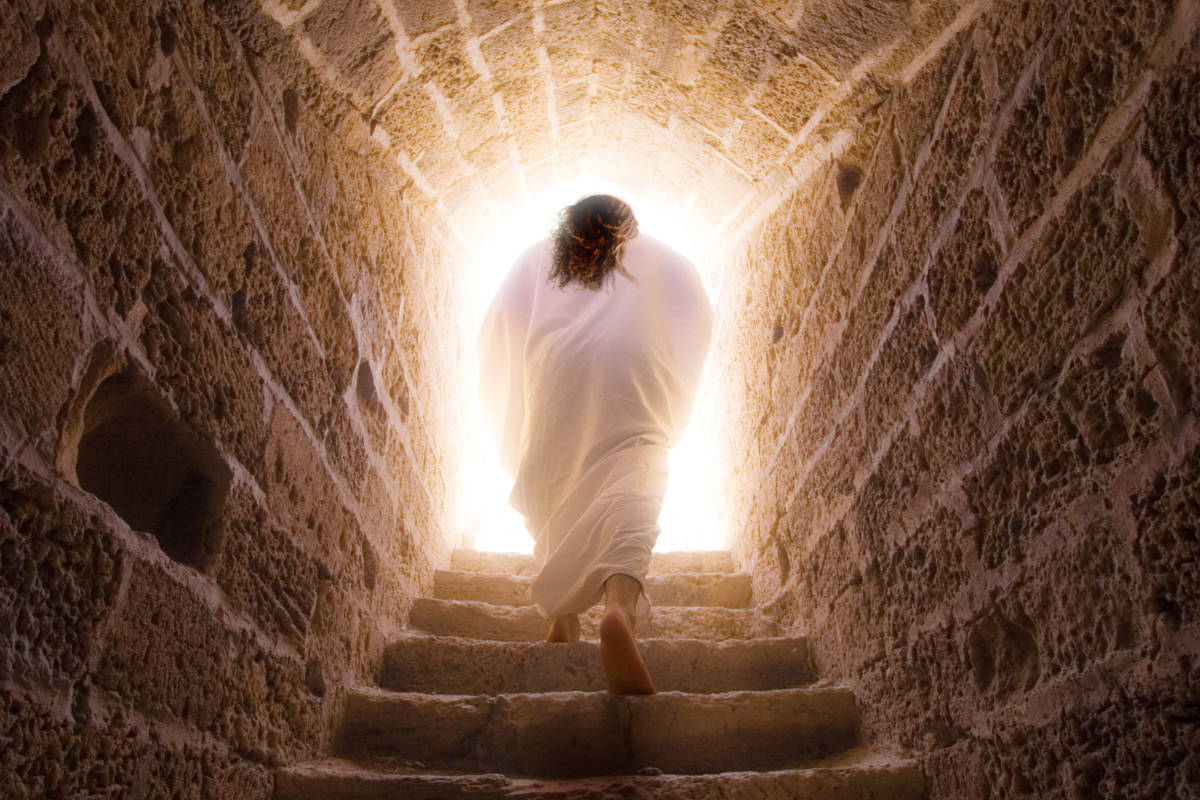
One claim argues that one account shows the stone being rolled away, while another shows it already moved. People present this as a contradiction, but that conclusion only comes from confusing sequence with observation.
The Gospel writers do not always arrange events in strict chronological order. One writer describes what happened at a specific moment, while another describes what the women saw when they arrived. Both accounts can be true at the same time. The difference comes down to perspective, not accuracy.
Many readers make this mistake when they move through Scripture too quickly. When you take time to understand how the accounts fit together, the supposed contradiction disappears.
As the conversation continues, it becomes clear that the real issue is not the text itself, but how people handle it. Even when someone acknowledges a difficulty, they often assume that difficulty means error. That assumption causes the argument to fall apart.
Scripture is not meant to be read in fragments or used for quick arguments. It calls for careful attention, proper context, and a genuine desire to understand before drawing conclusions.
 Why This Matters for Your Faith
Moments like this are not just debates—they are opportunities for growth. They remind us that many challenges to the Bible rely on surface-level readings rather than careful study.
When we take the time to dig deeper, our confidence in Scripture does not weaken; it strengthens. Share on XThese discussions also show that the Bible does not fall apart under scrutiny. Instead, it becomes clearer and more consistent the more closely it is examined. What initially appears confusing often reveals itself to be coherent when viewed in full context.
What started as an attempt to expose contradictions ultimately revealed something very different. The arguments presented relied heavily on quick comparisons and assumptions, but they did not hold up under closer examination.
The Bible remains consistent, reliable, and trustworthy, even when challenged. Share on XIf this breakdown helped you, check out the next article. It walks through similar arguments in greater detail and shows how they fall apart when examined in context. It is a great next step if you want to strengthen your understanding and be better equipped for conversations like these.
WATCH THE VIDEO
















Recent Comments