
Muslim Tries To DESTROY Young Boy On Bible & It Ends BADLY!
A street debate between Shaykh Uthman Ibn Farooq and a young Christian quickly developed into a serious discussion about the identity of Jesus Christ.
The conversation moved through passages Muslims commonly use to challenge Christ’s deity, including Mark 13:32, John 14:28, John 17:3, Hebrews 2:9, and John 14:10.
At the same time, the exchange exposed a problem on the Christian side. The young man appeared to argue that Jesus is the Father rather than distinguishing the Father and the Son.
That position creates obvious difficulties whenever Jesus speaks to the Father, prays to the Father, or distinguishes Himself from Him.
 Does Jesus Know the Day and Hour?
The discussion began with Mark 13:32, where Jesus speaks about the timing of His return.
“But of that day and that hour knoweth no man, no, not the angels which are in heaven, neither the Son, but the Father.” — Mark 13:32
It connected the statement with the first-century marriage picture of a bridegroom preparing a place for his bride while the father possessed the honor of announcing when the time had come for the son to retrieve her.
The main point is that Christians should never isolate one verse from the rest of Scripture. Mark 13:32 must be considered alongside everything else the Bible reveals about Christ.
The same is true of John 14:28.
“…I go unto the Father: for my Father is greater than I.” — John 14:28
This verse distinguishes Jesus from the Father, but distinction does not disprove the Trinity. Christianity does not teach that Jesus and the Father are the same Person.
Jesus also uses the same Greek word earlier in the chapter, when he says, the disciples will do “greater” miracles than Him.
He was not saying they would do better miracles than him in quality. That’s absurd.
The context of the words, always determine what the words mean.
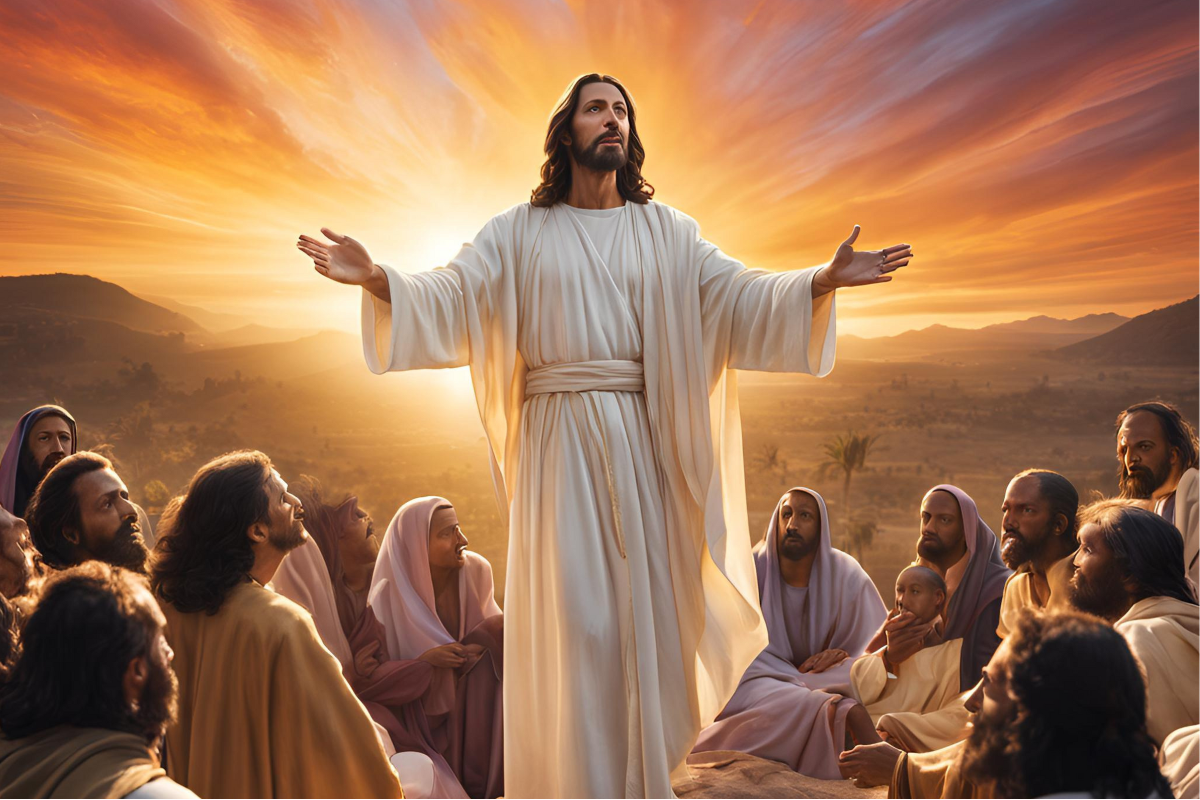 John 17:3 Does Not End the Discussion: Jesus Is the Prince of Life
Later, Shaykh Uthman turned to another familiar passage:
“And this is life eternal, that they might know thee the only true God, and Jesus Christ, whom thou hast sent.” — John 17:3
His argument was simple: Jesus distinguishes Himself from the Father, whom He calls “the only true God,” so Jesus cannot be God.
But John’s own writings force us to keep reading.
“That which was from the beginning, which we have heard, which we have seen with our eyes, which we have looked upon, and our hands have handled, of the Word of life; (For the life was manifested, and we have seen it, and bear witness, and shew unto you that eternal life, which was with the Father, and was manifested unto us;)” 1 John 1:1-2
John describes someone the apostles personally saw, heard, touched, and encountered, then calls Him “eternal life, which was with the Father.”
He even goes even further at the end of the epistle:
“And we know that the Son of God is come, and hath given us an understanding, that we may know him that is true, and we are in him that is true, even in his Son Jesus Christ. This is the true God, and eternal life.” 1 John 5:20
John 17:3 distinguishes Jesus from eternal life & the Father, while 1 John describes Christ as “true God, and eternal life.”
The distinction between Father and Son does not require Christians to deny Christ’s deity.
Acts also became part of the debate. Shaykh Uthman appealed to passages describing Jesus as God’s servant, but the same section gives Christ an extraordinary title.
“And killed the Prince of life, whom God hath raised from the dead; whereof we are witnesses.” — Acts 3:15
The KJV calls Jesus the “Prince [author] of life.” The discussion pointed out that Acts cannot be reduced to one verse describing Christ as God’s servant while ignoring another verse in the same passage that gives Him such a remarkable title.
Jesus willingly took the role of a servant. His humility does not erase His divine identity. Share on X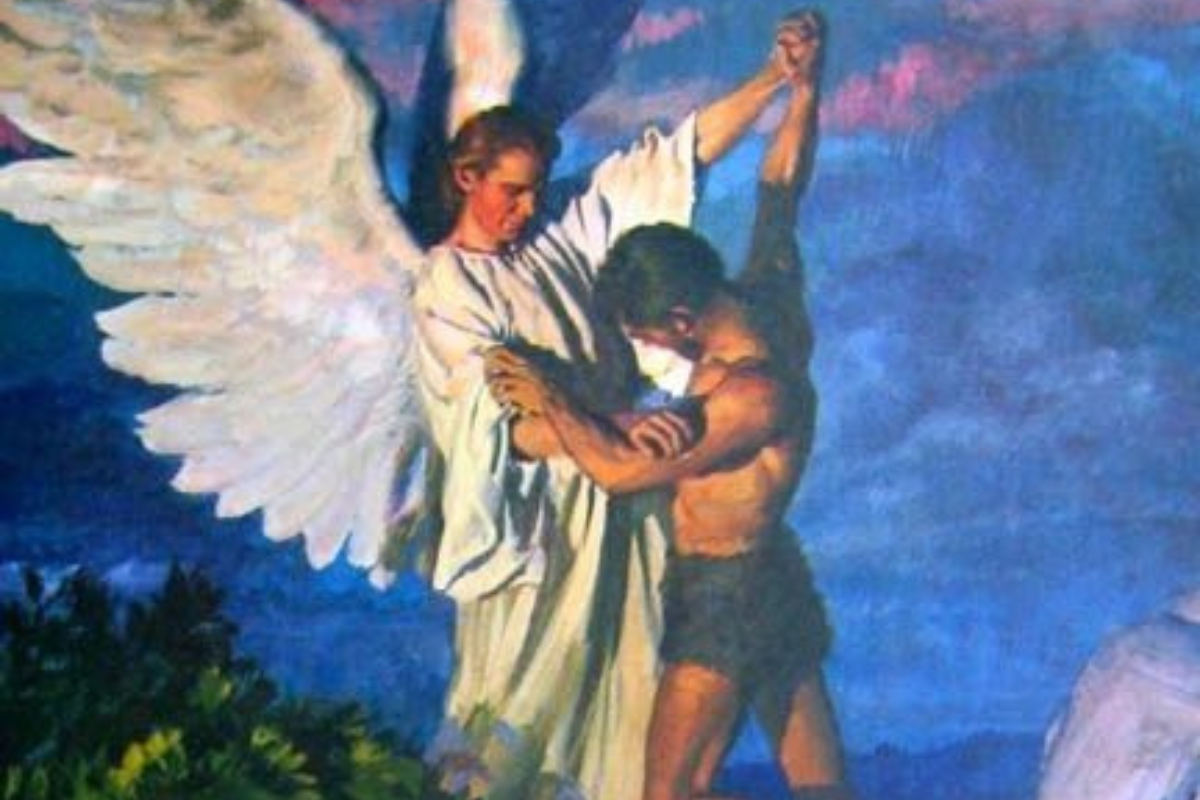 Can God Be Lower Than Angels? What Does It Mean To Be “In the Father”?
Hebrews 2:9 brought another challenge.
“But we see Jesus, who was made a little lower than the angels for the suffering of death…” — Hebrews 2:9
Shaykh Uthman asked how God could ever be lower than angels.
A company owner could voluntarily perform the work of someone in a lower position without surrendering ownership of the company.
His temporary role would describe what he chose to do, not everything he is.
Likewise, Hebrews says Jesus was “made” lower than the angels and connects that humiliation directly with suffering and death. The passage describes Christ’s incarnate mission.
The debate eventually reached John 14:10.
“Believest thou not that I am in the Father, and the Father in me?…” — John 14:10
The young Christian appealed to this language as evidence for his position, but Shaykh Uthman responded by moving to John 17.
“Neither pray I for these alone, but for them also which shall believe on me through their word; That they all may be one; as thou, Father, art in me, and I in thee…” — John 17:20-21
That response exposes a weakness if someone tries to prove Christ’s deity merely from the phrase “in the Father.” Believers are also described as being “one.”
Christian doctrine therefore cannot rest on isolated phrases. The case for Christ’s deity comes from the whole Biblical testimony.
 Know the Bible, Not Just Arguments
When two people compete over Scripture without properly understanding it, the conversation quickly turns into chaos.
That is a lesson Christians should take seriously. Courage matters, but courage without Biblical understanding can lead us into defending ideas Scripture never teaches.
Difficult verses should never frighten us. Read the passage, study the context, and compare Scripture with Scripture. Share on X“Study to shew thyself approved unto God… rightly dividing the word of truth.” — 2 Timothy 2:15
For another Christian-Muslim street encounter that highlights the importance of knowing what the Bible actually teaches, read the next article.
It is another reminder that confidence alone is not enough; Christians must be prepared to answer challenges with Scripture in its proper context.
WATCH THE VIDEO
















Recent Comments