
Muslim Tries To CONFUSE Christian Missionary & Gets EXPOSED!
Street debates often move quickly, and confidence can sometimes sound more convincing than careful reasoning.
In this discussion, Muslim preacher Hashim raises familiar objections against the Trinity, the deity of Christ, and the atonement.
Yet when his claims are compared with the full testimony of Scripture, many of his arguments depend on isolated verses, misunderstood contexts, or false dilemmas rather than the Bible’s complete message.
One of the most encouraging moments is watching the Christian missionary remain calm while continually pointing the conversation back to God’s Word. Rather than relying on emotion, she consistently appealed to Scripture and the work of Christ.
 Does Genesis Teach That God Is One Person?
Hashim argues that because Genesis 1:27 uses singular language after Genesis 1:26, Christians cannot point to the plural wording in the creation account.
The problem is that Christians have never claimed there are multiple gods. The Bible consistently teaches there is one God while also revealing distinctions within the Godhead.
Genesis 1:26 says, “Let us make man in our image,” while the very next verse declares that God created man. Plurality and unity stand together, perfectly fitting the Biblical doctrine of the Trinity rather than contradicting it.
“And God said, Let us make man in our image, after our likeness…” – Genesis 1:26
“So God created man in his own image…” – Genesis 1:27
 What Did Jesus Mean in John 16?
Another objection centered on Jesus saying He had “many things” to tell His disciples. The claim was that the Holy Spirit must reveal entirely new doctrines.
But that is not what Jesus says.
The Holy Spirit does not introduce a different gospel or replace Christ’s teaching. Instead, He guides believers into the truth, glorifies Christ, and helps them understand what Jesus had already revealed.
“I have yet many things to say unto you, but ye cannot bear them now. Howbeit when he, the Spirit of truth, is come, he will guide you into all truth…” – John 16:12–13
Throughout the discussion, one important lesson becomes clear: always ask where a claim actually appears in Scripture.
Confidence is never a substitute for context. Share on X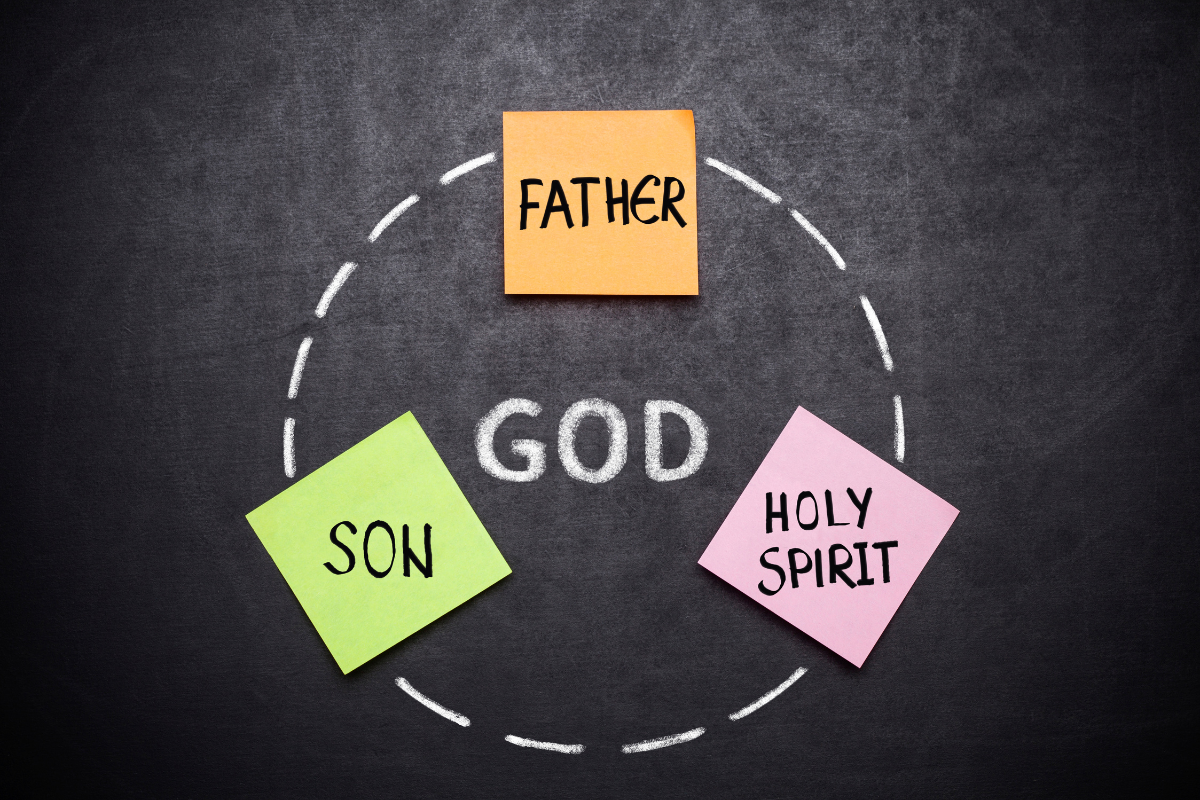 Can God Have a God? What John 17:3 Says About the Trinity?
One of the most common questions asked was, “Can God have a God?”
The New Testament answers this through the incarnation. Jesus is fully God while also becoming fully man.
By taking on human nature, He willingly humbled Himself, prayed to the Father, and demonstrated perfect obedience. His earthly submission does not deny His deity—it reveals His mission.
Jeremiah reminds us that God is “the God of all flesh.” When the eternal Son became flesh, He entered the human experience without ceasing to be God.
“Behold, I am the LORD, the God of all flesh: is there any thing too hard for me?” – Jeremiah 32:27
John opens his Gospel by removing all doubt about Christ’s identity.
“In the beginning was the Word, and the Word was with God, and the Word was God.” – John 1:1
Muslims frequently quote John 17:3, where Jesus calls the Father “the only true God.” Because this verse distinguishes the Father from the Son; it does not deny the Son’s deity.
Throughout John’s writings, Jesus is described as eternal, Creator, life itself, and worthy of divine honor. Later, Jesus declares:
“I and my Father are one.” – John 10:30
Likewise, Jesus identifies Himself as the Shepherd whose sheep can never be taken from His hand, language that echoes Psalm 95, where God’s people are described as the sheep of His pasture.
 Payment or Forgiveness?
Perhaps the most interesting exchange focused on forgiveness.
Hashim argued that if payment is required, then forgiveness is impossible. But Scripture presents God’s justice and mercy working together.
Sin carries a real penalty because God is perfectly holy. Rather than ignoring justice, God satisfied it through Christ. At the cross, God Himself provided the sacrifice that sinners could never provide.
“…without shedding of blood is no remission.” – Hebrews 9:22
The Christian message is not that an unwilling victim paid someone else’s debt. It is that God, in His love, entered history in the person of Christ to bear the penalty Himself.
The discussion also exposed an important inconsistency. While Ezekiel 18 emphasizes personal responsibility and repentance, Sahih Muslim 2767 speaks of Jews and Christians serving as a Muslim’s ransom on the Day of Judgment.
That raises difficult questions for Muslims claiming, Christianity alone teaches substitutionary atonement.
 The Importance of Reading the Whole Bible
Many objections against Christianity rely on lifting one verse out of its setting while ignoring the wider testimony of Scripture.
The Bible presents one unified story: humanity’s sin, God’s holiness, Christ’s incarnation, His sacrificial death, and His victorious resurrection.
The Trinity is not built upon one isolated verse but upon the consistent witness of the entire Bible. Jesus is distinguished from the Father, yet He possesses the very identity, authority, and works of God. That is why Christians worship Him.
Rather than fearing difficult questions, believers should welcome them.
Honest investigation of Scripture consistently points back to the same conclusion: Jesus Christ is Lord. Share on XIf you enjoyed this discussion, be sure to watch this related video, where another challenging conversation examines the claims made against Christianity and compares them carefully with Scripture.
WATCH THE VIDEO















Recent Comments