Muslim RUNS UP On Elderly Christian Lady & She EXPOSES Islam!
What happens when a confident Muslim preacher challenges an elderly Christian woman about her faith, only to find himself facing questions about his own religion?
In a fascinating exchange, Muslim preacher Shamsi attempts to undermine the Bible, defend the Quran, and argue that Jesus was a Muslim.
However, the Christian woman refuses to back down, raising important questions about divine inspiration, Muhammad’s revelations, and what it actually means to follow Jesus Christ.
 Are the Gospel Writers Inspired by God?
Shamsi begins by arguing that Matthew, Mark, Luke, and John never explicitly claimed to be inspired by God. He suggests this casts doubt on the divine inspiration of their writings.
But does someone have to personally announce that they are writing Scripture for their writings to be inspired?
The Bible teaches:
“All Scripture is given by inspiration of God, and is profitable for doctrine, for reproof, for correction, for instruction in righteousness.” – 2 Timothy 3:16
Furthermore, Peter acknowledged Paul’s writings alongside the other Scriptures:
“And account that the longsuffering of our Lord is salvation; even as our beloved brother Paul also according to the wisdom given unto him hath written unto you; As also in all his epistles, speaking in them of these things; in which are some things hard to be understood, which they that are unlearned and unstable wrest, as they do also the other scriptures, unto their own destruction.” – 2 Peter 3:15–16
The question is not simply whether each Biblical writer explicitly declared himself inspired. Rather, we must examine the evidence supporting the authority of his writings.
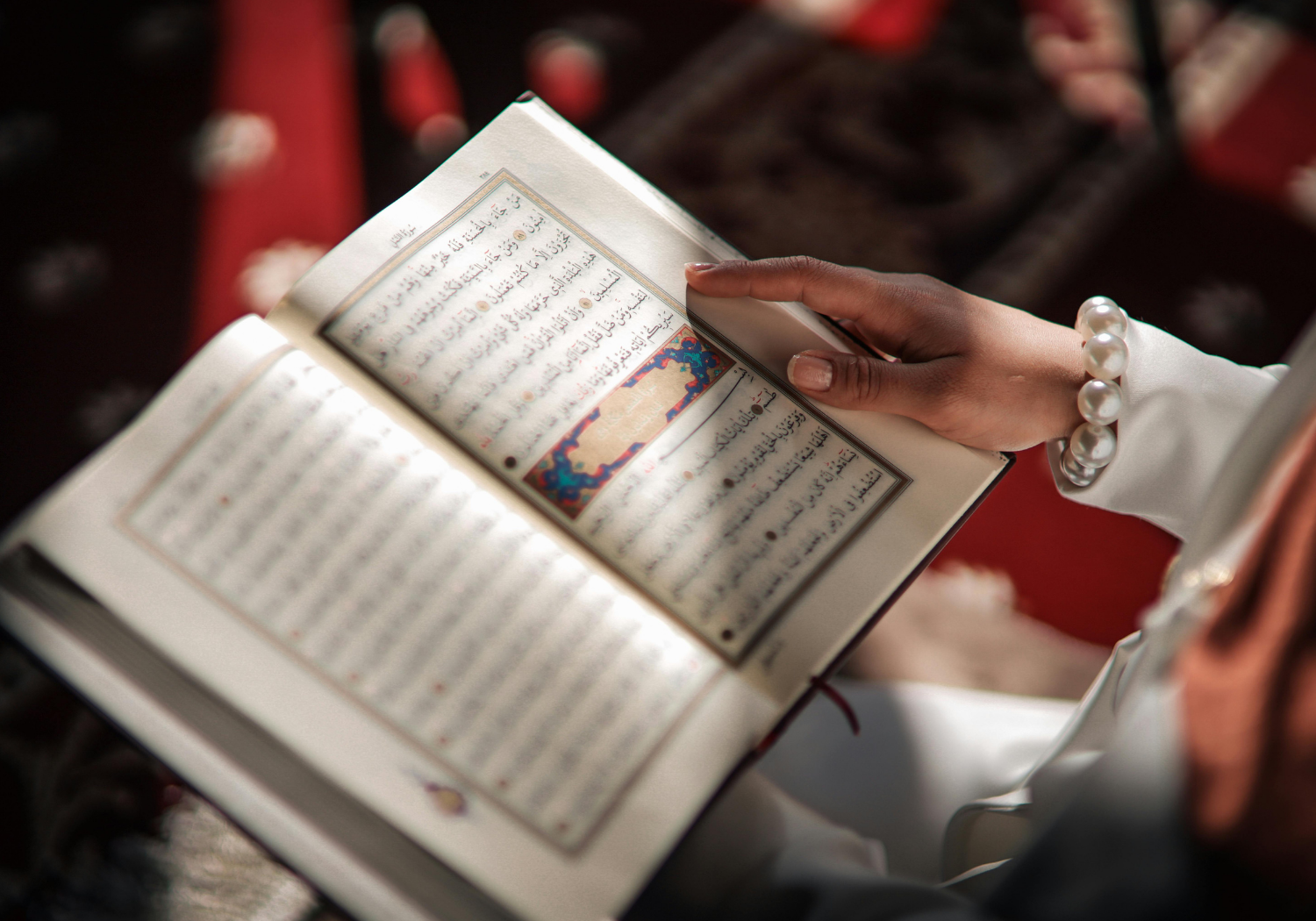 Is the Quran the Word of God? How Do We Know the Quran Is From God?
When the Christian woman asks how he knows the Quran comes from God, Shamsi responds that the Quran claims divine authority and proves itself through its uniqueness.
But claiming something does not automatically make it true.
Imagine picking up a book from your bookshelf, writing inside it that the book contains God’s words, and then presenting that statement as evidence of divine inspiration.
Would that establish anything? Of course not.
Yet this illustrates the problem with Shamsi’s reasoning. He questions the Gospels because their writers supposedly never declared themselves inspired, while accepting the Quran partly because it declares itself divine.
A claim is not the same as proof. Share on XShamsi appeals to the Quran’s challenge for humanity to produce something comparable to it. He argues that nobody has successfully matched its eloquence, legislation, and literary qualities.
However, literary excellence alone cannot establish divine authorship.
During my commentary, I recalled how Christian Prince would reportedly play Arabic Bible passages to Muslim listeners, some of whom praised the recitation while apparently mistaking it for Quranic material.
The example raises an interesting question: If listeners cannot reliably distinguish the texts, how can their appreciation of eloquence establish divine origin?
Shamsi also points to Islam’s worldwide expansion, including churches converted into mosques. But popularity is not proof of truth.
Jesus warned:
“Enter ye in at the strait gate: for wide is the gate, and broad is the way, that leadeth to destruction, and many there be which go in thereat:” – Matthew 7:13
A religion’s growth cannot, by itself, demonstrate that God inspired its teachings.
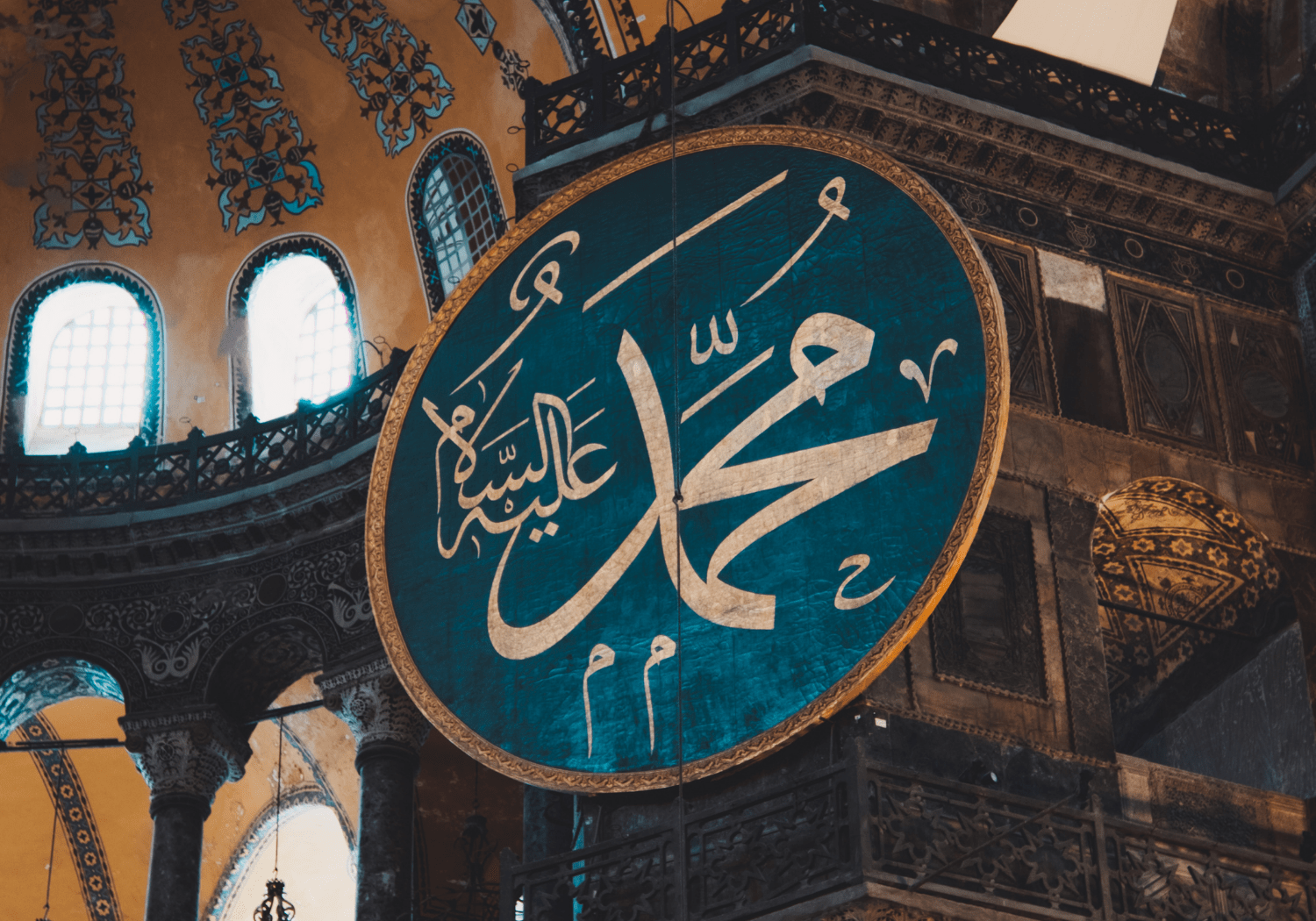 Muhammad’s Encounter in the Cave
One of the most significant moments occurs when the elderly Christian woman questions Muhammad’s first reported revelation.
According to Islamic tradition, Muhammad was frightened by his encounter in the cave and returned to his wife, Khadijah. She subsequently took him to her relative Waraqah ibn Nawfal, who was familiar with Biblical Scripture.
Waraqah identified the visitor as the angel associated with Moses. This raises important questions about how Muhammad’s experience was authenticated.
Why did Muhammad initially fear the encounter? What evidence established the visitor’s identity? And why should Waraqah’s interpretation be accepted as proof?
The Bible instructs believers to examine spiritual claims carefully.
“Beloved, believe not every spirit, but try the spirits whether they are of God: because many false prophets are gone out into the world.” – 1 John 4:1
 Can Muslims Claim to Follow Jesus While Rejecting His Sonship?
Shamsi repeatedly insists that Muslims love Jesus. However, the Christian woman challenges him over Islam’s rejection of Jesus as the Son of God.
Scripture states:
“Whosoever denieth the Son, the same hath not the Father: (but) he that acknowledgeth the Son hath the Father also.” – 1 John 2:23
This is a fundamental theological disagreement. Recognizing Jesus as a prophet or Messiah is not equivalent to accepting everything the New Testament teaches about His identity.
Consider someone who praises a king’s wisdom, kindness, and achievements but refuses to recognize him as king.
Would that person truly be acknowledging his identity? The same principle applies when examining competing claims about Jesus.
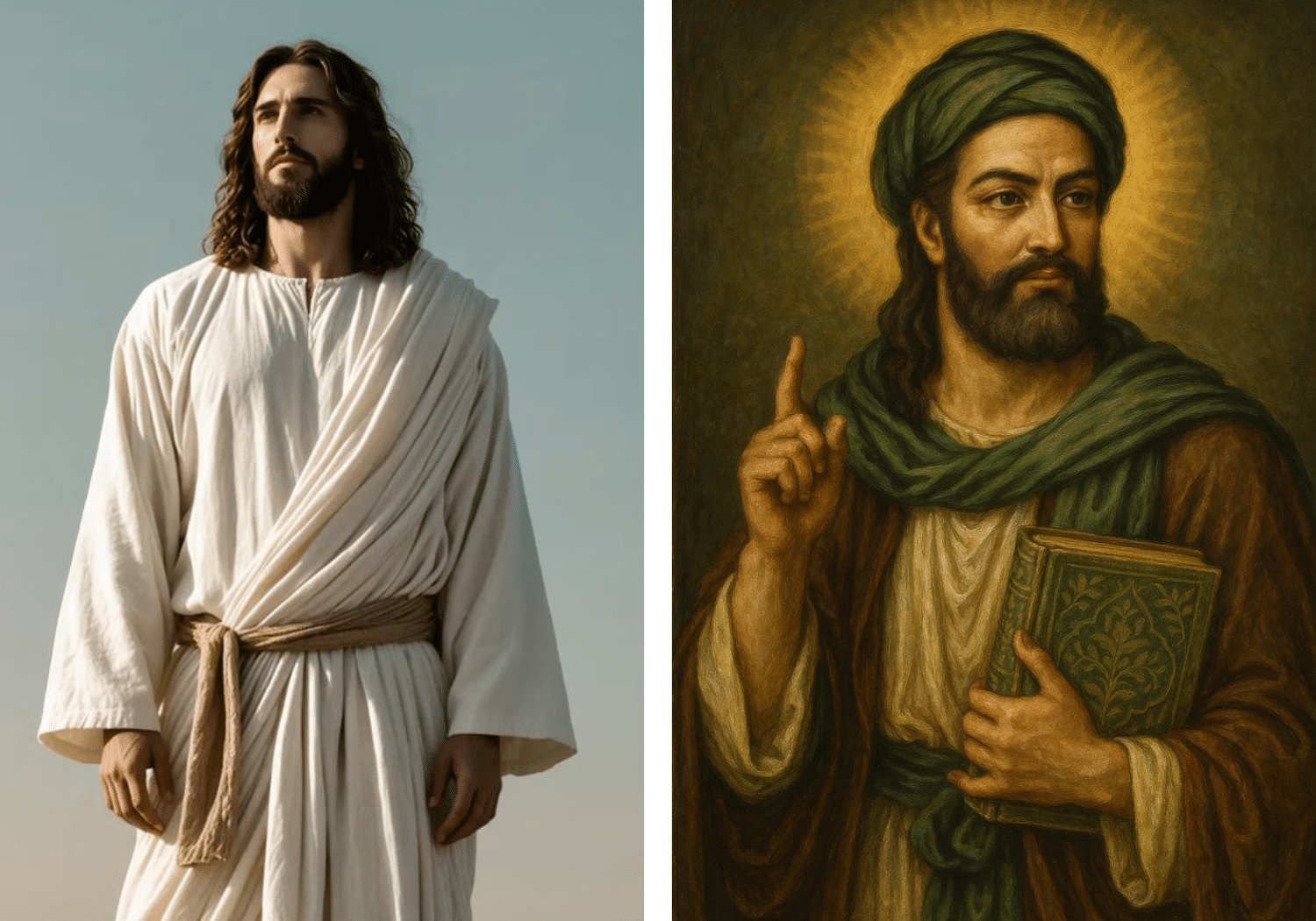 Was Jesus a Muslim or a Christian?
Shamsi then asks whether Jesus ever called Himself a Christian. But this question misunderstands the meaning of Christianity.
A Christian is a follower of Christ. Jesus did not need to follow Himself; He called others to follow Him. The Bible also identifies when His disciples received the name Christians.
“And the disciples were called Christians first in Antioch.” – Acts 11:26
Furthermore, Peter explicitly used the term:
Christianity is not defined merely by the word someone uses to describe themselves. It is defined by allegiance to Jesus Christ and His teachings. Share on X“Yet if any man suffer as a Christian, let him not be ashamed; but let him glorify God on this behalf.” – 1 Peter 4:16
 The Final Question: What Is the Evidence?
Toward the end, Shamsi questions how Christians know Paul received revelation from God.
Two important considerations emerge: Paul’s message can be examined against earlier Scripture, and his ministry received recognition from established apostles.
These are meaningful forms of corroboration, rather than simply accepting someone’s claims without examination.
The same scrutiny should be applied to Muhammad and the Quran.
Confidence does not establish truth. Evidence matters. Share on XAs Christians, we should be willing to test every religious claim, including our own understanding, against Scripture.
“Prove all things; hold fast that which is good.” – 1 Thessalonians 5:21
If you want to explore more of Shamsi’s arguments against Christianity, read the next article. Discover how he challenges the Trinity, questions the deity of Jesus Christ, and struggles with the Biblical distinction between the Father, Son, and Holy Spirit.
WATCH THE VIDEO















Recent Comments