
Muslim LIES To Mexican Christian AGAIN & Gets EXPOSED!
One of the most common arguments Muslims make against Christianity sounds simple: Jesus prayed to God, obeyed God, was tempted, and even referred to the Father as His God. Therefore, they argue, Jesus cannot be God.
At first glance, these arguments can sound convincing, especially when several verses are fired off quickly without giving a Christian enough time to explain them.
That was exactly the dynamic in the conversation between Shaykh Uthman Ibn Farooq and a Mexican Christian. The Christian knew many of the right passages, but he admitted that he had not come as prepared as he should have.
The important question is not whether Muslims can find verses describing Jesus as a man, a prophet, or someone who prayed to the Father. Christians already believe all of those things.
The real question is whether those truths contradict the Biblical teaching that Jesus is also divine.
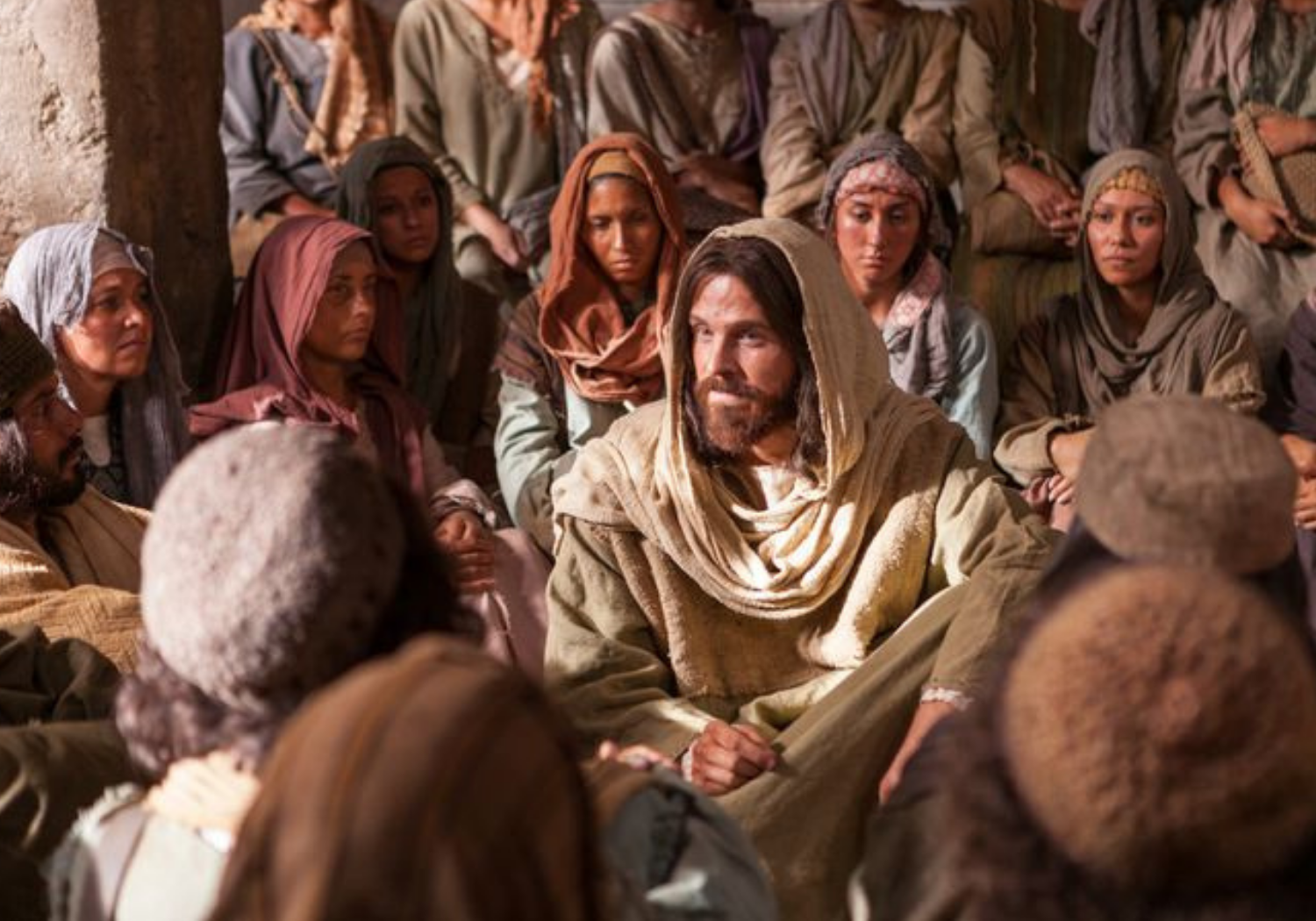 Is Jesus a Prophet of God? And Who Did Jesus Pray To?
Christians do not have a problem calling Jesus a prophet. Scripture presents Him as a prophet, Messiah, Son of God, and much more.
Jesus Himself said:
“A prophet is not without honour, save in his own country, and in his own house.” — Matthew 13:57
But identifying Jesus as a prophet does not tell us everything about His identity.
That is where the Muslim argument frequently goes wrong. It takes one true description of Jesus and treats it as though every other Biblical description must therefore be false.
Jesus can be a prophet and still be more than a prophet. Share on XJohn begins his Gospel by deliberately taking his readers back to the language of Genesis.
“In the beginning was the Word, and the Word was with God, and the Word was God.” — John 1:1
Then John identifies that Word as the One who entered the world in flesh.
“And the Word was made flesh, and dwelt among us…” — John 1:14
When Genesis 1 and John 1 are read together, John’s language is difficult to miss. He presents the Word as existing in the beginning, being with God, and being God, before identifying that Word with Jesus Christ.
Being a prophet does not cancel any of that.
Another question raised in the conversation was straightforward: Who did Jesus pray to?
The answer is equally straightforward. Jesus prayed to the Father.
But that does not disprove the Trinity. In fact, Christianity has never taught that Jesus is the Father. The Father, Son, and Holy Ghost are distinct persons.
Jesus prayed:
“O my Father, if it be possible, let this cup pass from me: nevertheless not as I will, but as thou wilt.” — Matthew 26:39
The Son communicating with the Father is not evidence against the Trinity. It is exactly what we would expect if the Father and Son are personally distinct.
The Bible even presents Father, Son, and Holy Ghost together:
“Go therefore and make disciples of all nations, baptizing them in the name of the Father and of the Son and of the Holy Spirit,” — Matthew 28:19
We cannot take passages where Jesus speaks to the Father and pretend that Christians believe Jesus was talking to Himself. That attacks a doctrine Christians do not believe.
 Was Jesus Tempted If God Cannot Be Tempted?
The conversation then moved to Matthew 4:1.
“Then was Jesus led up of the Spirit into the wilderness to be tempted of the devil.” — Matthew 4:1
The Muslim argument was then paired with James 1:13:
“Let no man say when he is tempted, I am tempted of God: for God cannot be tempted with evil, neither tempteth he any man:” — James 1:13
The conclusion sounds devastating when reduced to three sentences:
God cannot be tempted.
Jesus was tempted.
Therefore, Jesus cannot be God.
But we have to allow Scripture to define what it means rather than simply placing two English sentences beside each other.
James 1 is addressing the source of sinful temptation. James continues by explaining that a person is drawn away by his own lust. The passage is warning people not to blame God for their temptation to sin.
“But every man is tempted, when he is drawn away of his own lust, and enticed.” — James 1:14
Jesus, however, did not possess sinful desires that drew Him away from God. Satan genuinely tested Christ from the outside, yet Christ never surrendered to sin.
Hebrews makes both His testing and His sinlessness clear:
“For we have not an high priest which cannot be touched with the feeling of our infirmities; but was in all points tempted like as we are, yet without sin.” — Hebrews 4:15
The mistake is assuming that being confronted with temptation necessarily means possessing an internal inclination toward evil.
It does not.
 Can God Enter His Own Creation? God Cannot Not Know Everything
This leads to an even bigger issue.
Shaykh Uthman Ibn Farooq argued that if God became human, experienced hunger, learned things, and lived with the limitations associated with human existence, He would cease to possess the characteristics of God.
But where does Scripture say God cannot enter His creation?
Genesis 18 creates an immediate problem for that assumption. Abraham encounters the LORD in a remarkably physical scene. Food is prepared, and the visitors eat.
“And he took butter, and milk, and the calf which he had dressed, and set it before them; and he stood by them under the tree, and they did eat.” — Genesis 18:8
The point raised is significant: Scripture does not share the assumption that God is somehow incapable of manifesting Himself within His creation.
The incarnation is certainly extraordinary, but Christians are not claiming that God stopped being God. Share on XWe are saying that the eternal Son took upon Himself a genuine human nature.
“For in him dwelleth all the fulness of the Godhead bodily.” — Colossians 2:9
Another major objection concerned God’s omniscience.
If God knows everything, how could Jesus ever speak or behave in a way that appears to involve limited human knowledge?
This is where the incarnation matters. Jesus was not pretending to be human. He truly became man.
“But made himself of no reputation, and took upon him the form of a servant, and was made in the likeness of men:” — Philippians 2:7
Christians are not arguing that God’s divine nature suddenly became ignorant. We are confessing what Scripture reveals about the Word becoming flesh.
This is why isolated arguments about Christ’s humanity cannot simply erase passages describing His deity. Both truths have to be accounted for.
Any interpretation that explains Jesus’ humanity by denying His deity fails to account for half of the Biblical evidence.
 What Does John 1:18 Really Mean? And Does God Have a God?
Another passage raised in the discussion was John 1:18.
“No man hath seen God at any time; the only begotten Son, which is in the bosom of the Father, he hath declared him.” — John 1:18
The Muslim argument essentially became: if nobody has seen God, but people saw Jesus, Jesus cannot be God.
The problem is that the Old Testament itself describes people seeing God. For example:
“Then went up Moses, and Aaron, Nadab, and Abihu, and seventy of the elders of Israel: And they saw the God of Israel…” — Exodus 24:9–10
Yet later, God tells Moses:
“Thou canst not see my face: for there shall no man see me, and live.” — Exodus 33:20
Is the Bible contradicting itself? No.
The distinction is between God revealing Himself in a form human beings can endure and experiencing the unveiled fullness of God’s glory.
This same idea helps us understand Christ. During His earthly ministry, people genuinely saw Jesus, but they were not constantly looking upon the unrestricted manifestation of His divine glory.
At the Transfiguration, something extraordinary happened:
“And was transfigured before them: and his face did shine as the sun, and his raiment was white as the light.” — Matthew 17:2
The glory that had ordinarily been veiled became dramatically visible.
The conversation eventually moved to another popular objection.
Jesus says:
“Him that overcometh will I make a pillar in the temple of my God… and I will write upon him the name of my God…” — Revelation 3:12
So does God have a God? The Christian answer requires us to remember the incarnation.
Jesus did not discard His humanity after the resurrection. The Son remains the God-man. According to His human nature, He can properly refer to the Father as His God.
Scripture teaches:
“Behold, I am the LORD, the God of all flesh: is there any thing too hard for me?” — Jeremiah 32:27
If the eternal Son genuinely took flesh, then passages describing His relationship to God according to His humanity do not disprove His divine nature.
Otherwise, we would have to ignore passages such as Hebrews 1, where the Father explicitly calls the Son God.
The Bible gives us both truths. We do not have permission to throw either one away.
 Isaiah 48:16 and the Distinction Within God: Scripture Must Interpret Scripture
One of the most interesting moments came near the end when the Christian brought up Isaiah 48:16. Despite struggling to articulate some of his answers, he knew enough Scripture to recognize that this Old Testament passage presents a fascinating distinction.
“Come ye near unto me, hear ye this; I have not spoken in secret from the beginning; from the time that it was, there am I: and now the Lord GOD, and his Spirit, hath sent me.” — Isaiah 48:16
The passage deserves careful study because the speaker has been speaking with divine authority and then speaks of being sent by the Lord GOD and His Spirit.
This should at least make us cautious about imposing an overly simplistic view of God’s personal identity onto the Old Testament.
The New Testament does not invent the idea of distinction within the Godhead out of nowhere. The seeds are already present. Share on XThis entire discussion highlights why Christians need to know more than isolated proof texts.
“All scripture is given by inspiration of God, and is profitable for doctrine, for reproof, for correction, for instruction in righteousness:” — 2 Timothy 3:16
We cannot build our theology from one verse while ignoring everything else Scripture says.
When Jesus prays to the Father, we have to account for it. His temptation must also be accounted for. And when Jesus calls the Father His God, we cannot simply ignore it.
But Muslims must likewise account for the passages calling Jesus God, identifying Him as the eternal Word, presenting Him as Creator, describing His divine glory, and showing distinction within the Godhead.
You cannot demand that Christians explain your verses while refusing to explain ours.
 Sometimes You Need More Reps: Being Sent Does Not Mean Jesus Is Not God
One of the most important lessons from this encounter actually has little to do with any individual proof text.
The Christian clearly knew Scripture. He remembered passages such as Isaiah 48:16 and understood several important Christian doctrines. His biggest problem was that he struggled to communicate those truths confidently while being pressured in a fast-moving conversation.
That is something many Christians can relate to.
You can know the answer while sitting at home with your Bible open and still freeze when somebody suddenly challenges you face-to-face.
I have been in situations where I was not as ready or prepared as I should have been. Those experiences can become valuable if they drive us back into Scripture.
Apologetics is like exercising a muscle. Studying matters, but so do repetitions. Share on XHave conversations. Answer objections. Pray. Study the passages people commonly misuse. Learn from the times when you stumble over an answer instead of allowing embarrassment to stop you from speaking again.
The Christian in this encounter should not simply walk away discouraged. He can use the experience as motivation to become sharper, clearer, and more confident the next time somebody challenges his faith.
One final argument asks how Jesus could be God if the Father sent Him.
“As my Father hath sent me, even so send I you.” — John 20:21
Being sent describes role, relationship, and mission. It does not automatically determine nature.
I like to give the example of directors within a company. One director can give another director an instruction without the second person suddenly ceasing to be a director.
The analogy is imperfect, as all analogies concerning God ultimately are, but it exposes the flaw in the argument.
Authority and nature are not identical categories. Share on XThe Father sending the Son does not prove that the Son lacks the divine nature any more than the Son submitting to the Father proves that He is merely a creature.
 Read the Bible in Context
Muslim objections to the deity of Christ can sound powerful when verses are isolated, questions are asked rapidly, and Christians are not given the opportunity to explain what they actually believe.
- But Christianity does not teach that Jesus is the Father.
- It does not teach that Jesus only appeared to be human.
- It teaches that the eternal Son truly became flesh while remaining divine.
That is why Scripture can describe Jesus praying, obeying, suffering, being tempted, and calling the Father His God, while calling Him God, Creator, Lord, and the eternal Word at the same time.
The answer is not to hide from the difficult verses.
Read them.
Study them.
Put them in context.
Then put them alongside everything else God has revealed.
If you want to see another example of these same apologetic tactics being challenged, read this article. It examines another encounter involving Shaykh Uthman and shows why Christians need to understand Scripture in context rather than being intimidated by rapid-fire objections.
WATCH THE VIDEO
















Recent Comments