
Shaykh Uthman Looks For BABY Christians To DESTROY In Debate & Get DESTROYED!
In this exchange, a familiar pattern unfolds: bold claims, quick citations, and surface-level arguments that sound convincing at first but collapse under careful examination.
Two well-known Muslim figures, Shaykh Uthman Ibn Farooq and Central Dawah, engage a Christian in conversation, attempting to use Scripture, language, and logic to argue their case.
But as we walk through this discussion, the importance of context becomes impossible to ignore. What looks like confidence is often just repetition. What sounds like scholarship is often selective reasoning.
There are countless testimonies, many quiet, many unseen, of people leaving Islam after examining its claims more deeply.
Truth doesn’t need theatrics. It stands on its own. Share on X Isaiah 42 and the “Muslim” Argument
One of the central arguments presented is from Isaiah 42, attempting to redefine the word “perfect” or “complete” as “Muslim” meaning one who submits to God.
This is a classic example of what’s known as the phonetic fallacy: assuming that because two words sound similar, they must share meaning.
But Hebrew doesn’t work like that.
The Book of Isaiah 42:19 speaks about a servant who is blind and deaf, not a future prophet bringing revelation. The context points to Israel, not Muhammad.
“Who is blind, but my servant? or deaf, as my messenger that I sent?” – Isaiah 42:19
There is no linguistic or contextual bridge that turns this into a prophecy about Islam.
The appeal to the Hebrew-English lexicon (entry 799) is meant to give the argument weight. But lexicons define words, they don’t override context.
The Hebrew word being referenced relates to completeness or wholeness, not Islamic submission. Reading “Muslim” into the text is not translation; it’s imposition.
 Song of Solomon and the “Muhammad” Claim
Another common claim appears in Song of Solomon, that the Hebrew word machmadim refers to Muhammad.
But this argument falls apart quickly.
The word simply means “lovely” or “desirable”, and it’s used in multiple places across the Old Testament, not as a proper name, but as a descriptive term.
“His mouth is most sweet: yea, he is altogether lovely. This is my beloved, and this is my friend…” – Song of Solomon 5:16
The passage is clearly describing a beloved person in poetic language—not predicting a future prophet.
If machmadim meant Muhammad, consistency would demand that every occurrence of the word be treated the same way, which would lead to absurd conclusions elsewhere in Scripture.
The argument then shifts to Arabic roots, connecting hamida (“praised”) to Muhammad.
But Hebrew predates Arabic. You can’t retroactively project a later language onto an earlier text and claim fulfillment.
That’s not interpretation; it’s rewriting history.
 Can God Be Called Father?
This is where the discussion becomes even more revealing. The attempt is made to argue that calling God “Father” is merely metaphorical and therefore compatible with Islamic theology.
But this runs into a major problem. The Qur’an explicitly denies this relationship.
Meanwhile, the Bible consistently affirms it. Not just metaphorically, but relationally.
“Our Father which art in heaven…” – Matthew 6:9
“…whereby we cry, Abba, Father.” – Romans 8:15
This isn’t a minor detail; it’s foundational. You can’t claim Jesus was a Muslim while ignoring that He consistently referred to God as Father.
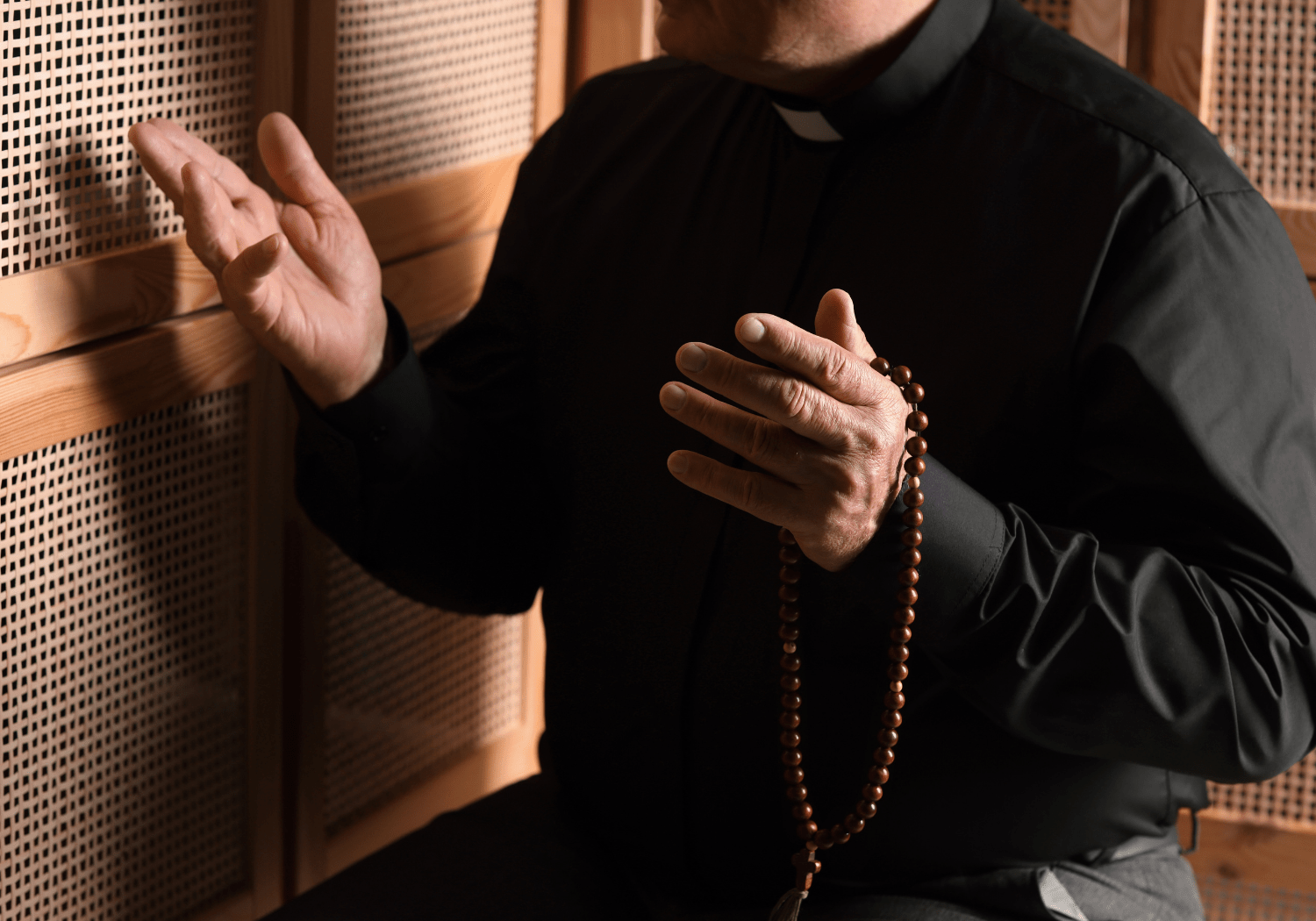 Calling a Priest “Father” and Hosea 2:16
The conversation brings up the idea of calling a priest “father” to justify broader usage. But this misses the point entirely.
Titles of respect among humans are not equivalent to divine revelation. The question isn’t whether humans can use the term loosely. It’s whether God permits or reveals it as part of His identity.
And in Scripture, He does. The appeal to Book of Hosea is another attempt to show that God changed how He is addressed. But the text says something very different.
“And it shall be at that day, saith the LORD, that thou shalt call me Ishi; and shalt call me no more Baali.” – Hosea 2:16
This isn’t God rejecting a name He commanded. it’s God correcting a misunderstanding tied to pagan influence.
There is no moment where God says, “Call me this,” and then later forbids it. That claim simply isn’t in the text.
Truth isn’t measured by volume or spectacle. It’s not about how many hands go up in a moment but what holds up under scrutiny. Share on X The Bigger Pattern: Selective Reasoning
What we see throughout this exchange is a consistent pattern:
- Isolate a word
- Ignore its context
- Apply a later meaning
- Build a new conclusion
This method does not discover truth; it creates confusion.
Debates like this may feel intense, but they reveal something important: truth stands on its own. It doesn’t rely on linguistic gymnastics or selective citations. It holds together from every angle.
If you want to see another example of how these arguments play out and how quickly they unravel, check out this article. It walks through a similar encounter and shows, step by step, how clarity cuts through confusion when you stay grounded in context.
WATCH THE VIDEO
















Recent Comments