
Muslim DEBATES Christian On The TRINITY & Gets DISMANTLED!
Debates about the Trinity often begin with the same assumption: if Christians believe the Father, Son, and Holy Spirit are all God, then they must believe in three gods.
During a recent exchange with Muslim preacher Shamsi, that familiar objection surfaced again. Yet as the discussion unfolded, it became clear that much of the disagreement was not about what the Bible actually teaches, but about misunderstanding Christian doctrine.
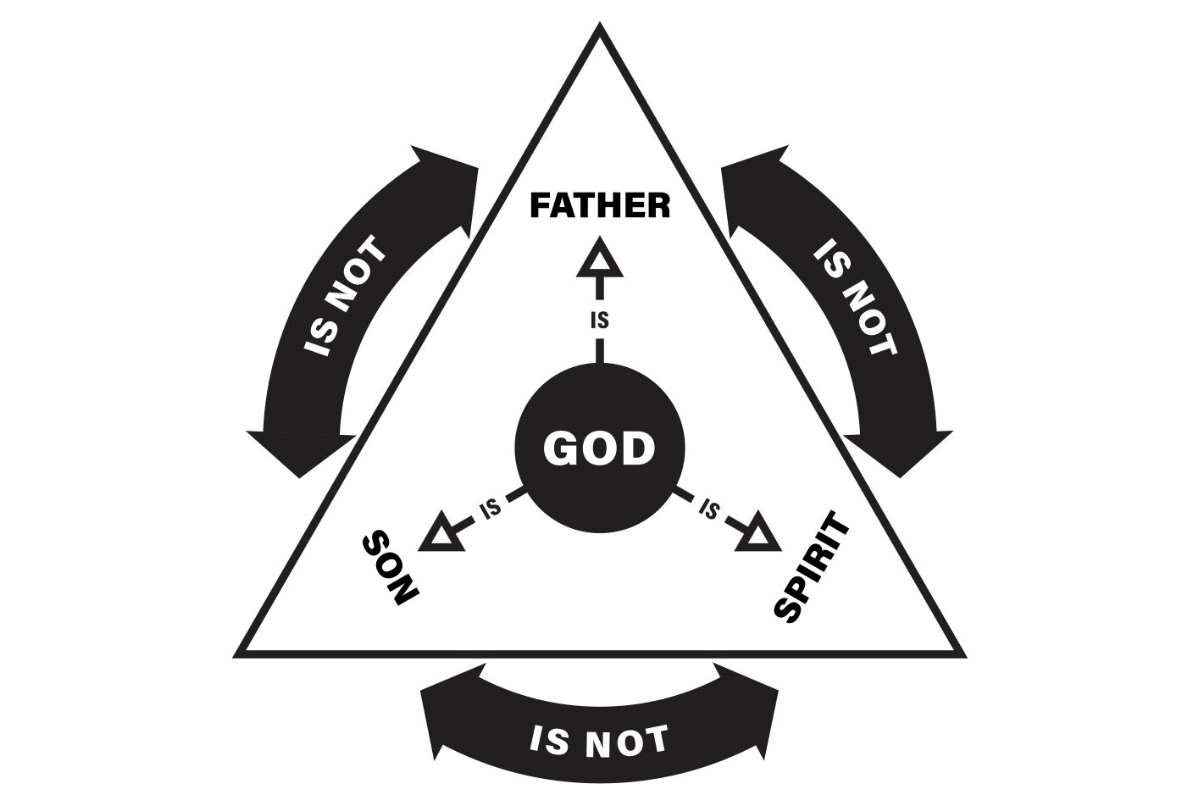
Rather than addressing the Trinity as Christians define it, the conversation repeatedly treated “being” and “person” as though they were identical concepts.
That confusion prevented the discussion from moving forward and highlighted why careful listening is essential in any theological conversation.
 Understanding the Difference Between Being and Person
One of the Christian’s main points was simple: Christianity teaches there is one divine Being who eternally exists as three distinct Persons—the Father, the Son, and the Holy Ghost.
Christians do not believe in three separate gods. Instead, the three Persons fully share the one divine nature.
Throughout the debate, Shamsi repeatedly insisted that mentioning three Persons automatically meant believing in three gods. However, that conclusion only follows if “person” and “being” mean exactly the same thing. Historic Christianity has never made that claim.
A helpful illustration used during the discussion compared humanity. Every human shares the same human nature, yet each individual is a distinct person. While no earthly example perfectly explains God’s nature, it demonstrates that nature and personhood are not identical ideas.
 Does “The Father Is Greater Than I” Disprove Christ’s Deity?
One of the most common objections came from Jesus’ words:
“Ye have heard how I said unto you, I go away, and come again unto you. If ye loved me, ye would rejoice, because I said, I go unto the Father: for my Father is greater than I.” — John 14:28
Muslim apologists frequently argue that this verse proves Jesus cannot be God. However, the context points in another direction.
The Son willingly took on human flesh and entered the world as a servant. During His earthly ministry He humbled Himself, submitting to the Father’s will.
That functional submission does not mean Jesus possesses an inferior divine nature. Scripture distinguishes between Christ’s role in redemption and His eternal deity.
The debate repeatedly returned to this distinction. Equality of nature does not eliminate differences in role. Just as authority structures can exist without changing someone’s nature, the Father and the Son can have distinct roles while sharing the same divine essence.
At several moments the Christian carefully explained the doctrine, yet the explanation was interrupted before it could be completed. That reminds believers of an important Biblical principle.
“Wherefore, my beloved brethren, let every man be swift to hear, slow to speak, slow to wrath.” — James 1:19
Meaningful conversations require both sides to understand what the other person actually believes. Refuting a position that Christians do not hold only creates confusion rather than genuine dialogue.
While these conversations can become frustrating, Christians should continue praying that God removes spiritual blindness and opens hearts to the truth instead of responding with bitterness.
 Is the Father Alone Sufficient?
Another question raised during the debate asked whether the Father alone is sufficient for creation or whether the Son must be added afterward.
The question itself assumes that the Father once existed without the Son. Scripture never teaches that idea. The Son is eternal. There has never been a moment when the Father existed apart from Him.
The Bible consistently presents the Father and the Son working together in creation.
Creation was never the work of an isolated Father acting independently of the Son. The Father created through His eternal Word. Share on X“All things were made by him; and without him was not any thing made that was made.” — John 1:3
“For by him were all things created, that are in heaven, and that are in earth, visible and invisible… all things were created by him, and for him.” — Colossians 1:16
 Colossians 2:9 Leaves Little Room for Doubt: Context Matters in Every Debate
Toward the end of the discussion, one verse summarized the Christian position beautifully.
“For in him dwelleth all the fulness of the Godhead bodily.” — Colossians 2:9
This verse does not describe Jesus as merely reflecting God’s character or acting as God’s representative. Paul declares that the fullness of deity dwells bodily in Christ.
That statement explains why Christians worship Jesus without abandoning monotheism. The Son possesses the fullness of the divine nature while remaining personally distinct from the Father.
When interpreted alongside the rest of Scripture, Colossians 2:9 harmonizes perfectly with the Biblical teaching that there is one God revealed as Father, Son, and Holy Ghost.
Several arguments during the exchange relied on isolated statements without considering their surrounding context. Whether discussing God’s attributes, Christ’s incarnation, or figurative language, context determines meaning.
The Bible contains history, poetry, prophecy, wisdom literature, parables, and letters. Each genre communicates differently. Ignoring context often produces conclusions that the original authors never intended.
Christians should resist the temptation to build doctrine on one verse while overlooking the broader testimony of Scripture. The strongest theology always allows the whole Bible to speak.
 Standing Firm in Biblical Truth
Debates can be informative, but they should ultimately drive believers back to God’s Word. The Trinity is not a doctrine invented by philosophers; it arises from the consistent testimony of Scripture.
The Father is God, the Son is God, the Holy Ghost is God, and yet there is only one God. Share on XAlthough critics frequently appeal to verses like John 14:28, those passages do not overturn the many Scriptures that affirm Christ’s divine identity. Instead, they reveal the humility of the Son during His earthly ministry while preserving His eternal divine nature.
The more carefully we study the Bible, the more clearly we see that God’s revelation fits together without contradiction.
If you enjoyed this discussion, be sure to read the next article. It explores another debate involving common objections to Christianity and demonstrates why understanding Scripture in its proper context is essential.
As always, let God’s Word, not popular arguments, be the final authority in every discussion.
WATCH THE VIDEO
















Recent Comments