
Muslim RUNS UP On Christian STUDENTS & I EXPOSE Him AGAIN!
One of the most repeated claims in interfaith discussions is that Jesus was only a prophet. It’s often presented as something obvious, something that settles the conversation quickly.
But when you slow down and actually examine the reasoning behind it, the argument begins to unravel.
In this discussion, we’re looking at Shaykh Uthman Ibn Farooq, who tries to define a “Muslim” as simply someone who submits to their creator. From there, he concludes that Jesus must be a Muslim.
 Is Jesus Really Just a Prophet?
That sounds simple, but it doesn’t hold up under scrutiny.
Submitting to anything you call “God” doesn’t make you part of a specific belief system.
Even within Islam, people direct their submission toward a specific understanding of God. So the real question isn’t just whether Jesus submitted; it’s who He submitted to.
Scripture does refer to Jesus as a prophet. But that does not mean He is only a prophet.
“Nevertheless I must walk to day, and to morrow, and the day following: for it cannot be that a prophet perish out of Jerusalem.” — Luke 13:33
The mistake comes from assuming that being a prophet excludes Him from being anything more. In Christianity, it doesn’t.
 Jesus and the Father, and Understanding Why Jesus Prayed
A major issue arises when we look at how Jesus speaks about God. Jesus consistently refers to God as His Father, something that Islam explicitly rejects.
“I am come in my Father’s name, and ye receive me not: if another shall come in his own name, him ye will receive.” — John 5:43
This is not a small difference in wording. It reflects a completely different understanding of God. If Jesus reveals God as Father, and Islam denies that relationship entirely, then the claim that Jesus fits within Islam becomes deeply problematic.
Another common objection is built around a familiar question:
“If Jesus is God, why does He pray?”
This question assumes that Christians believe the Father and the Son are the same Person, but that’s not what Christianity teaches.
Jesus, as the Son, communicates with the Father. That’s not a contradiction; it’s part of the relationship within the Godhead. We see this clearly when Jesus submits in the garden:
“Saying, Father, if thou be willing, remove this cup from me: nevertheless not my will, but thine, be done.” — Luke 22:42
This moment doesn’t deny His identity. It shows His perfect obedience and alignment with the Father’s will.
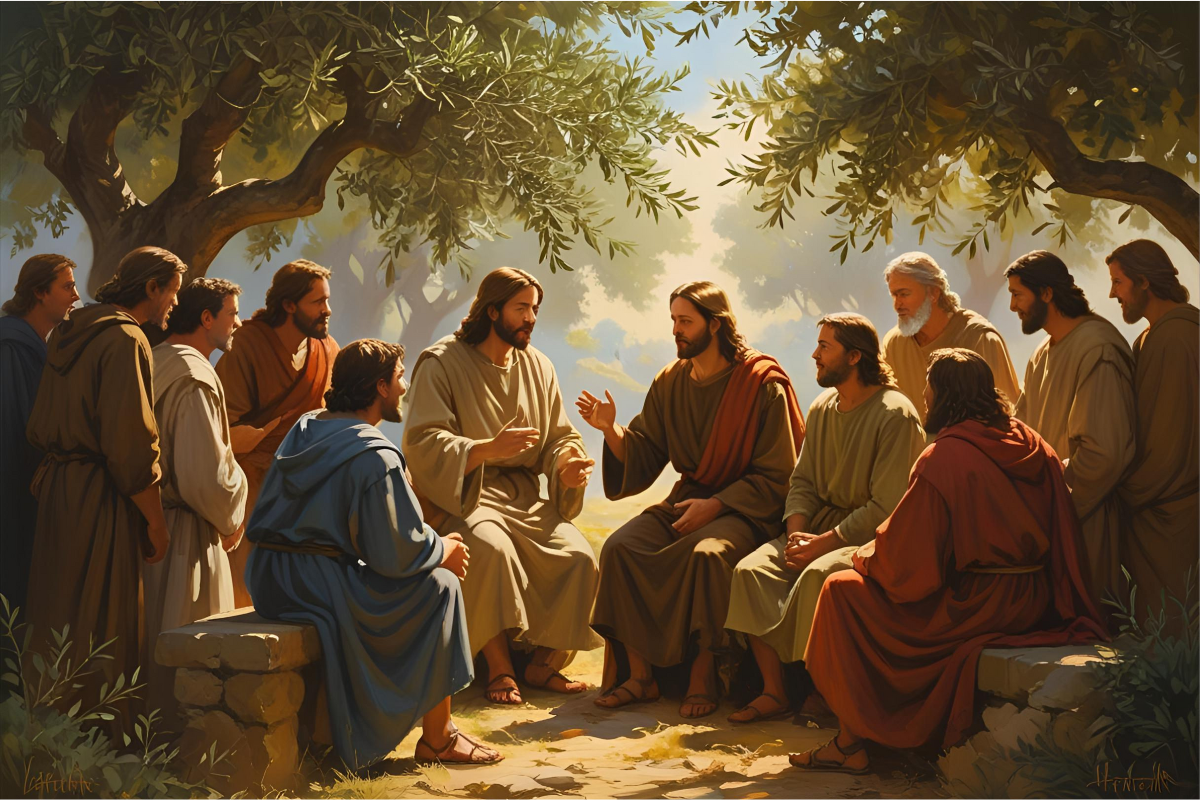 The “Good Teacher” Misunderstanding
Another passage often brought up is when Jesus says:
“And Jesus said unto him, Why callest thou me good? none is good, save one, that is, God.” — Mark 10:18
Some take this as Jesus denying His divinity. But that interpretation misses what’s happening. Jesus is not rejecting the label. He’s challenging the man’s understanding.
If only God is truly good, then calling Jesus “good” carries serious implications. Jesus is leading the man to recognize who He really is.
 Alleged Contradictions: Looking at the Full Picture
A large portion of the discussion shifts toward supposed contradictions in the Bible. These are often presented quickly, without context, to create doubt. Let’s walk through a few examples.
The Death of Saul
One passage describes Saul taking his own life:
“Therefore Saul took a sword, and fell upon it.” — 1 Samuel 31:4
Another passage records a man claiming he killed Saul:
“So I stood upon him, and slew him, because I was sure that he could not live after that he was fallen.” — 2 Samuel 1:10
And another refers to the broader battle context:
“After that the Philistines had slain Saul in Gilboa.” — 2 Samuel 21:12
When these are read together, there’s no contradiction, only multiple perspectives:
- Saul attempts suicide
- He may not have died immediately
- An Amalekite claims to have finished him (possibly lying)
- The Philistines are responsible for the battle that led to his death
This is not confusion, it’s layered detail.
The Age of King Ahaziah
Another example often raised involves Ahaziah’s age:
“Two and twenty years old was Ahaziah when he began to reign…” — 2 Kings 8:26
“Forty and two years old was Ahaziah when he began to reign…” — 2 Chronicles 22:2
At first glance, this looks like a contradiction. But this is widely understood as a scribal copying issue, not a doctrinal problem.
And that distinction matters.
Small transmission variations do not undermine the message of Scripture; they reflect the reality of how ancient texts were preserved and copied.
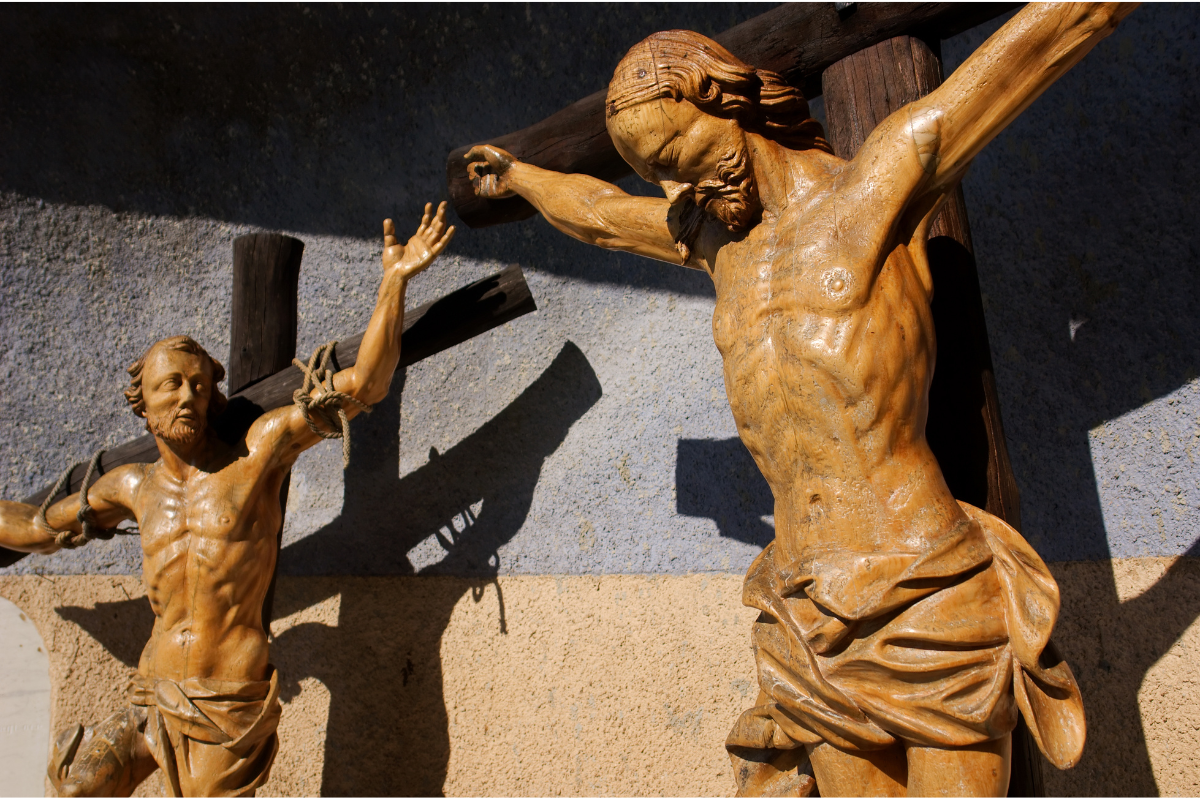 The Crucifixion Timing Question: Context Changes Everything
Another argument involves the timing of Jesus’ crucifixion.
“And it was the third hour, and they crucified him.” — Mark 15:25
“And it was the preparation of the passover, and about the sixth hour…” — John 19:14
These are often presented as conflicting statements. But that assumes both writers are using the same timekeeping system. They are not.
Jewish and Roman methods of counting hours differed. Just like modern time zones differ today. What appears to be a contradiction is actually a difference in perspective.
The biggest issue in these discussions isn’t the verses themselves; it’s how people handle them. They isolate verses, strip them of context, and present them in ways that create confusion.
But when you read Scripture carefully, in full context, the clarity returns.
Context isn’t optional; it’s essential. Share on X A Personal Reminder: It’s Okay to Learn as You Go
One of the most important lessons from this conversation is simple:
You don’t have to have every answer instantly. If you don’t know something, take the time to study it properly.
Honest learning is far more powerful than rushed responses. Share on XThese arguments aim to do one thing: create doubt in the Bible. Once they plant that doubt, they move quickly to replace it with something else.
But when critics build their case on misunderstandings, selective reasoning, and inconsistent standards, you cannot trust their conclusions.
The truth is this:
The Bible does not fall apart under scrutiny. It stands stronger when it is examined properly.
If you want to see another discussion play out and understand how these arguments are answered in real time, watch the next video. It shows exactly how these claims are made and how they’re answered with clarity, context, and confidence.
WATCH THE VIDEO
















Recent Comments