
Korra & Tovia Singer Try PROVING Jesus Is NOT God & Get WIPED OUT!
Few passages in the Bible have generated as much discussion about God’s nature as Genesis 1:26-27.
In a recent conversation, Muslim apologist Korra and Rabbi Tovia Singer attempted to argue that this famous passage offers no support whatsoever for the Christian understanding of the Trinity.
Their discussion focused primarily on Genesis 1 and later shifted to Genesis 19, where another significant Old Testament passage appears.
Rather than accepting their conclusions, it is worth slowing down and examining what the text actually says. When Scripture is allowed to speak for itself, several of the explanations offered in the discussion create more questions than answers.
 A Surprising Alliance Against Christianity: Does “Let Us Make Man” Really Mean Nothing?
One interesting observation from the discussion is that a Muslim and an Orthodox Jewish rabbi joined together to challenge Christian theology.
Throughout the conversation, Korra repeatedly sought Rabbi Singer’s interpretation of passages Christians commonly use when explaining the deity of Christ and the Trinity.
Many Muslims regularly argue that the Hebrew Scriptures have been corrupted, yet they often appeal to Jewish interpretations whenever those interpretations seem to challenge Christianity.
This inconsistency became increasingly apparent throughout the discussion.
The conversation centered on Genesis 1:26-27:
“And God said, Let us make man in our image, after our likeness… So God created man in his own image, in the image of God created he him; male and female created he them.” — Genesis 1:26-27
Rabbi Singer argued that the plural language has nothing to do with God’s nature. Instead, he suggested that God was referring to humanity’s unique creation from both physical matter and the breath of life described later in Genesis 2:7.
Since mankind consists of both body and spirit, he claimed this explains the plural language.
At first glance, that explanation may sound thoughtful. However, it never actually answers the central question.
The issue is not whether man possesses both a body and a spirit. The question is simple: Who is God addressing when He says, “Let us make man in our image”?
Those are two entirely different discussions.
 When an Argument Changes the Subject: Genesis 2 Does Not Replace Genesis 1
One of the biggest weaknesses in the explanation is that it diverts attention away from the wording of Genesis 1 itself.
Rather than identifying who “us” refers to, the discussion moved toward how mankind was created from dust and given life through God’s breath. While Genesis 2:7 certainly teaches that truth, it does not explain why God speaks in the plural in Genesis 1.
This illustrates a common logical distraction often called a red herring—introducing information that may be true but does not actually answer the original question.
The discussion also drifted into lengthy explanations without resolving the issue directly. Instead of identifying God’s audience, the explanation circled around the topic before returning to the same conclusion without demonstrating it.
Genesis 2 expands on the creation of mankind, but it does not redefine the conversation that already took place in Genesis 1.
“And the LORD God formed man of the dust of the ground, and breathed into his nostrils the breath of life; and man became a living soul.” — Genesis 2:7
Christians fully affirm Genesis 2:7. The question is whether this verse explains the plural pronouns used one chapter earlier.
Genesis 2 never says God was speaking to the dust. Nor does it suggest He was addressing the physical universe. It also gives no indication that He was speaking to the human soul before it existed.
Those ideas must be added into the text rather than drawn from it.
 The Singular Does Not Eliminate the Plural: All Things Were Created Through Christ
Another argument raised during the discussion was that Genesis 1:27 immediately switches back to singular language.
Because verse 27 says, “God created man in his own image,” it was suggested that verse 26 therefore cannot indicate plurality within God.
Ironically, this observation fits perfectly with Christian theology.
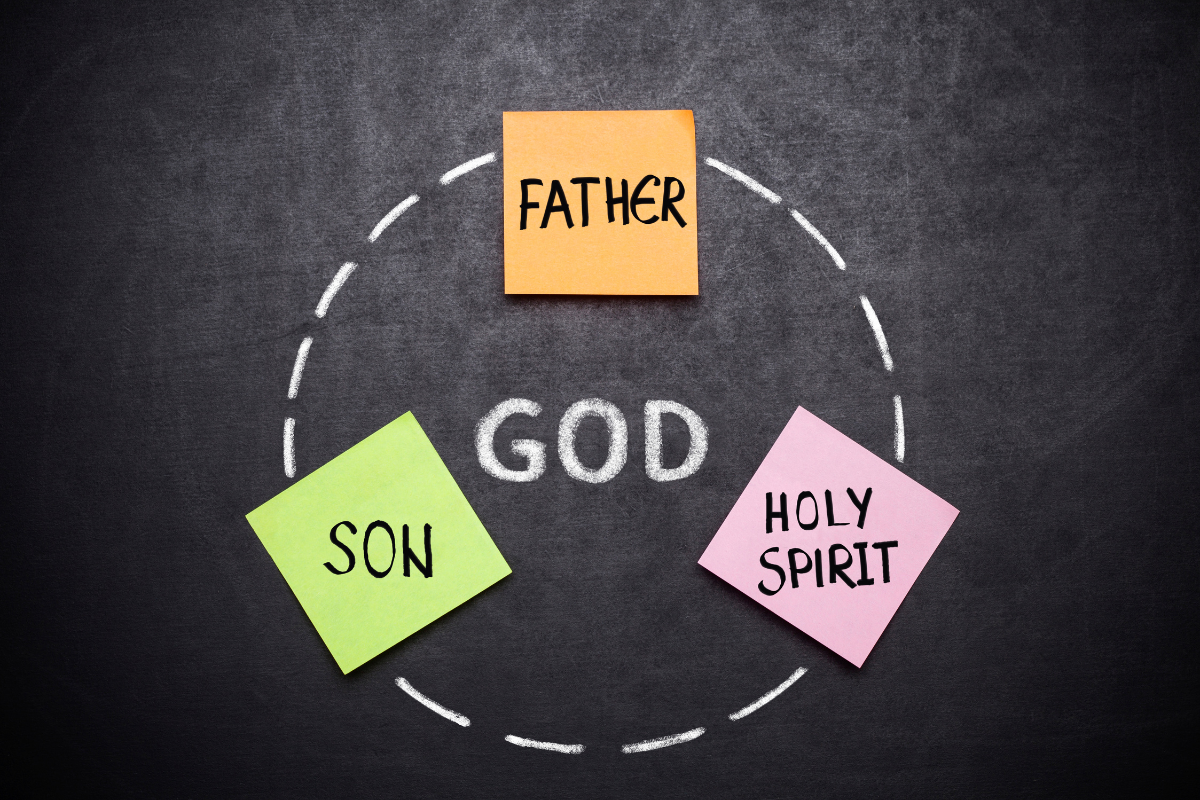
Christians have never claimed there are multiple gods. Christianity teaches one God who exists eternally as Father, Son, and Holy Ghost. God can naturally speak both collectively and individually because He is one divine Being.
The movement from plural speech to singular action does not contradict the doctrine of the Trinity. It is entirely consistent with it.
The New Testament also sheds light on creation itself.
“All things were made by him; and without him was not any thing made that was made.” — John 1:3
John identifies Jesus as the eternal Creator who participated in every act of creation. Notice the significance of that statement.
Rabbi Singer questioned why Christ is not separately mentioned creating light, animals, or other parts of creation. Yet John answers that concern by declaring that everything came into existence through Him.
The New Testament does not isolate Christ to one creative act because it attributes the entire creation to Him.
 Genesis 19 Presents Another Remarkable Passage: Context Matters More Than Punctuation
The conversation later shifted to Genesis 19:24.
“Then the LORD rained upon Sodom and upon Gomorrah brimstone and fire from the LORD out of heaven.” — Genesis 19:24
This verse has fascinated Bible readers for centuries. The text plainly speaks of the LORD acting on earth while simultaneously describing judgment coming from the LORD out of heaven.
Rather than explaining why Scripture presents the passage this way, much of the discussion focused on punctuation and Hebrew grammar.
Yet even if punctuation is discussed, the broader context remains unchanged. Reading Genesis 18 through Genesis 19 reveals an important sequence.
The LORD personally appears to Abraham, speaks with him, and proceeds toward Sodom. The angels arrive first.
Finally, Genesis 19:24 describes the LORD raining judgment from the LORD out of heaven. This larger narrative explains why many Christians see more than one divine person operating within the same account.
Attempting to reduce the passage to a punctuation issue does not remove the broader context already established by the narrative.
 The Angel of the LORD Is Unlike Ordinary Angels: The LORD Is Our Righteousness
Another important distinction appears throughout the Old Testament. Ordinary angels consistently identify themselves as servants sent by God.
The Angel of the LORD, however, frequently speaks with God’s own authority, receives worship, forgives sin, and identifies Himself as God.
Consider these examples:
“Behold, I send an Angel before thee… Beware of him, and obey his voice, provoke him not; for he will not pardon your transgressions: for my name is in him.” — Exodus 23:20-21
“And the angel of the LORD said, I made you to go up out of Egypt…” — Judges 2:1
In Judges 2, the Angel of the LORD speaks in the first person about delivering Israel from Egypt—something only God Himself accomplished.
Likewise, Exodus 23 says God’s own name is in this Angel, giving Him authority unlike any created messenger. These passages help explain why Christians have historically understood the Angel of the LORD as more than an ordinary angel.
The Old Testament also contains remarkable statements about God’s identity that Christians see fulfilled in Christ.
“And this is the name wherewith she shall be called, The LORD our righteousness.” — Jeremiah 33:16
The divine name is associated with the promised land because it’s righteousness comes from the Messiah, who is called the LORD Himself (Jeremiah 23:5-6).
 Final Thoughts
Genesis 1 and Genesis 19 continue to be powerful passages in discussions about the Trinity because they naturally raise questions about God’s self-revelation.
While these verses alone do not contain a complete doctrine of the Trinity, they fit beautifully with the fuller revelation found throughout both the Old and New Testaments.
Rather than forcing the text into preconceived conclusions, believers should examine Scripture carefully, compare passage with passage, and allow the Bible to interpret itself.
If you enjoyed this discussion and want to see an even deeper examination of Old Testament passages that point to the deity of Christ, be sure to watch this related video.
It expands on many of the same themes and shows why careful attention to context is essential when discussing the identity of God and the claims of Jesus Christ.
WATCH THE VIDEO
















Recent Comments