
Christian CRUSHES DUMB Hebrew Israelites Attacking Christians In Africa!
One of the most dangerous things in any religious discussion is loud confidence without careful reading. A group of Hebrew Israelites confronts Christians publicly in Africa, insisting they alone understand Scripture.
The volume is high, the certainty is strong—but the interpretation is deeply flawed.
What unfolds is not a debate over obscure theology, but a lesson in how quickly Scripture can be distorted when context is ignored.
The issue centers on the Song of Solomon, a book often abused by those trying to force modern racial categories into ancient poetic texts.
“The song of songs, which is Solomon’s.” – Song of Solomon 1:1
This opening line establishes authorship. It does not tell us that Solomon is the speaker in every verse. Confusing authorship with narration is the first major interpretive error—and everything else collapses from there.
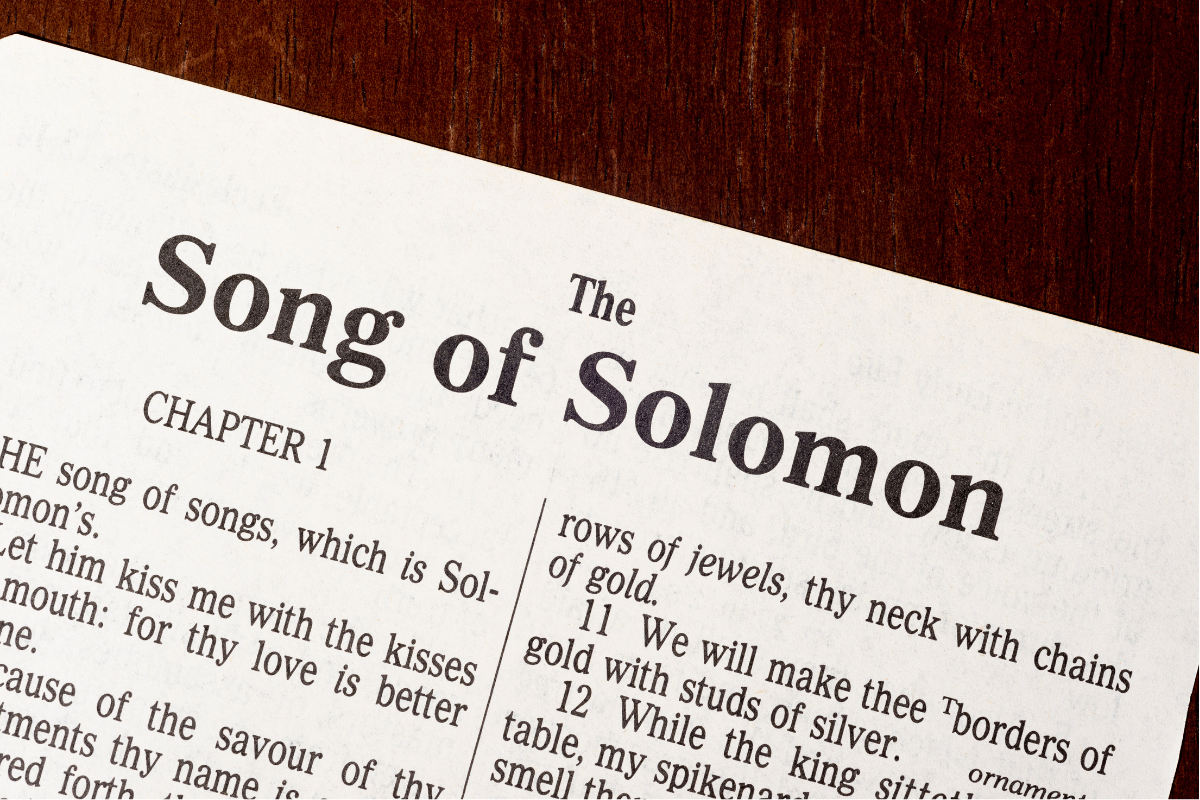 Authorship Is Not the Same as Voice: Let the Text Explain Itself
The Song of Solomon is a poetic dialogue. It contains multiple speakers: a woman, a man, and a chorus. This is obvious to anyone who reads the text carefully instead of rushing to extract a talking point.
“Let him kiss me with the kisses of his mouth: for thy love is better than wine.” – Song of Solomon 1:2
If Solomon were speaking here, the text would portray him expressing romantic desire toward another man—an absurd conclusion no serious reader accepts. The verse itself tells us the speaker is the woman.
“I am black, but comely, O ye daughters of Jerusalem.” – Song of Solomon 1:5
The same voice continues here. Yet instead of asking who is speaking, the argument jumps straight to how this can be used to prove a racial claim.
The very next verse explains what verse five means, but it is routinely ignored.
“Look not upon me, because I am black, because the sun hath looked upon me.” – Song of Solomon 1:6
The woman explains her darker appearance as the result of sun exposure. This is not a declaration of ethnicity—it is a poetic description of labor and circumstance.
The Bible often interprets itself when we are willing to keep reading. Share on X Solomon’s Wisdom, Jeremiah, and Misused Language
No Christian denies Solomon wrote the Song of Solomon. Scripture is explicit.
“And God gave Solomon wisdom and understanding… And he spake three thousand proverbs: and his songs were a thousand and five.” – 1 Kings 4:29–32
The disagreement is not over authorship but interpretation. Claiming Christians deny Solomon’s authorship creates a straw man argument—attacking a position no one is actually holding.
The same pattern of misreading appears when Jeremiah is introduced.
“Judah mourneth, and the gates thereof languish; they are black unto the ground.” – Jeremiah 14:2
The subject of the sentence is not people’s skin—it is the gates. The imagery describes devastation, famine, and judgment.
Buildings reduced to ruin are described as “black unto the ground.” This is poetic language of destruction, not a racial descriptor.
 Scattering Foretold by Christ: Revelation and Symbolic Vision
Confusion about modern Jerusalem is often addressed with speculation instead of Scripture. Jesus already explained what would happen.
“And they shall fall by the edge of the sword, and shall be led away captive into all nations.” – Luke 21:24
Israel would be scattered. Jerusalem would be trampled by Gentiles. This dispersion explains history without requiring racial theories forced onto unrelated passages.
Apocalyptic imagery is another frequent target of misuse.
“His head and his hairs were white like wool, as white as snow.” – Revelation 1:14
This passage describes Christ in a visionary, symbolic setting—representing purity, authority, and eternity. Treating symbolic imagery as a biological description is a category error that leads only to confusion.
Matthew’s Gospel is also pressed into service for arguments it was never meant to make.
“Arise, and take the young child and his mother, and flee into Egypt.” – Matthew 2:13
Egypt was a diverse, cosmopolitan region—a refuge outside Herod’s jurisdiction. The claim that Jesus could only hide there if He matched a specific racial profile misunderstands both history and the text.
Herod searched Bethlehem, not Egypt, because prophecy pointed him there.
 Why This Matters
This discussion is not about defending one skin color over another. It is about honoring Scripture. When verses are isolated, grammar is ignored, and context is discarded, the Bible becomes a tool for ideology rather than truth.
Being accused of ignorance while watching Scripture misused is exhausting. But truth does not require shouting—it requires careful reading.
If you want to see these passages examined carefully in real time, with each claim addressed directly from Scripture, I strongly encourage you to watch the full video.
It demonstrates how quickly weak arguments unravel when the Bible is allowed to speak for itself—and why context is not optional when handling God’s Word.
WATCH THE VIDEO
















Recent Comments