Muslim Tries To CONFUSE English Christian But Gets EXPOSED!
A Muslim street preacher in Shepherd’s Bush, London, engaged a Christian man in a fascinating discussion about Jesus Christ, the reliability of the Gospels, the nature of God, and the differences between Christianity and Islam.
Throughout the conversation, the Muslim preacher attempted to challenge the Christian understanding of Jesus by quoting passages from the Bible. However, many of these arguments raise an important question: Are these Scriptures being interpreted in their proper context?
Let’s examine the major claims, the Biblical evidence, and the lessons Christians can learn from this encounter.
 The Injil and the Four Gospels: Are They Different?
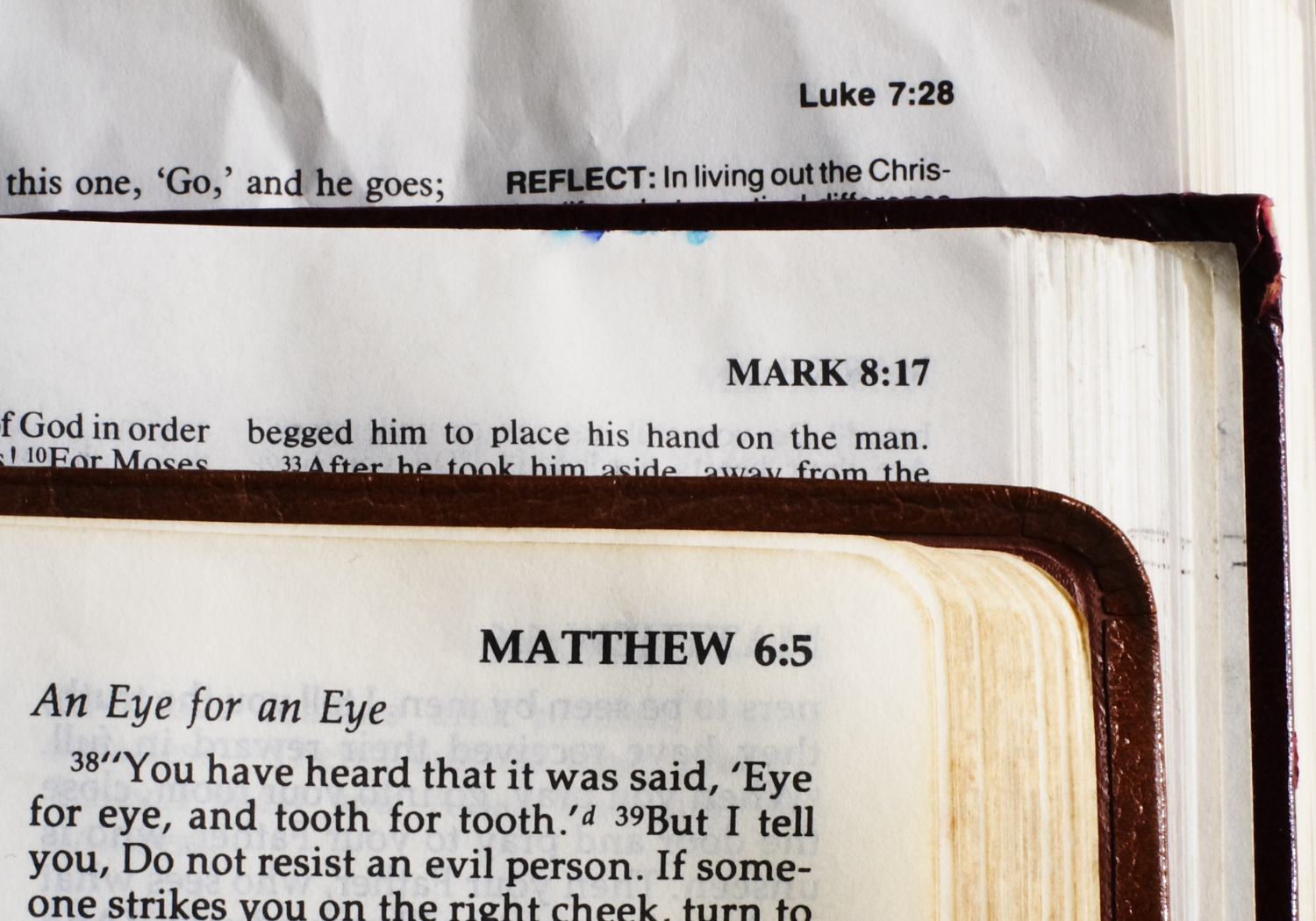
One of the first arguments concerned the Injil, the Arabic term commonly translated as Gospel.
The Muslim preacher argued that the Injil revealed to Jesus was not the same as the four canonical Gospels: Matthew, Mark, Luke, and John.
But this raises an important question: If the Injil is not the Gospel preserved in the New Testament, where is it, and what evidence identifies its contents?
Christians understand the Gospels as inspired accounts of Jesus Christ’s life, ministry, death, and resurrection. The fact that they record his teachings does not make them incompatible with divine revelation.
Mark begins with this declaration:
“The beginning of the gospel of Jesus Christ, the Son of God;” – Mark 1:1
The discussion also touched on the Apostle Paul, whom the Muslim preacher accused of changing Christianity. Yet making that accusation requires evidence that Paul’s teachings contradicted Jesus.
Furthermore, if changing Jesus’ message disqualifies someone as a genuine messenger of God, the same standard must be applied consistently when examining Muhammad’s teachings.
 Apotheosis Versus Incarnation: Did Man Become God?
Another major issue was the preacher’s repeated description of Christianity as believing that a man became God. This confuses two fundamentally different concepts.
Apotheosis refers to a human being becoming divine, an idea found in various ancient religious traditions. Incarnation, however, refers to God taking on human nature.
Christianity teaches the latter. Jesus did not begin as an ordinary man who subsequently achieved divinity. Christians believe the eternal Word became flesh.
“And the Word was made flesh, and dwelt among us, (and we beheld his glory, the glory as of the only begotten of the Father,) full of grace and truth.” – John 1:14
The distinction matters because arguments against human beings becoming gods do not automatically refute the Christian doctrine of God becoming man.
 Were the Jews Expecting God to Appear on Earth? Does the Old Testament Say God Cannot Become Man?
During the discussion, the Christian man referred to Old Testament prophecies and the Jewish expectation of a Messiah.
Although Jewish expectations were diverse, the Hebrew Scriptures contain passages that Christians understand as anticipating a Messiah with divine characteristics.
“For unto us a child is born, unto us a son is given: and the government shall be upon his shoulder: and his name shall be called Wonderful, Counsellor, The mighty God, The everlasting Father, The Prince of Peace.” – Isaiah 9:6
This does not mean every Jew expected God to become incarnate. Rather, it demonstrates why Christians believe the Old Testament provides a foundation for understanding the divine identity of the Messiah.
The Muslim preacher quoted Numbers 23:19, 1 Samuel 15:29, Hosea 11:9, and Malachi 3:6 to argue that God could not become human.
However, examining their contexts reveals a different emphasis.
“God is not a man, that he should lie; neither the son of man, that he should repent: hath he said, and shall he not do it? or hath he spoken, and shall he not make it good?” – Numbers 23:19
“And also the Strength of Israel will not lie nor repent: for he is not a man, that he should repent.” – 1 Samuel 15:29
Both passages contrast God’s faithfulness with human unreliability. Their immediate subject is not whether God could assume human nature.
Similarly, Hosea emphasizes God’s mercy toward Israel.
“I will not execute the fierceness of mine anger, I will not return to destroy Ephraim: for I am God, and not man; the Holy One in the midst of thee: and I will not enter into the city.” – Hosea 11:9
And Malachi declares:
“For I am the LORD, I change not; therefore ye sons of Jacob are not consumed.” – Malachi 3:6
The point is God’s unchanging character and covenant faithfulness. Christians do not believe the incarnation altered God’s divine nature.
God becoming man is not the same as God ceasing to be God. Share on X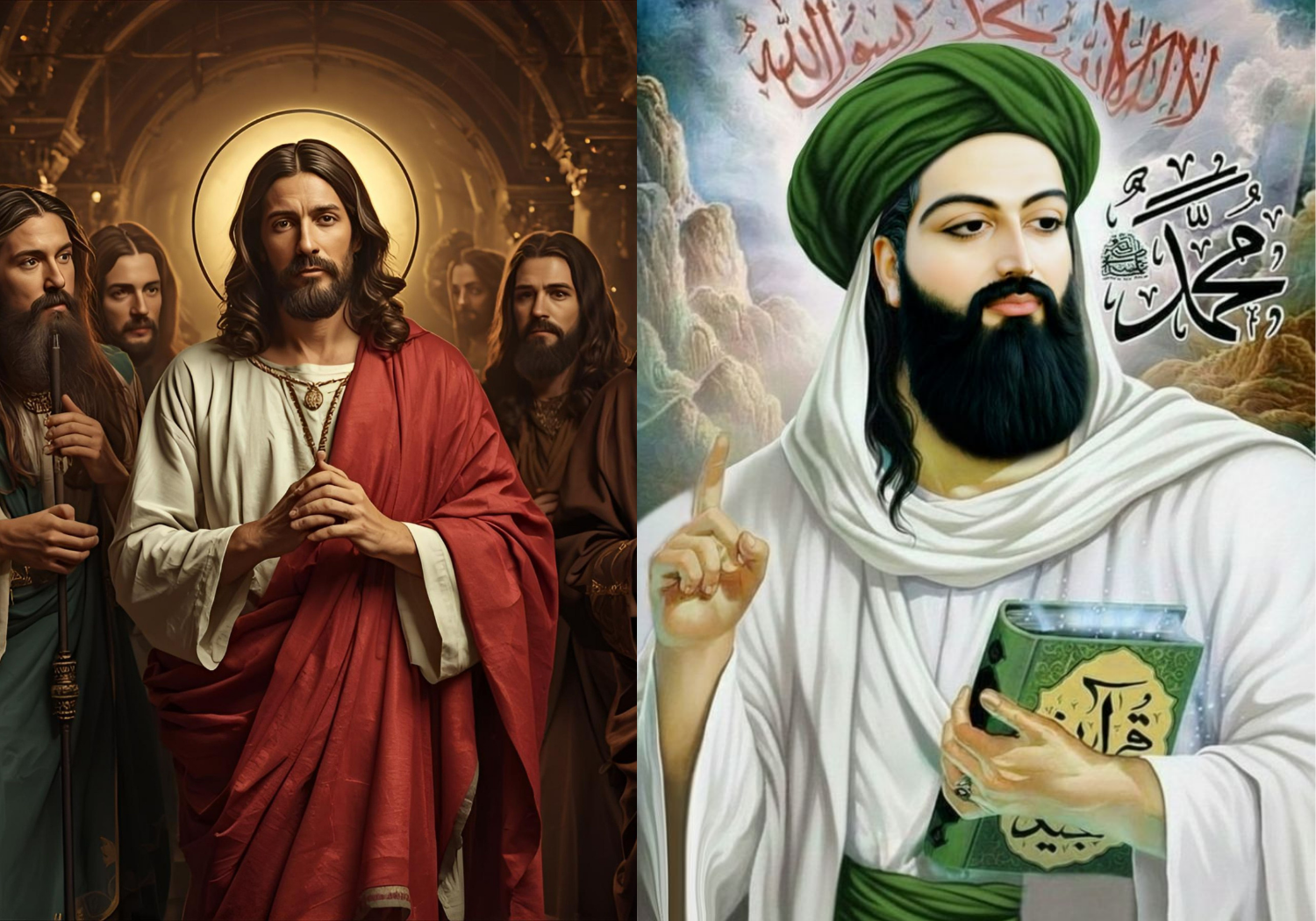 John 17:3 and 1 John 5:20: Comparing Jesus and Muhammad
The preacher also used John 17:3 to argue that Jesus distinguished himself from the only true God.
“And this is life eternal, that they might know thee the only true God, and Jesus Christ, whom thou hast sent.” – John 17:3
However, distinguishing the Father from the Son does not necessarily deny the Son’s divinity. John’s writings repeatedly distinguish Jesus from the Father while also affirming his divine identity.
“And we know that the Son of God is come, and hath given us an understanding, that we may know him that is true, and we are in him that is true, even in his Son Jesus Christ. This is the true God, and eternal life.” – 1 John 5:20
Christians understand this passage as affirming Christ’s deity, although the precise referent of “This” is debated. The important lesson is that John’s theology must be examined as a whole rather than through isolated statements.
One particularly interesting moment occurred when the Christian man explained his interest in business founders. He described studying entrepreneurs such as Steve Jobs and Elon Musk to understand their values, motivations, and achievements.
He then applied the same approach to religious founders.
When examining Jesus, he saw someone who healed the sick, taught love for enemies, and willingly sacrificed his life. When examining Muhammad, he struggled with the military campaigns and political authority associated with his ministry.
His comparison raised a powerful question: What do the actions and teachings of religious founders reveal about their message?
The Muslim preacher responded by appealing to Old Testament warfare.
 1 Samuel 15:3, Luke 19:27 and Quran 2:256
The preacher cited God’s command against Amalek as evidence that Christianity also contains divine commands involving warfare.
“Now go and smite Amalek, and utterly destroy all that they have, and spare them not; but slay both man and woman, infant and suckling, ox and sheep, camel and ass.” – 1 Samuel 15:3
This is undeniably a difficult passage. However, the Christian argument presented distinguishes a specific divine judgment against Amalek from a general command to spread religious belief through military conquest.
The preacher also appealed to Jesus’ words in Luke.
“But those mine enemies, which would not that I should reign over them, bring hither, and slay them before me.” – Luke 19:27
Crucially, these words occur within the parable of the pounds. They are spoken by the nobleman in the story, not presented as an instruction for Christians to execute unbelievers.
The distinction between a parable, divine judgment, and instructions governing religious conduct is essential.
Toward the end of the encounter, the Muslim preacher appealed to Quran 2:256.
“There is no compulsion in religion.” – Quran 2:256
The Christian questioned how this principle should be understood alongside Islamic teachings concerning warfare, religious authority, and the historical treatment of non-Muslims.
The discussion also raised the subject of abrogation, whereby some Islamic scholars understand later revelations as superseding earlier rulings.
However, Muslims disagree about whether Quran 2:256 was abrogated, and the verse’s relationship to Islamic law remains a subject of interpretation.
The Christian’s challenge was ultimately about consistency: religious claims should be evaluated alongside their historical context and practical implications.
 Why Biblical Context Matters
This encounter demonstrates why Christians must understand Scripture beyond memorizing individual verses.
The Muslim preacher raised challenging questions, but the Christian response repeatedly returned to context, the distinction between God becoming man and man becoming God, and the importance of comparing religious teachings fairly.
Whether discussing God’s unchanging nature, the deity of Christ, or Biblical warfare, a verse removed from its context can easily be made to support a conclusion that its author never intended.
For another fascinating encounter involving a Muslim preacher and a Christian in Australia, read the next article. It provides another opportunity to examine competing religious claims and consider why understanding Scripture is essential when defending the Christian faith.
WATCH THE VIDEO
















Recent Comments