
Muslim Preacher RUNS UP On Christian Lady & Gets WIPED OUT!
Public debates often move quickly, and when Bible verses are quoted without their surrounding context, they can sound convincing.
In this discussion, popular Muslim preacher Ali Dawah attempts to persuade a Christian woman that Jesus never claimed to be God.
His argument rests on familiar passages such as John 17:3, John 20:17, and Mark 10, claiming these verses prove Jesus was only a prophet.
However, when each passage is read in context, a very different picture emerges. Rather than denying His deity, Jesus repeatedly speaks and acts in ways that identify Himself with Yahweh while remaining distinct from the Father.
Throughout this conversation, the Christian woman remains gracious and continues pointing back to Scripture, while several of Ali Dawah’s objections lose their force once the surrounding context is considered.
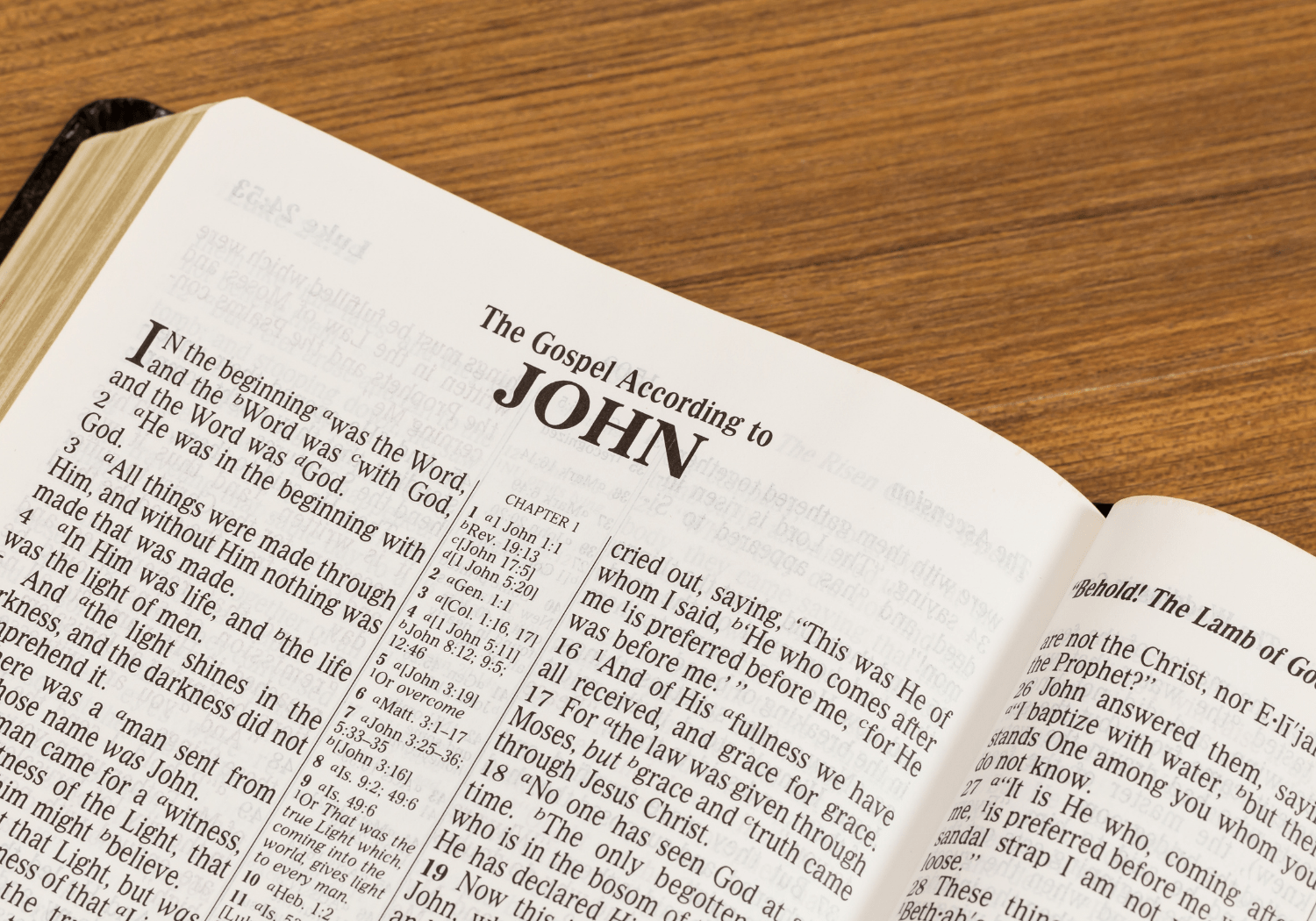 John 10 Is More Than One Verse
One of the biggest mistakes people make in discussions about Christ’s deity is quoting only John 10:30:
“I and my Father are one.” – John 10:30
Muslim apologists frequently respond by pointing to John 17, where Jesus prays that believers may be “one,” arguing that Jesus simply meant unity of purpose. But that objection overlooks the context leading up to John 10:30.
Beginning in John 10:25, Jesus describes Himself as the Shepherd whose sheep hear His voice. He promises them eternal life, declares that no one can snatch them from His hand, and immediately parallels His own hand with the Father’s hand before declaring, “I and my Father are one.”
This language intentionally echoes Psalm 95, a passage about Yahweh Himself.
“For he is our God; and we are the people of his pasture, and the sheep of his hand. To day if ye will hear his voice…” – Psalm 95:7
The similarities are striking. Yahweh’s sheep hear His voice and belong in His hand. Jesus applies those very descriptions to Himself before declaring His unity with the Father. This is far more than agreement in purpose—it is a claim rooted in Old Testament descriptions of Yahweh.
The reaction of Jesus’ audience confirms they understood exactly what He meant, because they immediately attempted to stone Him for blasphemy.
 Does John 17:3 Deny Christ’s Deity?
Ali Dawah repeatedly returns to John 17:3:
“And this is life eternal, that they might know thee the only true God, and Jesus Christ, whom thou hast sent.” – John 17:3
At first glance, some assume this excludes Jesus from being God. But John’s writings consistently distinguish the Father from the Son while affirming the full deity of both.
Just a few verses later, Jesus asks the Father to restore the glory He shared before the world existed.
“And now, O Father, glorify thou me with thine own self with the glory which I had with thee before the world was.” – John 17:5
Only someone who existed before creation could make such a request. Even more importantly, the same author who wrote John 17 later identifies Jesus as eternal life.
“For the life was manifested, and we have seen it… and shew unto you that eternal life, which was with the Father, and was manifested unto us.” – 1 John 1:1–2
John has no difficulty distinguishing the Father and the Son while applying divine titles to Christ. His Gospel begins exactly the same way:
The Word is distinguished from God the Father, yet fully identified as God. Share on X“In the beginning was the Word, and the Word was with God, and the Word was God.” – John 1:1
 “My God and Your God” Doesn’t Create a Contradiction
Another passage often raised is John 20:17.
“I ascend unto my Father, and your Father; and to my God, and your God.” – John 20:17
Some claim this settles the discussion by proving Jesus cannot be God. But Christians have never denied that Jesus became fully human.
Jeremiah reminds us that God is the God of all flesh.
“Behold, I am the LORD, the God of all flesh: is there any thing too hard for me?” – Jeremiah 32:27
Because Christ truly took on human nature, it is entirely appropriate for Him, as the incarnate Son, to speak of the Father as His God. This reflects His humanity, not a denial of His divine nature.
The New Testament actually presents both truths together. Hebrews 1 records the Father addressing the Son with divine language.
“But unto the Son he saith, Thy throne, O God, is for ever and ever…” – Hebrews 1:8
Later in the same chapter, words originally spoken about Yahweh in the Psalms are applied directly to Jesus.
The Bible never forces us to choose between Christ's humanity and His deity. It teaches both. Share on X Reading Difficult Passages in Their Context
Throughout the discussion, Ali Dawah repeatedly paraphrases passages in ways the text itself never says. One example is Mark 10, where he insists Jesus said, “Don’t call me good.”
But that is not what the passage says.
“And Jesus said unto him, Why callest thou me good? there is none good but one, that is, God.” – Mark 10:18
Jesus asks a question. He does not reject the title “good.” Instead, He challenges the rich young ruler to consider the implications of using that title.
Likewise, Psalm 82:6 is often cited to argue that humans are called “gods.”
“I have said, Ye are gods; and all of you are children of the most High.” – Psalm 82:6
Yet Jesus uses this passage not to lower Himself to the level of human judges, but to argue that if Scripture can use that language for earthly rulers, how much more appropriate is it for the One whom the Father sanctified and sent into the world.
Even Mark’s Gospel opens by applying Old Testament prophecy about Yahweh directly to Jesus.
“The beginning of the gospel of Jesus Christ, the Son of God. As it is written in Isaiah the prophet, “Behold, I send my messenger before your face, who will prepare your way, the voice of one crying in the wilderness: ‘Prepare the way of the Lord, make his paths straight,’”” Mark 1:1–3 ESV
From the opening verses of the Gospel, Jesus occupies the place prepared for Yahweh Himself.
 The Bigger Picture of Who Jesus Is
Perhaps one of the most revealing moments in the discussion comes when the Christian woman asks how Jesus could give eternal life if He were merely a prophet. That question exposes a significant difference between Christianity and Islam.
No prophet ever claimed the authority to grant eternal life or to keep believers eternally secure.
Throughout the debate, the Christian repeatedly returns to Scripture instead of relying on slogans or isolated verses. That is an important reminder for every believer.
Individual passages should never be removed from their context or interpreted apart from the rest of God's Word. Share on XWhen we read John’s Gospel, Hebrews, the Psalms, and the opening chapters of Mark together, they paint a consistent picture.
Jesus is distinct from the Father, yet fully shares the identity, authority, and glory of Yahweh. Share on XHis humility during His earthly ministry reflects His role in the incarnation, not an absence of deity.
If you enjoyed this, be sure to watch this next video, where another common objection about the identity of Christ is examined directly from Scripture.
Continue comparing every claim with God’s Word, and you’ll discover that the testimony of Scripture consistently points to Jesus Christ as far more than a prophet—the eternal Son of God.
WATCH THE VIDEO
















Recent Comments