
What Makes Your Marriage Valid (Religious Ceremony Or Civil)
Marriage has become a confusing subject in today’s world. Some believe a marriage is only valid after signing legal paperwork with the government. Others argue that standing before God alone is enough, making civil registration unnecessary.
As Christians, however, our opinions are not the final authority. Scripture is.
To answer this question, we must begin where marriage itself began—not with governments, traditions, or cultures, but with God. The Bible reveals both the purpose of marriage and how believers should conduct themselves as citizens under earthly authorities.
When those two truths are held together, the picture becomes much clearer.
 God Established Marriage from the Beginning
The first marriage was not designed by a government but by God Himself. In Genesis, the Lord created mankind as male and female before bringing them together in the first marriage. That means God, not culture, is the originator of marriage.
Because He designed it, He alone has the authority to define it.
“So God created man in his own image, in the image of God created he him; male and female created he them.” — Genesis 1:27
“Therefore shall a man leave his father and his mother, and shall cleave unto his wife: and they shall be one flesh.” — Genesis 2:24
These verses establish several important principles. Marriage is between one man and one woman. It involves leaving one’s parents, forming a new family unit, and becoming “one flesh.” That blueprint has never changed.
One of the most practical illustrations from the discussion was the reminder that Adam and Eve did not have a government office where they could register their marriage. God Himself united them because He was physically present in the Garden.
Today, however, our circumstances are different. While God’s design remains unchanged, the way we demonstrate obedience includes living faithfully under the authorities He has established.
Throughout Scripture we also see wedding celebrations taking different forms. Samson held a wedding feast, and Jesus attended the wedding at Cana where He performed His first miracle.
Yet the Bible never teaches that a seven-day celebration, a lavish ceremony, or a particular venue is what makes a marriage legitimate. Those customs may differ across cultures, but obedience to God’s design remains the constant.
“Jesus saith unto them, Fill the waterpots with water. And they filled them up to the brim.” — John 2:7
The miracle at Cana reminds us that God cares about marriage, but it does not prescribe a required wedding format.
The heart of Biblical marriage is submission to God's pattern rather than adherence to cultural traditions. Share on X Honoring God Also Means Respecting God-Ordained Authority
Because God established marriage, His definition always comes first. Yet the Bible also teaches that civil authorities exist under God’s sovereign rule.
“Let every soul be subject unto the higher powers. For there is no power but of God: the powers that be are ordained of God.” — Romans 13:1
Paul continues by explaining that governing authorities exist to promote good and restrain evil. Christians are therefore called to obey the laws of the land whenever those laws do not require disobedience to God.
This creates an important balance. A government may legally recognize relationships that Scripture does not define as marriage. Civil legality does not automatically equal Biblical legitimacy. God’s Word remains the highest authority.
At the same time, when governments simply require couples to register their marriages through lawful procedures, Christians have every reason to comply. Completing legal paperwork does not replace God’s authority—it reflects obedience to the authorities He has established.
Some believers may have a church ceremony with family, friends, or church leaders present and consider the matter settled.
While such a ceremony may genuinely express a covenant before God, the Biblical principle found in Romans 13 encourages believers to take the additional step of complying with lawful civil requirements whenever possible.
“Whosoever therefore resisteth the power, resisteth the ordinance of God.” — Romans 13:2
This principle extends beyond marriage. Paul even points to paying taxes as another example of submitting to legitimate governing authority. Christians should not seek loopholes simply because they believe they are being “more spiritual.”
Instead, our lives should demonstrate integrity before both God and society.
 When God’s Law and Human Law Conflict
None of this means governments possess unlimited authority. Scripture consistently shows that God’s commands always take priority whenever earthly authorities demand sin.
If a government attempts to redefine marriage in a way that contradicts God’s Word, believers must stand with Scripture.
The Creator's definition never changes, regardless of cultural trends or legal decisions. Share on XHowever, when civil laws simply provide an orderly process for recognizing Biblical marriages, there is no conflict. In those situations, obeying the law is itself an act of obedience to God.
The goal is not choosing between God and government. Rather, it is recognizing that God has established both the institution of marriage and the principle of lawful authority. When both align, Christians can joyfully honor each.
“For rulers are not a terror to good works, but to the evil… Do that which is good, and thou shalt have praise of the same.” — Romans 13:3
“For promotion cometh neither from the east, nor from the west, nor from the south. But God is the judge: he putteth down one, and setteth up another.” — Psalm 75:6–7
These verses remind us that God remains sovereign over every earthly authority. Our confidence ultimately rests in Him, not in governments.
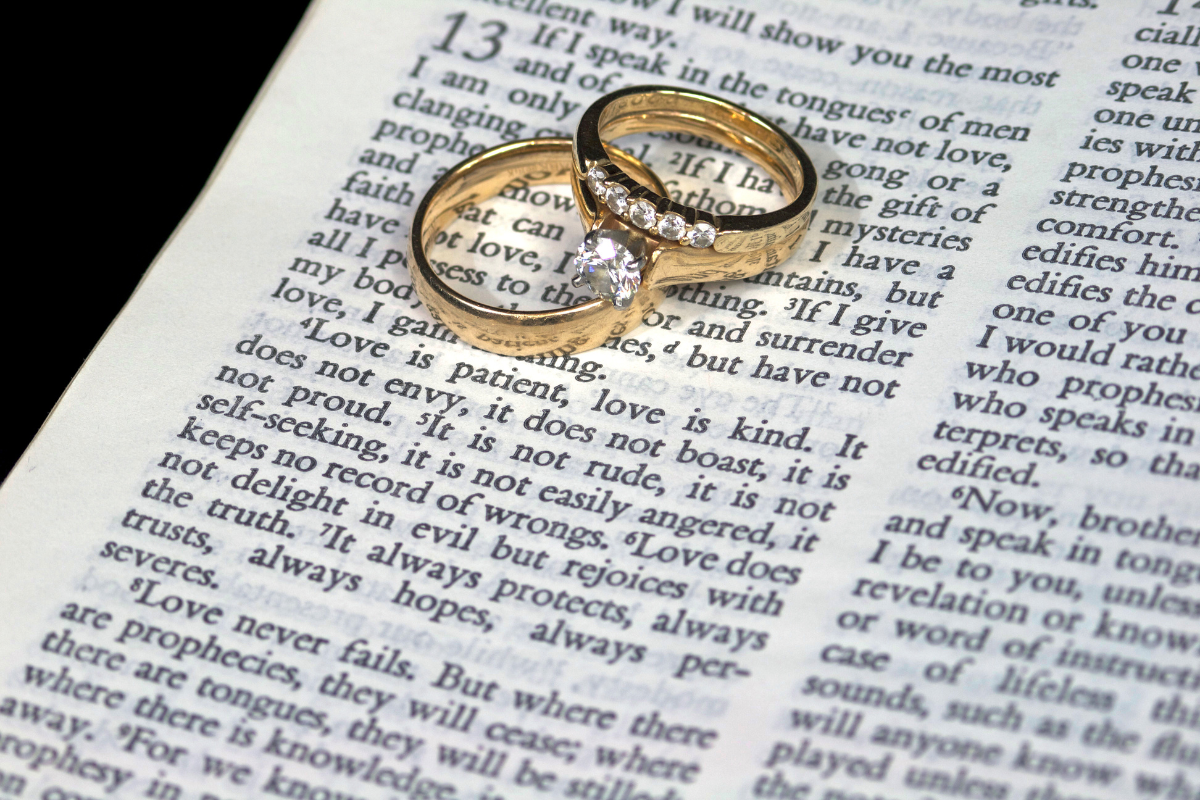 Marriage in God’s Eyes
A Biblical marriage begins with God’s design, not man’s approval. God defines what marriage is, who marriage is for, and the principles that govern it.
Yet the same God who established marriage also instructs Christians to respect lawful civil authority whenever doing so does not compromise His Word.
The ideal is not choosing between a religious ceremony or a civil registration. Whenever possible, faithful believers should honour both—entering marriage according to God’s design while also fulfilling the legal responsibilities required by the nation in which they live.
Doing so allows us to maintain a clear conscience before both God and man.
If you’d like to explore this topic further, be sure to read our companion article. It examines the Biblical foundation of marriage in greater depth and answers additional questions that many Christians have about marriage, covenant, and God’s design.
WATCH THE VIDEO














Recent Comments