
Christian DESTROYS Hebrew Israelites LYING About The Bible!
One of the most revealing moments in this street interaction isn’t the question about Jesus’ appearance—it’s how quickly the conversation is redirected away from it.
A Christian man approached a group of Hebrew Israelites and asked a question that was actually fair and honest.
He openly acknowledges that Jesus likely didn’t look like the way Western art often portrays Him. That should have been the end of the tension.
Instead, what follows is a textbook example of misdirection.
Rather than answering the original question directly, the response shifts into a completely different argument—one that sounds spiritual and Biblical, but ultimately avoids dealing with the issue at hand.
This tactic isn’t accidental. It’s a strategy designed to confuse rather than clarify.
This is where discernment matters.
“And Jesus answered and said unto them, Take heed that no man deceive you. For many shall come in my name, saying, I am Christ; and shall deceive many.” – Matthew 24:4–5
Jesus doesn’t begin His end-times warning by talking about nations, wars, or earthquakes. His first warning is about deception—specifically, deception that comes from people using His name.
 How a Red Herring Works in Theology
A red herring is a distraction that pulls attention away from the real issue. In this exchange, the discussion starts with a simple question: Is there a physical description of Jesus in Scripture?
Instead of answering that directly, the conversation detours into emotional rhetoric about images of Jesus in movies, Western civilization, and alleged global deception. None of that answers the Biblical question. It only stirs suspicion and outrage.
You can actually hear the confusion building in real time. The Christian man isn’t being hostile—he’s trying to follow the argument. But the argument keeps changing lanes.
That’s usually a sign that something else is going on.
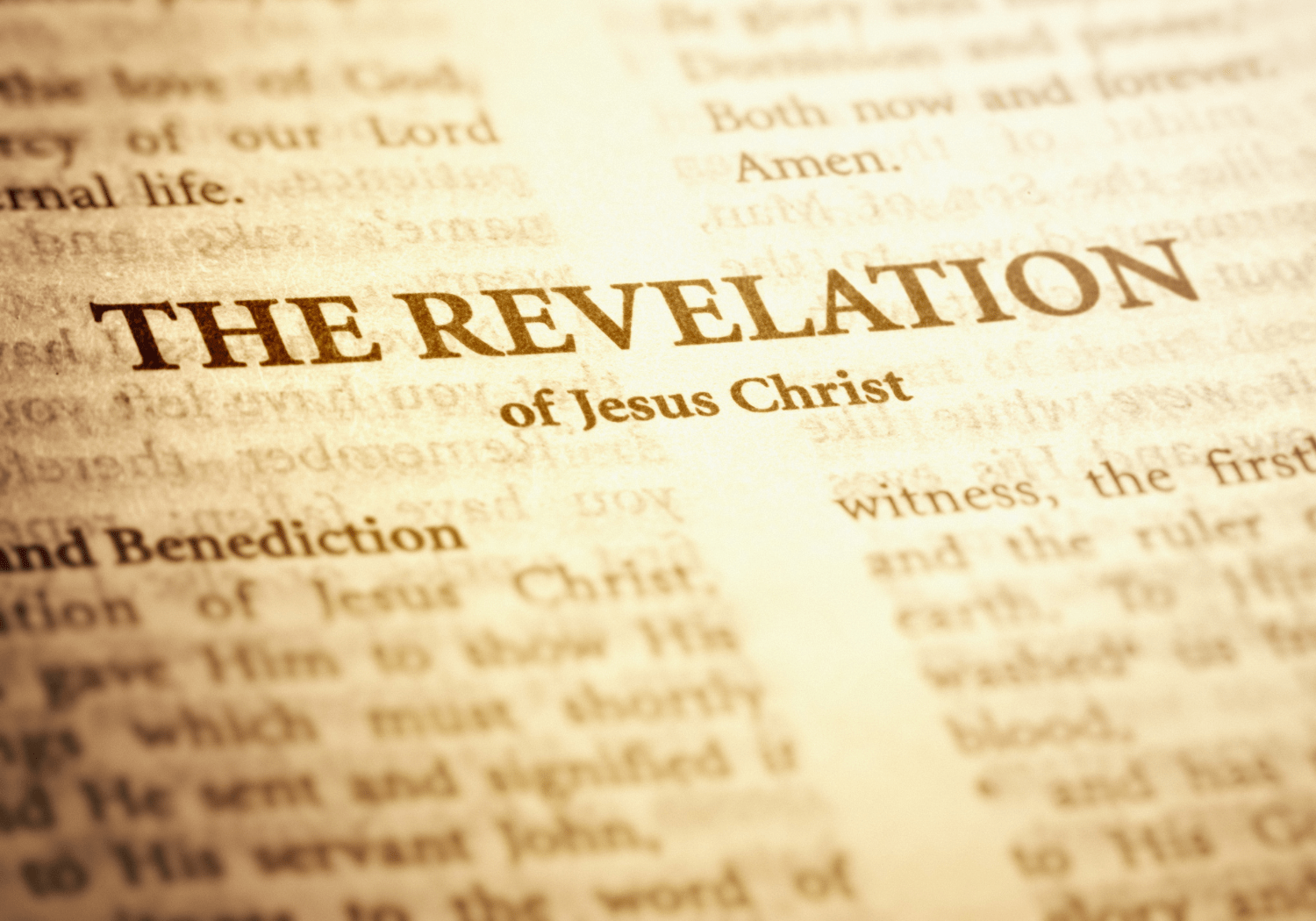 Matthew 24 and Revelation 1
Matthew 24 is introduced as if it solves the question of Jesus’ appearance. But it doesn’t. The passage is about deception surrounding Christ’s identity, not artistic depictions centuries later.
The irony is striking. A warning about deception becomes the tool used to deceive.
When people quote Scripture without context, they make it sound authoritative while saying something entirely different. That’s why slowing down matters.
Eventually, the conversation turns to the book of Revelation—specifically, Revelation chapter 1. This is where things become even more revealing.
Before touching verse 14, Revelation itself tells us how we are supposed to read the book.
“The Revelation of Jesus Christ, which God gave unto him, to shew unto his servants things which must shortly come to pass…” – Revelation 1:1
Revelation is not a random physical description manual. It is prophetic, symbolic, and visionary. John is receiving a vision meant to communicate theological truth, not skin tone.
That context is critical.
 John’s Vision on Patmos and The Passage Everyone Quotes—and Misquotes
John tells us exactly how this vision comes to him.
“I was in the Spirit on the Lord’s day, and heard behind me a great voice, as of a trumpet…” – Revelation 1:10
This isn’t Jesus walking by in Galilee. This is the risen, glorified Christ revealed in a prophetic vision. Treating this passage as a literal, racial identifier ignores the genre and purpose of the text.
Another focal point is Revelation 1:14.
“His head and his hairs were white like wool, as white as snow; and his eyes were as a flame of fire.” – Revelation 1:14
Here’s where the deception becomes obvious.
The text does not say “the hair on His head and His beard.” That language is added. The verse clearly separates head and hair. The imagery describes purity, glory, wisdom, and divine authority—not ethnicity.
A “white head like wool” is not a racial category. It’s symbolic language—just like eyes of fire and a voice like many waters.
When interpreters insert words that aren’t there, they aren’t explaining Scripture. They’re rewriting it.
 When a Doctrine Depends on Adding to the Text: Why This Matters More Than Appearance
One of the most important observations made is this: if an argument only works after you add words to the Bible, the argument is already lost.
The Bible knows how to describe a beard. It does so in many places. Revelation 1:14 doesn’t.
The moment someone has to quietly modify the text to support their doctrine, they’ve stopped submitting to Scripture and started using it.
For certain groups, this isn’t a side issue—it’s central to their message. Accepting a specific racial identity of Jesus becomes a test of orthodoxy. Disagreeing is framed as believing a “false gospel.”
That’s exactly why Paul’s warning about adding to the gospel matters so much.
The Bible doesn’t call us to believe in a particular artistic rendering of Christ. It calls us to believe in who He is and what He accomplished.
When secondary issues replace the gospel itself, deception has already taken root.
 The Quiet Ending Says Everything
The conversation eventually ends—not with clarity, but with disengagement. The Christian man leaves, not because he was refuted, but because the discussion never actually addressed his question.
And that may be the most telling part of all.
Truth doesn’t need to dodge. It doesn’t need distractions or emotional detours. It can sit calmly in the text and let Scripture speak for itself. Share on XTo see another interaction unpacked carefully—how Scripture is quoted, where words are added, and how context is ignored—watch the next video.
It will equip you to recognize these same tactics when you encounter them again.
WATCH THE VIDEO
















Recent Comments