
Muslim RUNS UP ON Christian Lady & Gets EXPOSED BADLY!
Street debates often move quickly, but the biggest mistakes usually happen when someone ignores the context of Scripture.
In a recent discussion on John’s Gospel, Muslim preacher Hamza challenged a Christian lady by arguing that Christians misunderstand their own Bible, claiming they read ambiguous passages as though they are clear while explaining away verses that contradict their beliefs.
At first glance, the argument may sound persuasive. However, when the surrounding passages are examined, and John’s Gospel is allowed to interpret itself, a very different picture emerges.
Rather than weakening the doctrine of the Trinity, the conversation actually highlights why context matters so much when studying God’s Word.
 John 10 Is About More Than One Verse
Many objections focus exclusively on Jesus’ statement, “I and my Father are one” (John 10:30). Yet isolating one sentence from the surrounding verses often creates confusion.
The entire section begins with Jesus identifying Himself as the Good Shepherd, describing His sheep as those who hear His voice and receive eternal life from Him.
He declares that no one can pluck them from His hand before immediately saying that no one can pluck them from the Father’s hand, concluding with the powerful statement that He and the Father are one.
This progression is significant because Jesus is drawing from Psalm 95, where Yahweh is described as the Shepherd of His people.
“O come, let us worship and bow down: let us kneel before the Lord our maker. For he is our God; and we are the people of his pasture, and the sheep of his hand. To day if ye will hear his voice,” Psalm 95:6-7
By applying this imagery to Himself, Jesus does far more than claim agreement with the Father. He places Himself within an Old Testament description that belongs to Yahweh alone. That explains why His audience immediately understood the seriousness of His words.
 Context Resolves Alleged Ambiguity
Throughout the debate, Hamza repeatedly described John 10:30 as an example of “syntactical ambiguity,” arguing that Jesus could merely be referring to unity of purpose rather than sharing the divine nature.
Christians certainly believe the Father and Son are perfectly united in purpose. But Scripture gives us no reason to think that is all Jesus meant. The context points to both unity of mission and unity of divine identity.
This creates a false dilemma. The statement does not have to mean one thing or the other. Throughout John’s Gospel, Jesus consistently presents Himself as distinct from the Father while sharing the Father’s divine authority, glory, works, and identity.
“And I give unto them eternal life; and they shall never perish, neither shall any man pluck them out of my hand. My Father, which gave them me, is greater than all; and no man is able to pluck them out of my Father’s hand. I and my Father are one.” John 10:28-30
The surrounding verses explain why the statement carries such weight.
 Does John 17:3 Disprove the Trinity?
The discussion eventually turned to John 17:3, a passage frequently cited against the doctrine of the Trinity.
“And this is life eternal, that they might know thee the only true God, and Jesus Christ, whom thou hast sent.” – John 17:3
Some argue this excludes Jesus from being God. Yet John’s own writings prevent that conclusion.
The same author who recorded John 17 also opens his Gospel by declaring:
“In the beginning was the Word, and the Word was with God, and the Word was God.” – John 1:1
Near the end of his first epistle, John writes:
“…This is the true God, and eternal life.” – 1 John 5:20
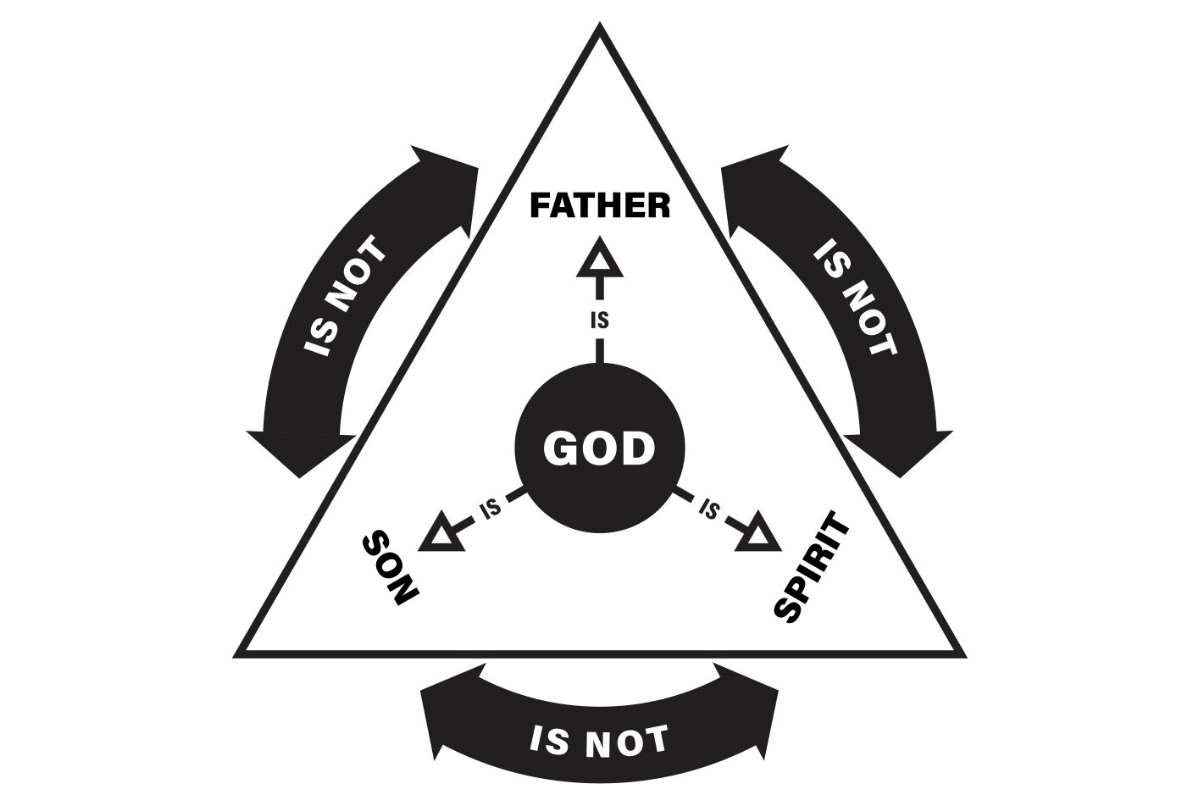
John repeatedly distinguishes the Father and the Son while also attributing deity to Christ. The distinction between persons never removes Christ’s divine nature.
Instead, it fits perfectly with the Biblical doctrine of the Trinity—one God existing eternally as Father, Son, and Holy Spirit.
 Read the Whole Bible, Not Isolated Verses
One memorable moment came when another Christian participant reminded everyone that no major doctrine is built upon a single verse alone. Instead, believers should examine the whole counsel of God before drawing conclusions.
That is exactly how Biblical theology should work.
Rather than jumping from one isolated verse to another, Christians read passages in their immediate context before comparing them with the rest of Scripture. This is why John’s Gospel is so important.
Again and again, John presents Jesus as distinct from the Father while simultaneously sharing God’s glory, authority, and identity.
This balanced approach prevents readers from forcing one passage to contradict another.
“Study to shew thyself approved unto God… rightly dividing the word of truth.” – 2 Timothy 2:15
Hamza unintentionally weakened his own case by applying a method that ultimately worked against his interpretation.
He argued that readers should interpret ambiguous passages through clearer ones, yet he overlooked the broader testimony of John’s writings.
Throughout both the Gospel of John and First John, John plainly affirms Christ’s deity, providing the very clarity Hamza claimed to be seeking.
Later in the debate, the same inconsistency surfaced again. After the discussion turned to John 17:5, where Jesus speaks of the glory He shared with the Father before the world existed, the response shifted from engaging with the text to appealing to personal religious beliefs instead of allowing Scripture to interpret itself.
Every reader brings assumptions to a text. The real question is whether we are willing to let Scripture correct those assumptions. Share on X Let Scripture Interpret Scripture
Debates like this remind us that understanding the Bible requires more than quoting isolated verses. It requires reading passages in context, comparing Scripture with Scripture, and allowing the entire Biblical witness to shape our theology.
When John’s Gospel is read as a whole, it consistently presents Jesus as distinct from the Father while fully sharing the divine identity. That is precisely why the historic doctrine of the Trinity remains firmly rooted in Scripture rather than in a handful of isolated proof texts.
If you enjoyed this discussion and want to see the Biblical evidence explored even further, be sure to watch this related video. It expands on many of these themes and demonstrates why careful attention to context is essential when evaluating objections to the Christian faith.
WATCH THE VIDEO
















Recent Comments