
Rabbi Tovia Singer CHALLENGED By Hebrew Israelite & Gets EXPOSED!
In a public exchange involving an African Hebrew Israelite questioner and Rabbi Tovia Singer, a familiar objection is raised—one that surfaces repeatedly in debates about messianic prophecy.
The question sounds reasonable on the surface: Where does the idea of one future Messiah come from when the Hebrew Scriptures speak of many anointed figures, such as kings and priests?
The argument hinges on the use of language. In the Hebrew Bible, priests are anointed. Kings are anointed. Even foreign rulers are occasionally called “anointed.”
So the claim follows that the concept of one future Messiah is a later invention rather than a Biblical expectation.
However, as the discussion unfolds, the issue is no longer about vocabulary. It becomes clear that the real problem is inconsistency—definitions shifting mid-argument, affirmations followed by denials, and clarity replaced with ambiguity.
 Messiah Means “Anointed”: Isaiah 45 and the Problem of Over-Generalization
One of the central points raised is that the word Messiah simply means “anointed.” This is true. In Hebrew, Mashiach refers to someone set apart for a role—often a leadership role—by God.
This is why the book of Leviticus uses the term frequently, particularly in reference to priests. The anointing was part of the inauguration process.
Even the verb related to anointing, often associated with Moses (Moshe), points to preparation for leadership rather than divinity.
But acknowledging that multiple people were anointed does not eliminate the Biblical expectation of a singular, future ruler.
The Tanakh regularly moves from general categories to specific promises. That pattern is precisely what happens with messianic prophecy.
To demonstrate how broad the term “anointed” can be, Isaiah 45:1 is cited:
“Thus saith the LORD to his anointed, to Cyrus…””—Isaiah 45:1
Cyrus, a Persian king, is explicitly called God’s anointed. This proves that Mashiach is not restricted to Israelites or to priests and kings within Israel.
But this point actually undermines the objection rather than strengthening it. If “Messiah” can refer broadly to those appointed by God, then the word itself cannot be used to dismiss the existence of a unique, promised Messiah.
The term’s flexibility does not erase the specificity of later prophecies.
 Ezekiel and the Promise of One Shepherd: Does the Word “Messiah” Appear in the Tanakh?
The discussion turns decisively to Ezekiel, where the ambiguity disappears.
“And I the LORD will be their God, and my servant David a prince among them…””—Ezekiel 34:24–25
“And David my servant shall be king over them; and they all shall have one shepherd…””—Ezekiel 37:24–25
These passages are critical. Ezekiel does not speak of recurring leaders or a collective system of anointed figures. He speaks of one shepherd, one king, and one covenant of peace.
David had been dead for hundreds of years when Ezekiel wrote this. The text is not pointing backward. It is pointing forward to a future Davidic ruler.
This is precisely why both Jewish and Christian interpreters have historically recognized these passages as messianic.
Another claim made is that although the word Messiah appears in the Tanakh, it never refers to the Messiah. This assertion introduces further confusion.
On one hand, Ezekiel is said to be clearly speaking about the Messiah. On the other hand, it is claimed that the Messiah is not referred to as the Messiah in the Tanakh. These two claims cannot comfortably coexist.
Psalm 2 exposes this tension.
“Yet have I set my king upon my holy hill of Zion…Thou art my Son; this day have I begotten thee.” – Psalm 2:6–7
Psalm 2 has long been understood as a messianic psalm. It presents a divinely appointed king whose authority extends beyond Israel to the nations.
Attempting to strip this passage of messianic meaning only deepens the inconsistency.
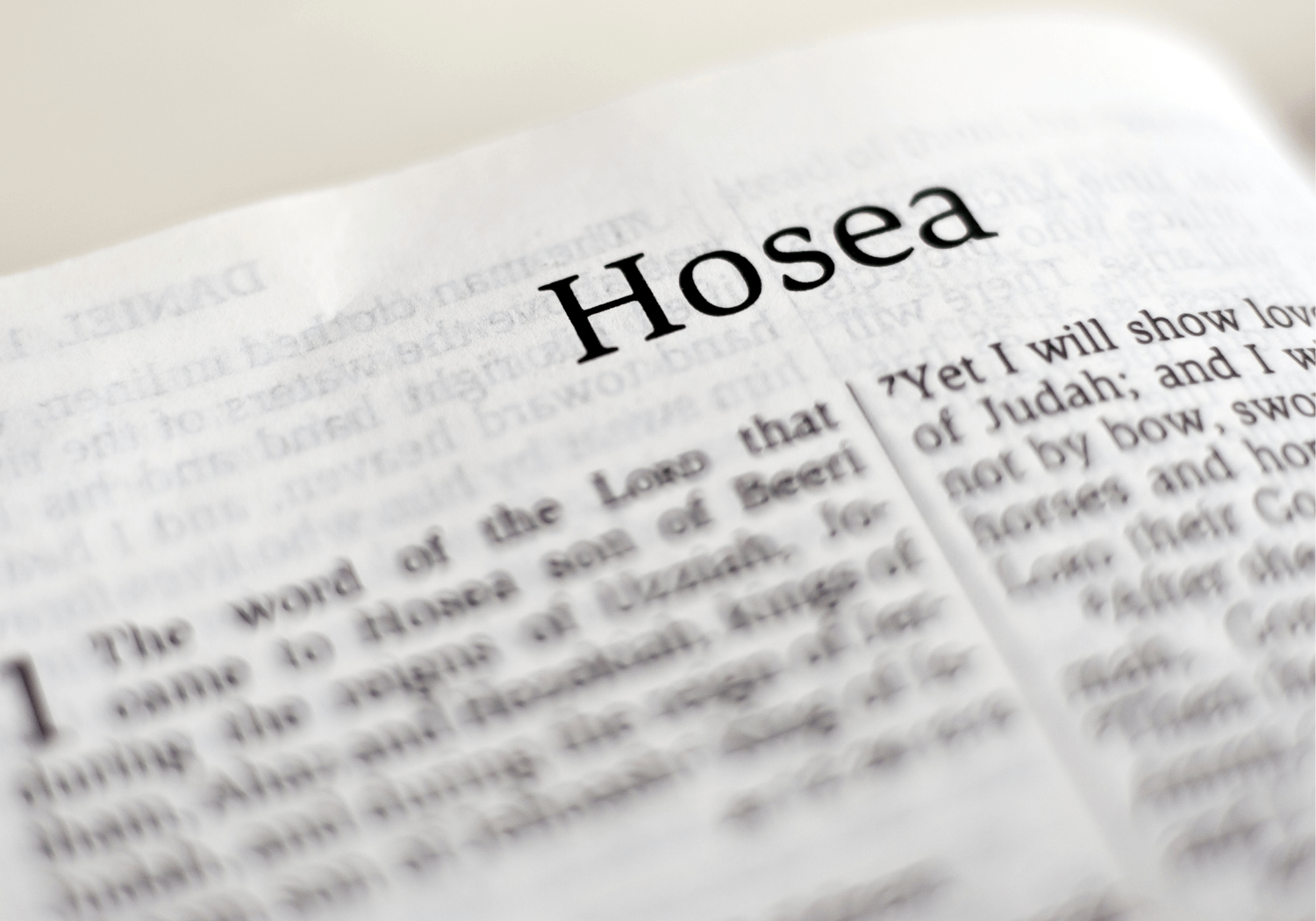 Hosea and Isaiah 61: the Role of the Anointed One
Prophet Hosea adds historical depth to the discussion.
“For the children of Israel shall abide many days without a king…Afterward shall the children of Israel return, and seek the LORD their God, and David their king…”—Hosea 3:4–5
Hosea explicitly describes a prolonged period without a king, followed by a return to “David their king” in the latter days. This cannot refer to an ongoing cycle of anointed leaders. It points to a future restoration centered on a singular Davidic figure.
Isaiah 61 is also raised, particularly because of its emphasis on mission rather than title.
“The Spirit of the Lord GOD is upon me; because the LORD hath anointed me…” – Isaiah 61:1
The passage describes healing, liberation, and restoration. In the discussion, confusion arises over whether the Messiah performs miracles.
At one moment, miracles are dismissed as a gospel concept. Moments later, that dismissal is walked back.
The inconsistency is striking. Isaiah presents an anointed figure empowered by God’s Spirit to transform lives and nations.
Whether one labels these actions “miracles” or not, the passage clearly describes divine authority operating through a person, not merely an era.
 The Davidic Covenant: Daniel 7 and the Son of Man
The conversation eventually returns to the foundation of messianic hope: God’s promise to David.
“And thine house and thy kingdom shall be established forever…”—2 Samuel 7:12–16
This is not abstract theology. It is a covenant involving lineage, kingship, and continuity. A throne requires an heir. An eternal kingdom requires a king.
To deny a future Messiah while affirming the Davidic covenant is to affirm the promise while denying its fulfillment.
Daniel 7 brings the discussion to its climax.
“One like the Son of man came with the clouds of heaven…And there was given him dominion, and glory, and a kingdom…””—Daniel 7:13–14
This figure is distinct, personal, and exalted. He is acknowledged by all nations and given everlasting authority. The imagery cannot be flattened into symbolism without doing violence to the text.
 Why the Exchange Ultimately Reveals Confusion
The problem is not a shortage of Biblical material. The problem is a refusal to let Scripture speak plainly. When readers approach the Hebrew Bible as a unified whole—without selective narrowing—the expectation of one future, Davidic Messiah consistently emerges.
This confusion does not remain confined to messianic discussions. The same pattern surfaces whenever critics challenge Scripture with unequal standards—demanding rigorous proof from the Bible while quietly relaxing those demands for their own claims.
If you want to check out another instance where the same inconsistencies are shown, check out this video. It reinforces the broader issue raised—when arguments rely on shifting definitions and uneven standards, they generate confusion rather than truth.
Whether the topic is Moses, the Messiah, or Scripture itself, consistency remains the key test.
WATCH THE VIDEO
















Recent Comments