
He Actually Said Jesus Sinned On The Mount Of Transfiguration!
One of the more surprising claims that comes up in discussions is the idea that Jesus sinned on the Mount of Transfiguration by supposedly communicating with “familiar spirits.”
This argument usually points back to Old Testament warnings about necromancy and spiritual practices forbidden by God.
In this post, we’ll walk through the logic behind that claim, examine the relevant passages, and show why Scripture actually presents the Transfiguration as a moment of divine affirmation — not disobedience.
 Understanding the Claim: Deuteronomy and Familiar Spirits
The argument begins in Deuteronomy 18:9–12, where God warns Israel not to imitate pagan nations by practicing divination, sorcery, or consulting familiar spirits.
These practices were connected to rebellion against God and reliance on occult sources rather than divine revelation.
“When thou art come into the land which the Lord thy God giveth thee, thou shalt not learn to do after the abominations of those nations. There shall not be found among you and one that maketh his son or his daughter to pass through the fire, or that useth divination, or an observer of times, or an enchanter, or a witch. Or a charmer, or a consulter with familiar spirits, or a wizard, or a necromancer. For all that do these things are an abomination unto the Lord: and because of these abominations the Lord thy God doth drive them out from before thee.” – Deuteronomy 18:9–12
God commands Israel not to engage in divination, witchcraft, or consultation with the dead, calling such practices an abomination.
This command was given to protect Israel from pagan corruption as they entered the promised land. The context matters: these practices involved humans seeking hidden knowledge apart from God.
 King Saul and The Mount of Transfiguration: A Revelation of Glory
A powerful Old Testament example is King Saul. When God stopped speaking to him because of his rebellion, Saul turned to a medium to gain insight — something he himself had previously outlawed.
His desperation led him into direct disobedience, and Scripture presents this as sinful and judged by God.
- Saul sought revelation outside of God’s will.
- His actions violated the command in Deuteronomy.
- The situation was driven by fear and rebellion — not divine approval.
This background is important because some critics try to place Jesus in the same category during the Transfiguration. But the comparison breaks down immediately once we look at the Gospel accounts.
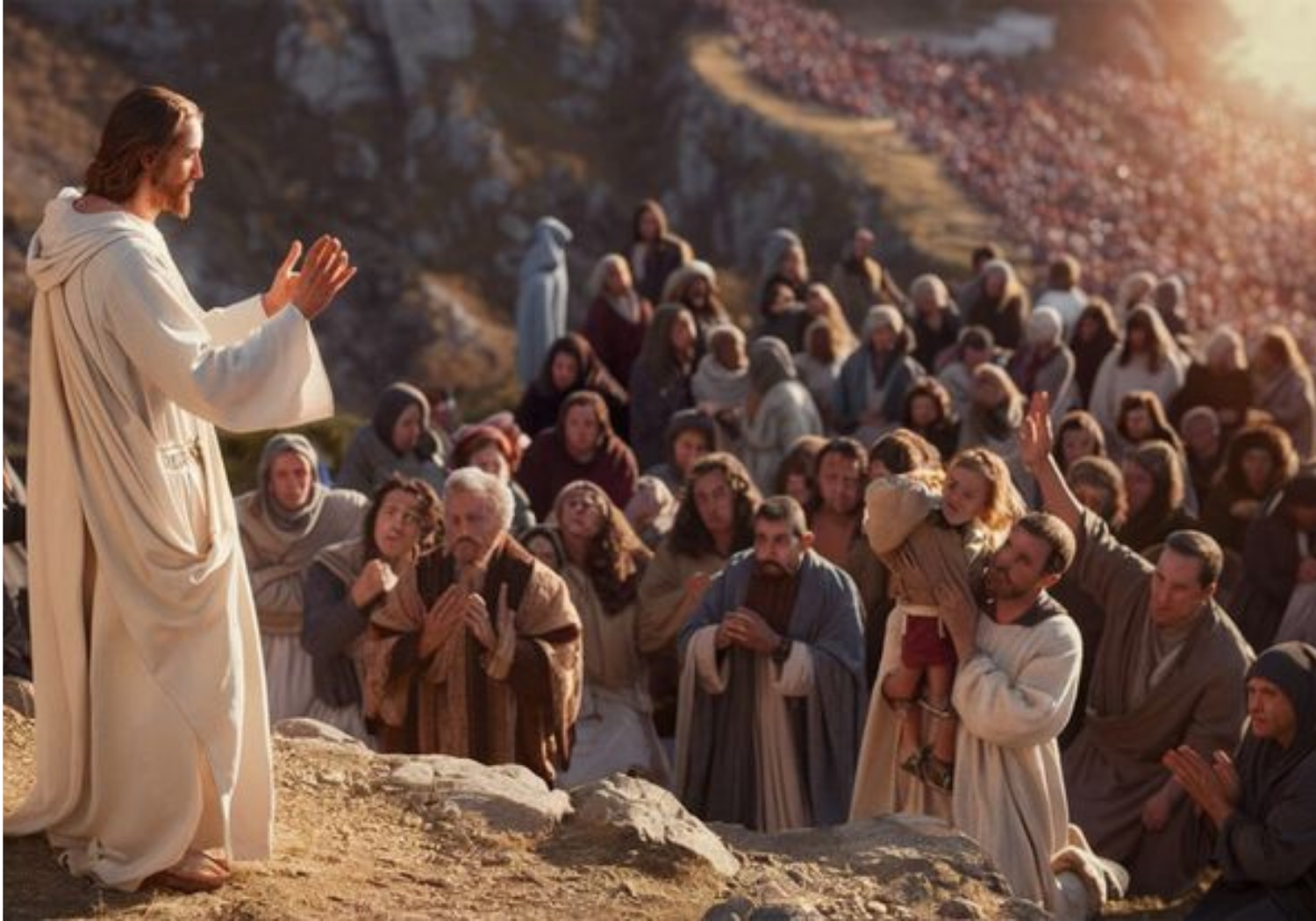
In Matthew 17:2–5, Jesus takes Peter, James, and John up a mountain. There, His appearance changes, revealing His glory — a moment recorded across multiple Gospels because of its significance.
Jesus is transfigured before the disciples, His face shining like the sun, and a voice from the cloud declares:
“This is my beloved Son, in whom I am well pleased.”
This is not a secret or forbidden spiritual practice. It is a public, divine revelation witnessed by disciples and confirmed by God Himself.
 Luke’s Account: Appearing in Glory
Luke adds an important detail often overlooked:
“And, behold, there talked with him two men, which were Moses and Elias: Who appeared in glory, and spake of his decease which he should accomplish at Jerusalem.” – Luke 9:30–31
Moses and Elijah appeared “in glory” and spoke with Jesus.
This language matters. The text does not describe necromancy or spirit conjuring. Instead, it presents a supernatural, God-orchestrated event connected to glory and future resurrection hope.
The appearance of Moses and Elijah is not equivalent to consulting the dead — it is a divine unveiling.
Some critics attempt to connect this event with Deuteronomy 13, which warns Israel about false prophets performing signs to lead people away from God.
“Thou shalt not hearken unto the words of that prophet, or that dreamer of dreams: for the Lord your God proveth you, to know whether ye love the Lord your God with all your heart and with all your soul.” – Deuteronomy 13:3
Signs and wonders must never lead people away from the true God. But here’s the key question: Who validates Jesus on the mountain?
God Himself.
The voice from heaven declares Jesus as His beloved Son. If this event were sinful or deceptive, then the Father would be affirming sin — an impossible conclusion that contradicts the entire Biblical narrative.
 The Voice from Heaven: Consistency Across the Gospels
This is not the only time heaven speaks over Jesus. At His baptism we see the same pattern.
“And Jesus, when he was baptized, went up straightway out of the water: and, lo, the heavens were opened unto him, and he saw the Spirit of God descending like a dove, and lighting upon him: And lo a voice from heaven, saying, This is my beloved Son, in whom I am well pleased.” Matthew 3:16–17
This consistency destroys the argument that the voice could be deceptive or unrelated to God the Father. The same heavenly affirmation appears at both the baptism and the Transfiguration.
The Gospel writers are not inventing something new — they are drawing from established messianic expectations.
“And the spirit of the Lord shall rest upon him, the spirit of wisdom and understanding, the spirit of counsel and might, the spirit of knowledge and of the fear of the Lord.” – Isaiah 11:2
“I will declare the decree: the Lord hath said unto me, Thou art my Son; this day have I begotten thee.” – Psalm 2:7
These passages describe a Messiah uniquely affirmed by God. When heaven declares Jesus as the Son, it aligns perfectly with Old Testament prophecy rather than contradicting it.
 The Bigger Picture: What the Transfiguration Really Shows
The Mount of Transfiguration is not about forbidden spiritual contact. It is about:
- Jesus revealing His divine glory
- The Law (Moses) and the Prophets (Elijah) pointing to Him
- The Father publicly affirms the Son
- A preview of future glorification
Rather than proving Jesus sinned, the event confirms His identity as the Messiah.
When Scripture is read in context, the accusation that Jesus sinned on the Mount of Transfiguration simply cannot stand.
Deuteronomy condemns humans seeking forbidden knowledge apart from God — but the Transfiguration is a God-initiated revelation that magnifies Christ and fulfills prophecy.
If you want to go deeper into this discussion to help you understand how to answer similar claims with clarity and confidence, check out the next video.
WATCH THE VIDEO
















Recent Comments