
Exposing the Lies Told by an Orthodox Muslim Preacher
When a Christian minister approached a group outside a mosque, he expected genuine dialogue.
What he encountered instead was a tangle of half-truths, emotional theatrics, and theological confusion—mostly coming from an Orthodox Muslim preacher known as AJ.
It clearly reminds Christians to stay rooted in Scripture and to defend the faith with gentleness and clarity.
The conversation began with a simple question: “Is Jesus God?”
What followed was a spiral of straw-man arguments, misquoted verses, and attempts to pressure the Christian preacher into a corner.
But as the exchange progressed, it became clear that the issue was not a lack of evidence—it was a refusal to examine it honestly.
 The Straw-Man: “Christians Believe a Man Became God”
AJ repeatedly argued that Christians worship “a man who became God,” a claim far removed from historic Christian doctrine. This is the heart of the straw-man argument he leaned on.
Christianity has never taught that a human being rose to the status of God. It teaches the exact opposite: God became man, taking on flesh without ceasing to be divine.
“Christians don’t believe a man became God. Christians believe God became a man.”
This misrepresentation is common in Muslim-Christian dialogues, but Scripture is clear about the nature of Christ.
“And the Word was made flesh, and dwelt among us…” —John 1:14
AJ tried to trap the preacher by insisting that since Jesus’ flesh was created, He cannot be worshipped. He argued:
- “Anything created cannot be worshipped.”
- “Jesus’ flesh is created, therefore worshipping Him is idolatry.”
But Christianity does not claim that believers worship flesh. Christians worship the Person of Christ—fully God, fully man—the eternal Word who took on humanity.
Even in the Old Testament, when God appeared in human form (Genesis 18), worship was given and accepted. God does not cease to be God because He condescends to reveal Himself.
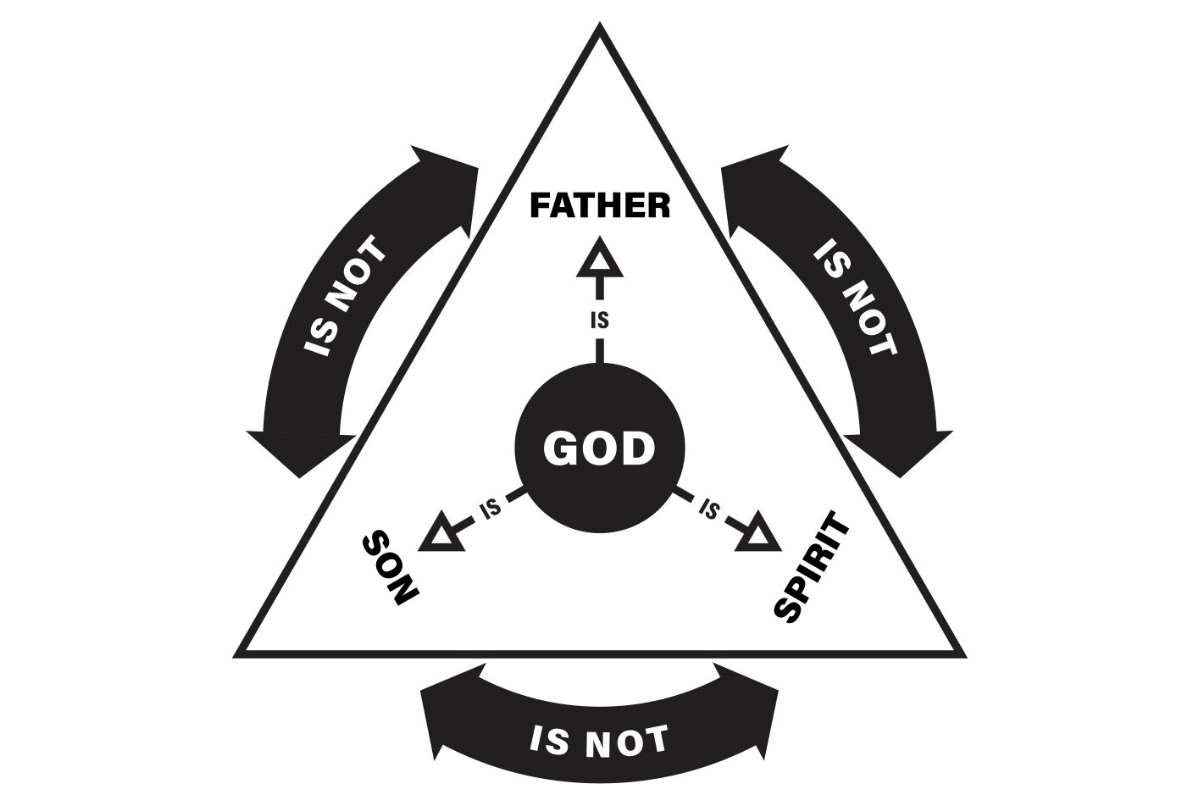 1 John 5:7 and the Gospel
AJ kept insisting that 1 John 5:7 was the Christian preacher’s only “evidence” for the Trinity, and then he immediately tried to dismiss it.
But Christians do not build doctrine on a single verse—the Trinity runs throughout all of Scripture. Still, the verse stands as a powerful testimony:
“For there are three that bear record in heaven, the Father, the Word, and the Holy Ghost: and these three are one.” —1 John 5:7
AJ’s dismissal only revealed unfamiliarity with Christian theology—not a flaw in the doctrine itself.
The most revealing moment came when AJ claimed:
“Christians don’t have the Gospel—we Muslims have it.”
But when asked to identify this “Gospel,” he couldn’t provide an answer. Ironically, the Qur’an itself acknowledges the written Gospel in the possession of Christians during Muhammad’s time.
Qur’an 7:157 explicitly refers to the Torah and the Injil (Gospel) as existing Scriptures.
So the natural question becomes: If the Gospel existed in written form, where is AJ’s version of it today?
That question went unanswered.
 Does Jesus Claim to Be God?: “Only God Is Good”
Muslims often demand that Jesus must say, “I am God” word for word, or else He cannot be divine. But this demand is artificial. Jesus didn’t need to use modern Western phrasing to communicate His identity.
He used Jewish expressions that His audience clearly understood as divine claims:
“I and my Father are one.”—John 10:30
“Before Abraham was, I am.”—John 8:58
The Jews immediately attempted to stone Him—because they understood exactly what He was claiming.
AJ insisted that Jesus denied divinity by saying, “Why callest thou me good? Only God is good.”
But this is another misunderstanding. Jesus wasn’t denying His goodness—He was questioning whether the rich young ruler truly recognized who he was speaking to.
Jesus never said, “I am not good.”
He never said, “I am not God.”
Instead, He pressed the man to consider the implications of calling Him “good.”
 Encouragement to Seek the Truth and a Call to Boldness: Titus 2:15
One of the most powerful moments came when the Christian preacher encouraged AJ to set aside ego, pride, and noise—and simply seek God with sincerity.
He said something to this effect:
“If you genuinely ask Jesus to reveal the truth, He will. But He responds to sincerity, not pride.”
Whether AJ heard this or not, the message remains true.
Near the end, the preacher referenced a verse that shaped his approach to sharing truth boldly:
Christians do not stay silent when others challenge the truth. We speak with authority—not with arrogance, but with conviction. Share on X“These things speak, and exhort, and rebuke with all authority. Let no man despise thee.”—Titus 2:15
 Be Brave
This encounter became more than a debate—it showed how easily spiritual confusion rises when people dismiss, misquote, or distort Scripture. It also showed that the Gospel is not an argument to win, but a truth we boldly proclaim.
And for anyone still wrestling with the identity of Jesus, the preacher’s invitation remains:
Ask Jesus sincerely, and He will show you who He is.
If you want to see how deceptive teachings can harm Christians—especially young believers—I strongly encourage you to read this eye-opening article: Christian Exposes Muslim Preacher Taking Advantage of Christian Girls.
It’s a powerful reminder of why discernment matters and why the church must stand firm in truth. Let this strengthen your faith and sharpen your spiritual awareness. God bless.
WATCH THE VIDEO
















Recent Comments