
Did The New Testament Writers Know They Were Writing Scripture?
A common claim made against Christianity is that the New Testament was not viewed as Scripture by the earliest believers.
According to this argument, the writings of the apostles were supposedly seen as ordinary letters, teaching notes, or helpful documentation that only later became Scripture after church councils and institutional decisions.
But when we read the New Testament carefully—and let it interpret itself—we discover something very different.
The writers of the New Testament did not treat these writings as casual religious reflections. They wrote with authority, cited one another authoritatively, and in key places explicitly referred to New Testament material as Scripture.
One of the clearest examples comes directly from the Apostle Paul.
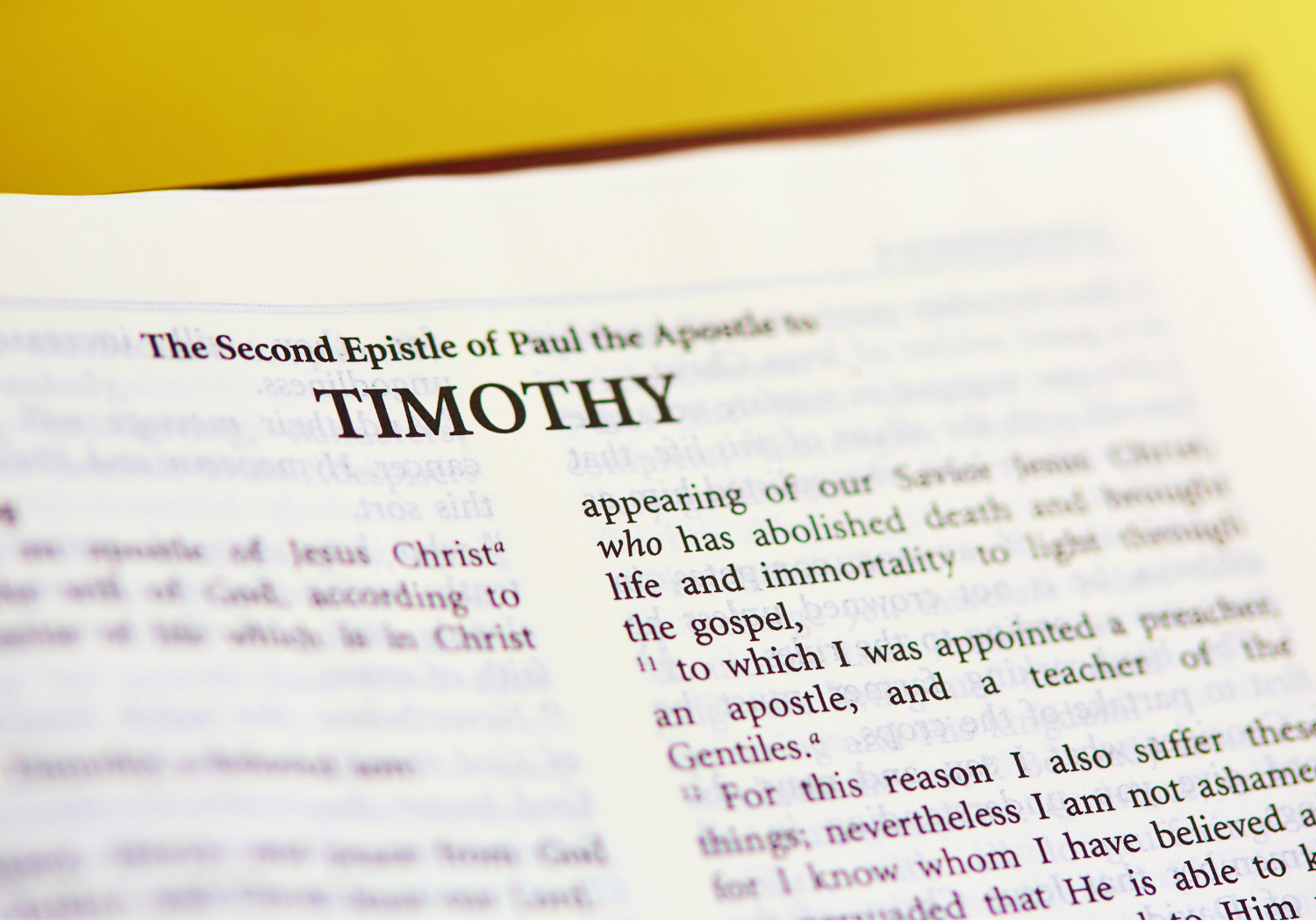 Paul’s Letter to Timothy and the Question of Scripture
To understand the issue properly, let’s begin by grounding the discussion in Paul’s words to Timothy.
“And that from a child thou hast known the holy scriptures, which are able to make thee wise unto salvation through faith which is in Christ Jesus.” — 2 Timothy 3:15
Many readers immediately assume Paul must be referring only to the Old Testament here. Since Timothy would have been taught the Hebrew Scriptures from a young age, the conclusion seems natural.
But this assumption creates a problem if we stop reading too early.
Paul does not end his statement with Timothy’s childhood exposure to Scripture. He continues by defining the nature and authority of Scripture itself.
“All scripture is given by inspiration of God, and is profitable for doctrine, for reproof, for correction, for instruction in righteousness.” — 2 Timothy 3:16
Paul makes a universal claim. Scripture is God-breathed. It carries divine authority. And it is intended to shape belief, behavior, and faith.
The key question then becomes: What qualifies as Scripture at the time Paul is writing?
 Why “Only the Old Testament” Doesn’t Work: First Timothy Changes Everything
Some argue that since Timothy knew the Scriptures “from a child,” Paul must be restricting Scripture to the Old Testament throughout the entire passage. But this reasoning does not actually follow.
First, we do not know how old Timothy was when Paul wrote this letter. We cannot confidently determine how much New Testament material may already have been circulating during Timothy’s lifetime.
Second—and more importantly—Paul does not say only the Scriptures Timothy learned as a child are inspired. He speaks more broadly: all Scripture is inspired by God.
And this is where Paul’s earlier writing becomes crucial.
Before Paul wrote 2 Timothy, he had already written 1 Timothy. That earlier letter contains one of the strongest internal indicators that New Testament writings were already being treated as Scripture.
“For the scripture saith, Thou shalt not muzzle the ox that treadeth out the corn. And, The labourer is worthy of his reward.” — 1 Timothy 5:18
Paul introduces both quotations with the phrase “For the scripture saith.” Not scriptures say, but scripture—singular.
This matters.
 One Old Testament Text… and One Gospel Text
The first quotation is unmistakably Old Testament.
“Thou shalt not muzzle the ox when he treadeth out the corn.” — Deuteronomy 25:4
Paul uses this Mosaic law as a principle: those who labor should benefit from their labor. Paul is not misusing the text but applying its moral logic to ministry support.
However, Paul does not stop with Deuteronomy.
He immediately adds another quotation.
“The labourer is worthy of his reward.” — Luke 10:7
This line comes directly from Jesus’ words when He commissioned His disciples. Luke records Jesus instructing them to remain with those who support them, explaining that their labor entitles them to provision.
Paul places Deuteronomy and Luke together under the single heading of Scripture.
Rather than making a vague reference or offering a loose paraphrase, Paul directly quotes the Gospel tradition and treats it as Scripture on equal footing with the Law of Moses.
That tells us several things:
- Paul viewed Jesus’ recorded words as divinely authoritative
- The Gospel accounts were already circulating and recognized
- New Testament writings were not waiting centuries to be considered Scripture
This recognition happens inside the New Testament itself.
 Scripture Was Recognized Early, Not Invented Later
Church councils did not create Scripture. They responded to what the early church was already reading, preaching, and trusting.
While scholarly debates often try to push New Testament writings as late as possible, the internal evidence consistently pushes them earlier, closer to the time of Jesus and the apostles.
That does not automatically prove inspiration—but it strongly supports authenticity and early recognition.
Paul’s own writing demonstrates that recognition was already happening.
The New Testament writers were not producing casual correspondence meant to fade away. They wrote knowing they were handling sacred truth.
Paul’s use of the phrase “Scripture says” is deliberate. He understood that God was speaking through these texts, just as He had spoken through Moses and the prophets.
When Paul later tells Timothy that all Scripture is God-breathed, there is no reason—based on Paul’s own earlier writing—to exclude the New Testament from that category.
 Why This Matters for Faith Today
If the New Testament writers knew they were writing Scripture, then Christianity is not dependent on later institutional authority. It stands on apostolic testimony, divine inspiration, and early recognition.
This matters when critics claim Jesus was misunderstood, misquoted, or reinterpreted over time. The evidence shows the opposite.
If this discussion raises questions about Jesus’ authority and the reliability of His words, I strongly encourage you to read the next article.
It expands on these arguments in a clear, step-by-step way, showing directly from Scripture how early Christians understood divine inspiration. It helps solidify why the New Testament stands on firm historical and theological ground.
WATCH THE VIDEO
















Recent Comments