
5 Reasons Luke CLEARLY Teaches The Virgin Birth!
When people approach the Gospel accounts, one of the most debated topics is whether the Bible truly teaches the virgin birth.
Some claim it’s unclear, others say it’s symbolic—but when you slow down and actually read the text, Luke leaves very little room for confusion.
In fact, Luke doesn’t just mention the virgin birth—he builds a case for it from multiple angles. When you follow the flow of his narrative, the conclusion becomes unavoidable.
Let’s walk through five clear reasons from Luke’s Gospel that point directly to the virgin birth.
 1. Luke Emphasizes That Mary Was a Virgin
Right from the beginning, Luke introduces Mary in a very intentional way. He doesn’t just casually mention her—he highlights something specific about her identity.
Instead of simply naming her, Luke repeats that she is a virgin. That repetition is not accidental. In Hebrew-style writing, repeating something signals importance. It’s a way of saying, “Don’t miss this.”
“To a virgin espoused to a man whose name was Joseph… and the virgin’s name was Mary.” – Luke 1:27
Luke could have introduced Mary in many ways—but he chose to anchor her identity in her virginity. That’s the foundation he wants you to build on as you read the rest of the account.
 2. Mary Confirms She Has Never Been With a Man
What makes this even stronger is that it’s not just Luke describing Mary this way—Mary confirms it herself.
After the angel tells her she will conceive the Messiah, she doesn’t respond with excitement or questions about timing; she questions how it’s even possible.
She knows something doesn’t add up naturally.
“How shall this be, seeing I know not a man?” – Luke 1:34
This matters. Mary understands how children are conceived, and she is engaged to Joseph. If this were a normal process, she would expect it to happen through him.
But she doesn’t.
That tells you everything. Her question only makes sense if she has had no relations with any man and does not expect this pregnancy to come through natural means.
 3. The Angel Explains a Supernatural Conception
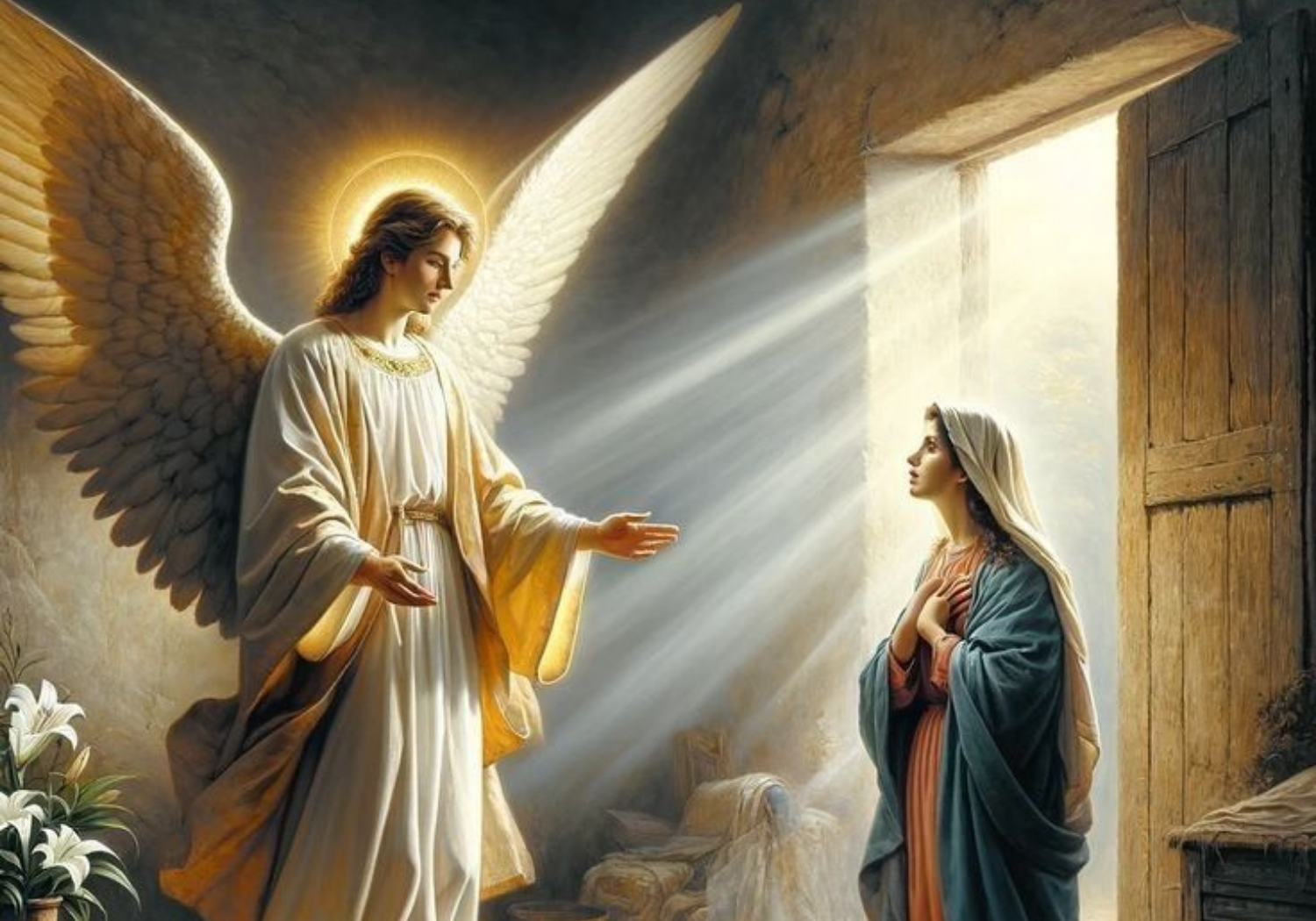
Gabriel’s response to Mary removes all doubt. Instead of pointing to Joseph, he explains something entirely different, something supernatural.
The explanation comes in three parts: the Holy Spirit will come upon her, God’s power will overshadow her, and Elizabeth’s miraculous pregnancy serves as confirmation.
“The Holy Ghost shall come upon thee, and the power of the Highest shall overshadow thee… therefore also that holy thing which shall be born of thee shall be called the Son of God… For with God nothing shall be impossible.” – Luke 1:35–37
Notice what’s missing—Joseph.
If this were a natural conception, there would be no need to mention divine overshadowing or God’s power. There would be no need to say “nothing shall be impossible.”
This is Luke’s way of showing that what’s about to happen is not ordinary; it is divine intervention.
 4. Jesus Is Called the Son of God in a Unique Way
Luke not only explains how Jesus would be conceived, but he also shows what it means.
He presents Jesus as the “Son of God,” not in a general sense like others in Scripture, but in direct connection to His supernatural conception.
“Therefore also that holy thing which shall be born of thee shall be called the Son of God.” – Luke 1:35
The wording matters. The phrase “therefore also” connects the miraculous conception to His identity. In other words, because this birth is supernatural, the child has a unique status.
This is not just another human birth. This is a holy, set-apart entrance into the world.
 5. Luke Uses the Word “Virgin” Consistently
Finally, Luke’s own writing style strengthens the case even more.
Throughout his writings, including the Book of Acts, Luke uses the word “virgin” in a clear and consistent way. It always refers to women who have not been with a man.
There’s no ambiguity in how he uses the term.
“And the same man had four daughters, virgins, which did prophesy.” – Acts 21:9
When you bring this back to Luke 1, it becomes clear that he is not using the word loosely or symbolically. He means exactly what the word naturally implies.
Mary is a virgin, both by description and by definition.
 A Clear and Consistent Message
When you step back and look at all five points together, the picture becomes undeniable.
Luke:
- Repeats that Mary is a virgin.
- Records Mary confirming she has never been with a man.
- Shows the angel describing a supernatural conception.
- Connects that conception to Jesus being the Son of God.
- Uses the word “virgin” consistently across his writings.
If you want to go deeper and see how Matthew also clearly teaches the virgin birth, check out this article. It will strengthen your understanding even more and show how the New Testament speaks with one voice on this foundational truth.
WATCH THE VIDEO
















Recent Comments