
Muslim Gets CAUGHT Teaching Christian Woman Lies & TOTALLY DESTROYED!
In a recent street interaction, a Muslim apologetic known as Central Dawah released a video featuring a conversation with a Ukrainian Christian woman.
They framed the clip as a clear victory—another supposed example of Islam “exposing” Christianity. But a careful look at the exchange reveals that it does not showcase truth triumphing over error; it showcases confidence overwhelming uncertainty.
The woman openly admits that she is still learning her faith. Rather than treating that moment with honesty and care, it becomes the very leverage used against her.
This is not an isolated incident. It follows a familiar pattern: find a Christian who cannot articulate complex theological or textual issues on the spot, apply pressure through selective Bible passages, and then broadcast the interaction as proof that Christianity collapses under scrutiny.
That approach may generate views, but it does not generate truth.
 The Resurrection Argument That Goes Nowhere
The conversation begins with Jesus and the resurrection. The Muslim speaker concedes, for the sake of argument, that Jesus rose from the dead—but immediately insists that resurrection alone does not prove divinity.
Others in Scripture, such as Lazarus and Tabitha, were also raised.
At first glance, this may sound reasonable. But the argument misunderstands what Christians actually claim about Jesus. The resurrection is not presented in isolation, as if one miracle alone proves everything.
Rather, it confirms everything Jesus claimed about Himself, His authority, and His relationship to the Father.
“Jesus of Nazareth, a man approved of God among you by miracles and wonders and signs, which God did by him…” – Acts 2:22
“The God of our fathers hath glorified his Son Jesus…” – Acts 3:13
These passages are often cited by Muslims to argue that Jesus is merely a servant. But that interpretation ignores the broader context. Acts emphasizes Jesus’ mission, not a denial of His divine nature.
The incarnation necessarily involves humility, submission, and obedience—but none of that negates who Christ is.
Reducing Jesus to “just another resurrected person” ignores His unique claims, His authority over death itself, and the fact that He raises others by His own power.
 Confusion About the Trinity Is Treated as a Win
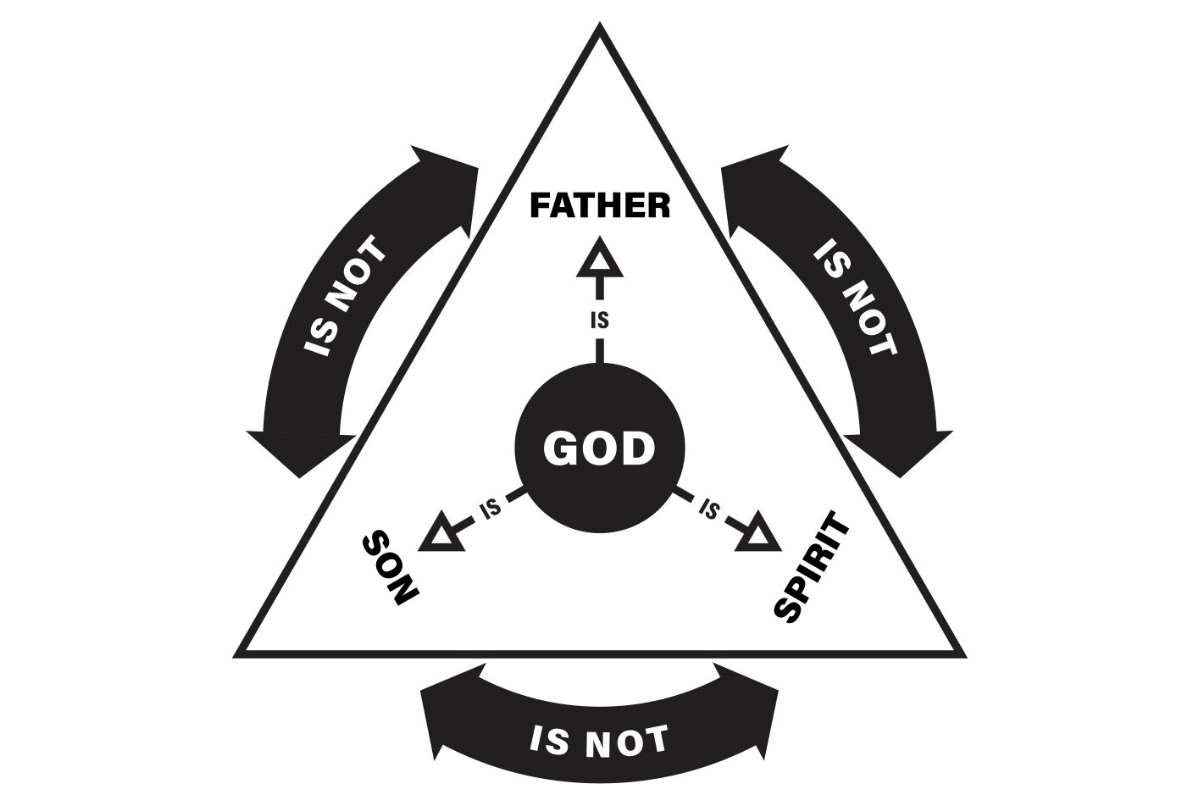
As the conversation moves forward, the discussion turns to the Trinity. The Christian woman struggles to articulate it clearly. This is not surprising. Even seasoned believers often find Trinitarian language difficult to express precisely.
Instead of clarifying or probing thoughtfully, the Central Dawah presses the confusion and presents it as absurdity.
Questions like “Does Jesus sit on His own right hand?” are not genuine inquiries—they are rhetorical traps designed to score points, not seek understanding.
Christian theology does not teach that God is one person wearing three masks, nor does it claim that Jesus is the Father. These caricatures are well-worn, but they persist because they are effective against the unprepared.
Confusion is not refutation. Share on X The Conversation Shifts to the Old Testament—As It Always Does
Once Christology becomes difficult to attack directly, the focus shifts—as it so often does—to the Old Testament. The accusation is familiar: God commanded immoral acts; therefore, the Bible cannot be from God.
This shift reveals something important. The issue is no longer Jesus. It is the moral character of God Himself.
“If a man find a damsel that is a virgin, which is not betrothed, and lay hold on her, and lie with her, and they be found; Then the man that lay with her shall give unto the damsel’s father fifty shekels of silver, and she shall be his wife; because he hath humbled her, he may not put her away all his days.” – Deuteronomy 22:28-29
The passage cited is Deuteronomy 22:28, read from a specific English translation that uses the word rape. This choice is critical.
Other major translations do not render the Hebrew text that way, and the original language uses a different term than the one used elsewhere in the same chapter for violent sexual assault.
Even within Deuteronomy 22, the law clearly distinguishes between consensual and forced acts. That distinction disappears only when a single translation is isolated and treated as definitive.
Context matters. Language matters. And parallel passages—such as Exodus 22—clarify that this law is addressing responsibility and protection in an ancient legal system, not endorsing violence against women.
None of that nuance is presented. Instead, the most inflammatory reading is assumed, and the Christian woman is expected to answer instantly.
 1 Samuel 15:3 and Selective Moral Outrage
The next passage raised is 1 Samuel 15:3, where God commands judgment against the Amalekites.
“Now go and smite Amalek, and utterly destroy all that they have…” – 1 Samuel 15:3
This text is presented as self-evidently immoral, with no discussion of historical context, generational violence, or divine justice. The Amalekites had attacked Israel repeatedly, targeting the weak and defenseless, and had persisted in that hostility for centuries.
Yet none of that is addressed. Instead, the passage is dismissed outright as something God “would not reveal.”
This creates a serious problem. Islamic theology affirms the Torah as revelation from God—at least in theory. Rejecting its moral authority while simultaneously appealing to it as corrupted is internally inconsistent.
Even more striking is the double standard. Islamic sources contain commands related to warfare, subjugation, and violence that are defended as moral, contextual, or divinely justified. Those same allowances are never extended to the Bible.
 A Powerful Moment of Honesty: The Invitation That Reveals the Problem
One of the most important moments in the entire video comes when the woman responds honestly: she admits she does not know enough to answer fully.
That moment deserves attention.
Christian faith does not require bluffing. Share on XScripture never commands believers to pretend certainty where it does not exist. In fact, humility and teachability are marks of wisdom.
Her response stands in stark contrast to the aggressive certainty being modeled opposite her. She chooses honesty over performance—and that is commendable.
Toward the end of the exchange, the woman is encouraged to read the Qur’an and consult Islamic authorities if she has questions. This invitation sounds generous—but it exposes a deeper issue.
If Muslims claim that the Torah, Psalms, and Gospel have been corrupted, three unavoidable questions immediately follow:
What exactly was the Torah that God gave to Moses if the one we possess today is not it?
Which Psalms were truly given to David if the current Psalter is said to be unreliable?
And what Gospel did Jesus receive if the New Testament is not the authentic one?
These questions are never answered clearly. They are avoided, redefined, or left vague. Yet the confidence with which Biblical corruption is asserted remains undiminished.
 Why Christians Must Be Better Equipped
This is not just about one conversation. It highlights a broader problem. Christians who love Christ but lack training in Scripture are routinely targeted, pressured, and then used as content.
That should concern the Church.
Believers must be taught not only what they believe, but why they believe it—and how to recognize manipulative tactics when they appear.
Confidence does not equal truth, and volume does not equal authority. Share on XIf you want to see this same pattern exposed even more clearly, I strongly encourage you to read the following article.
It expands on how selective quoting, confidence tactics, and moral pressure are used against Christians who are still growing in their faith—and why discernment is no longer optional.
WATCH THE VIDEO
















Recent Comments