
Muslim vs Captain America on If Jesus is God Ends in Disaster!
Conversations about Jesus Christ are some of the most important—and often the most heated—discussions we can have.
In a recent street encounter between Shaykh Uthman Ibn Farooq and a Christian (nicknamed “Captain America”), the debate centered around one question: Did Jesus ever claim to be God?
At first, the conversation seemed respectful. But as the discussion unfolded, Shaykh Uthman began to twist Scripture, accuse the Bible of contradictions, and ultimately deny the crucifixion.
What started as a promising dialogue quickly spiraled into a showcase of deception. Let’s walk through the main points and examine what the Bible actually says.
 “But Now You Seek to Kill Me”
Shaykh Uthman attempted to argue that Jesus identified Himself only as a man—not as God—by quoting:
“But now ye seek to kill me, a man that hath told you the truth, which I have heard of God.” – John 8:40
His conclusion? Jesus never called Himself God; people just misunderstood Him.
But this reasoning ignores the larger context. Only a few verses later, Jesus makes a bold declaration:
“Verily, verily, I say unto you, Before Abraham was, I am.” – John 8:58
The Jews immediately recognized this as a claim to divinity. “I AM” is the name God revealed to Moses in Exodus 3:14. The crowd’s response—picking up stones to kill Him—shows they understood Jesus wasn’t just calling Himself a prophet or a messenger.
He was identifying Himself with the eternal God of Israel.
 The Claim of Contradictions
The discussion then shifted to the resurrection accounts. Shaykh Uthman claimed the Gospels contradicted each other because Matthew mentions two women at the tomb, Luke mentions a group of women, and John highlights Mary Magdalene alone.
To him, these differences proved the Bible was unreliable. But as I explained in the moment:
“Repeating doesn’t mean contradicting.”
In fact, the Gospels give us a fuller, richer picture when read together. None of the accounts says only two women or only one woman. Instead, each writer emphasized certain details to highlight what mattered for their audience.
This is how eyewitness testimony works in real life. When different people describe the same event, one may focus on the time of day, another on who arrived first, and another on what was said.
Their accounts complement each other, not cancel each other out.
 Denying the Crucifixion
One of the most serious errors came when Shakyh Uthman outright denied the crucifixion, appealing instead to the Qur’an, which was written centuries later. He argued that Jesus wasn’t crucified, but that it only appeared that way.
The problem? Both Scripture and history confirm the crucifixion. Even secular historians like Tacitus and Josephus testify to Jesus’ death under Pontius Pilate. And the Apostle Paul declared with certainty:
Without the cross, there is no forgiveness. Without the resurrection, there is no victory over death. Share on X“For I delivered unto you first of all that which I also received, how that Christ died for our sins according to the Scriptures; And that he was buried, and that he rose again the third day according to the Scriptures.” – 1 Corinthians 15:3–4
To deny these truths is to strip Christianity of its very foundation.
 Twisting Scripture to Mislead
At one point, Shaykh Uthman pointed out that the blind man healed by Jesus called Him a prophet (John 9:17). He argued that this proves Jesus was only a prophet, nothing more.
But cherry-picking one statement while ignoring the rest of Scripture is deceptive. The same Gospel of John also presents Jesus as the eternal Word made flesh (John 1:1, 14), the Son of God (John 3:16), and the one who receives worship (John 20:28).
It’s no surprise, then, that false teachers try to emphasize one verse while ignoring the broader testimony. This tactic is not new—Satan himself quoted Scripture out of context when tempting Jesus in the wilderness (Matthew 4:6).
The Lord’s response remains our example: confront lies with the whole counsel of God’s Word.
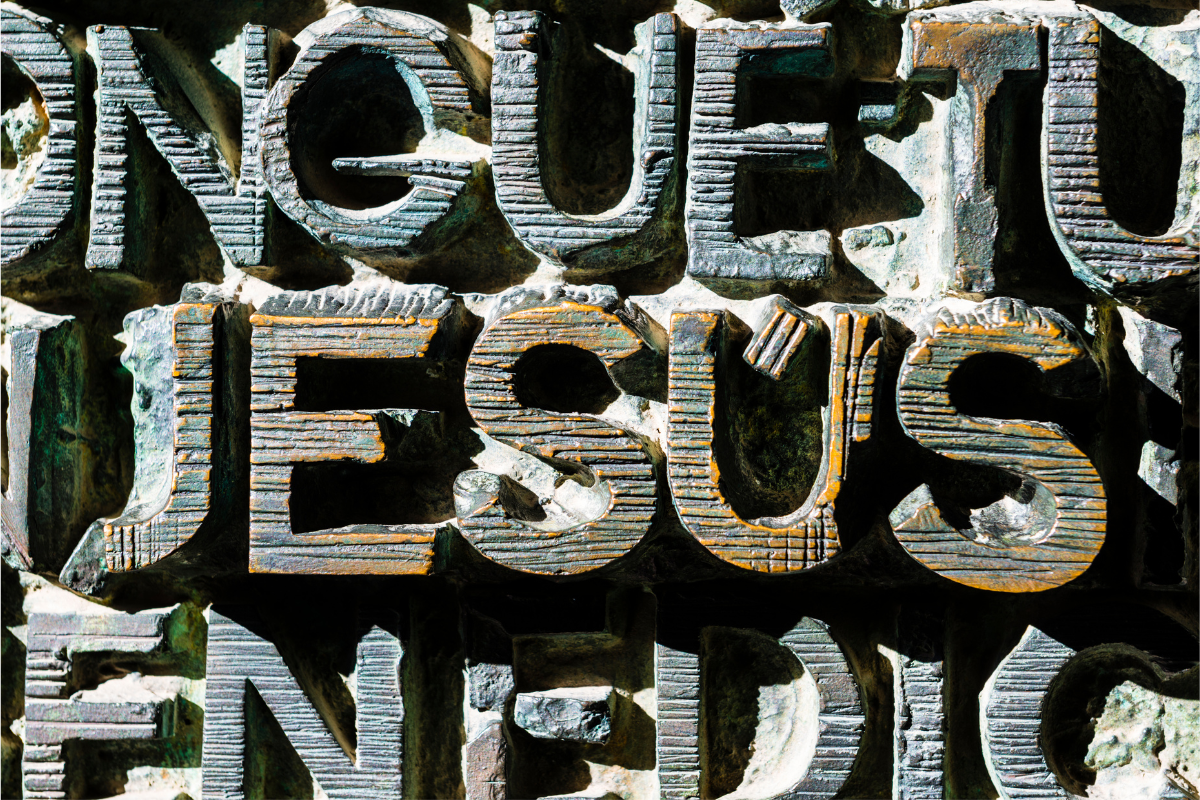 Jesus is God
What began as a respectful exchange ended in confusion and deception. Yet, the Bible remains unshaken. Jesus did claim to be God. The resurrection accounts do not contradict but confirm each other. And the crucifixion is an unshakable historical fact, central to our faith.
As believers, our task is not only to defend the truth but also to share it with compassion, trusting the Holy Spirit to open hearts. Share on XIf you’d like to see a deeper breakdown of these kinds of arguments and how to respond, I encourage you to watch this video. This resource will help you recognize these same deceptive tactics when you encounter them and give you confidence to stand on the truth of God’s Word with clarity and boldness.
WATCH THE VIDEO


















Recent Comments