
Muslim Tries PROVING Jesus Isn’t God But FAILS & Gets EXPOSED!
In today’s conversation, a well-known Muslim speaker, Shaykh Uthman Ibn Farooq, attempts to convince someone that Jesus is not God, but only a prophet. At first, the argument sounds structured and persuasive.
He references Scripture, points to specific verses, and presents what appears to be a clear case.
However, when you slow down and carefully examine what’s being said, the argument doesn’t just weaken; it actually begins to expose the very truth it’s trying to deny.
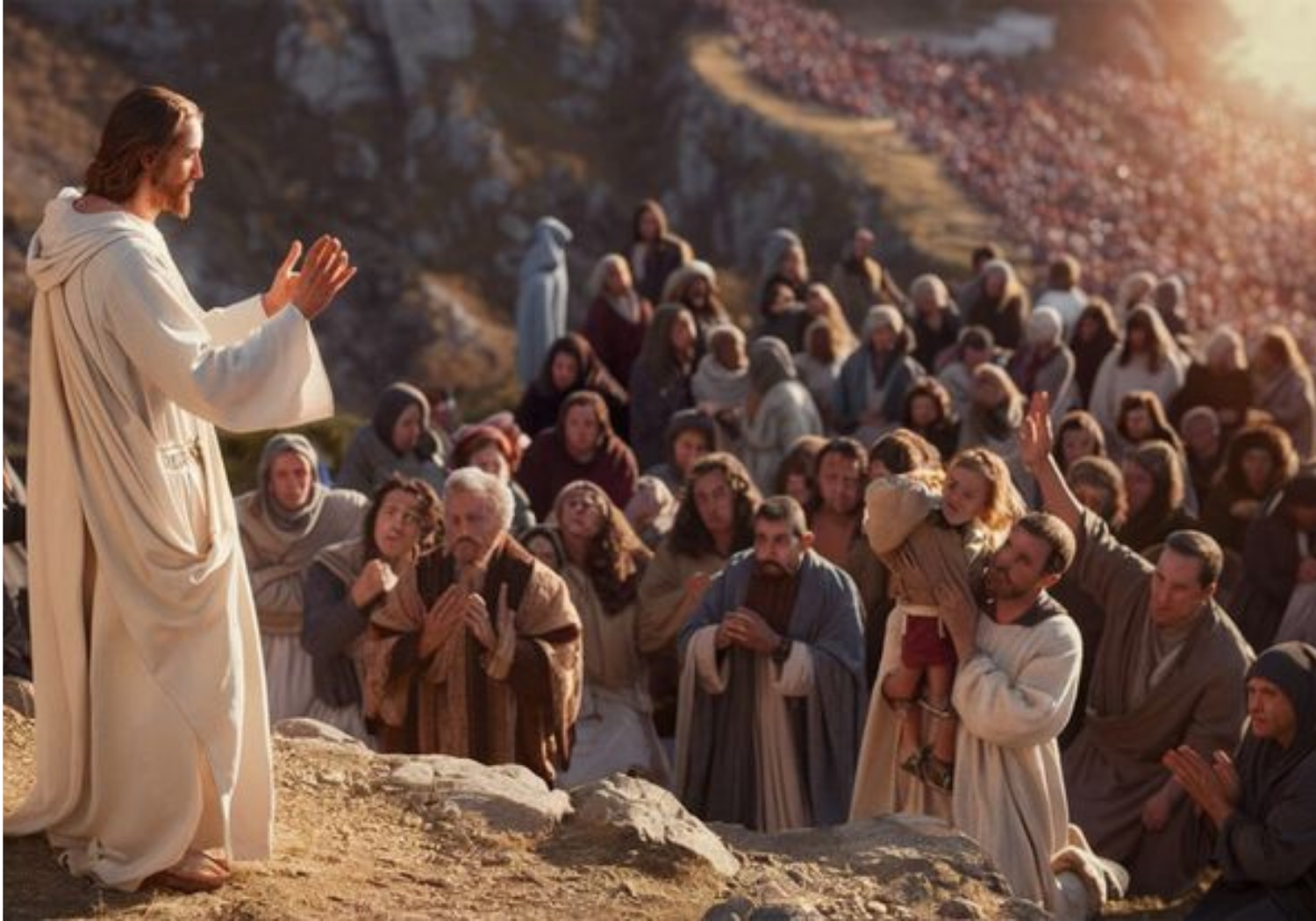 The “Jesus Is Only a Prophet” Claim
Shaykh Uthman repeatedly claims that because the Bible calls Jesus a prophet, He cannot be God.
He supports this argument by pointing to moments like the healing of the blind man, where the man calls Jesus a prophet, along with other passages where Jesus speaks in ways associated with prophets.
From this, he concludes that the title “prophet” limits who Jesus can be.
However, this reasoning falls short. If you accept the Bible as a valid source when it calls Jesus a prophet, then you must also accept what the same Bible says when it reveals more about His identity.
You cannot consistently accept one set of verses while rejecting others that speak just as clearly. The issue is not what the Bible says; it’s how selectively people choose to use it.
“For God so loved the world, that he gave his only begotten Son…” — John 3:16
“In the beginning was the Word, and the Word was with God, and the Word was God.” — John 1:1
 The Inconsistency That Changes Everything
This is where the argument begins to fall apart. On one hand, the claim is that Jesus must be a prophet because the Bible says so. But when the Bible calls Jesus the Son of God or directly identifies Him as God, those statements are dismissed or reinterpreted.
This creates a clear inconsistency. If Scripture is trustworthy enough to support one claim, it must be equally trustworthy when it challenges your position.
Truth does not require selective acceptance. Share on XWhen you approach Scripture honestly, you must allow all of it to speak—not just the parts that align with a preconceived belief.
 The Blind Man Miracle and The Mediator
Shaykh Uthman often uses the example of the blind man as strong evidence. After Jesus heals him, the man calls Jesus a prophet, and the speaker treats this as a final and definitive statement about who Jesus is.
But this approach ignores an important detail—people in the Bible often came to understand Jesus progressively. What someone says about Him in one moment does not fully define His identity.
In fact, that same passage shows a growing recognition of who Jesus truly is. The miracle itself points to something far greater than a typical prophetic act. It reveals authority and power that go beyond what any ordinary prophet demonstrated.
The title “prophet” may serve as a starting point in understanding, but it never stands as the final conclusion.
Shaykh Uthman also turns to the book of Timothy and points out that it describes Jesus as the mediator between God and man. He uses this to argue that Jesus cannot be God because He stands between God and humanity.
While this may sound logical at first, it actually misunderstands the true role of a mediator.
“For there is one God, and one mediator between God and men, the man Christ Jesus.” — 1 Timothy 2:5
The reason Jesus can serve as the perfect mediator is that He uniquely possesses both natures. As a man, He represents humanity fully. As God, He represents the divine perfectly.
This dual nature allows Him to bridge the gap between God and man in a way no one else can. Rather than disproving His divinity, this role actually depends on it.
 “Why Did Jesus Worship God?”
Another objection raised is that if Jesus is God, why does He pray to or worship God? This question assumes that Christians believe the Father, Son, and Holy Spirit are the same person, which is not the case.
Christianity teaches that they are distinct persons who share the same divine nature.
“Behold, I am the LORD, the God of all flesh…” — Jeremiah 32:27
When Jesus entered the world in human form, He lived as a man among men. In doing so, He demonstrated what perfect obedience and relationship with the Father looks like.
His prayers and worship were not contradictions of His divinity, but examples for us to follow. He showed humanity how to live in submission to God while still being fully divine.
Another frequently cited argument is that Jesus did not know the day or hour of His return. This is often presented as proof that He cannot be God. However, this again fails to consider the full context of His incarnation.
“But of that day and hour knoweth no man, no, not the angels of heaven, but my Father only.” — Matthew 24:36
During His time on earth, Jesus operated within the limitations of human experience. This was not because He lacked divinity, but because He chose to humble Himself and live fully as a man.
His statement reflects His role during that time, not a denial of His divine nature.
 The Acts Connection: The God of Abraham
The discussion also references the book of Acts, pointing out that the God of Abraham glorified Jesus. This is used to suggest that Jesus must be separate from God in nature. However, this interpretation overlooks the broader Biblical narrative.
“The God of Abraham, and of Isaac, and of Jacob… hath glorified his Son Jesus.” — Acts 3:13
The same God who revealed Himself to Abraham reveals Himself through Jesus Christ. The glorification of Jesus does not separate Him from God—it reveals His role within the Godhead. Scripture consistently connects Jesus to the identity and work of the God of Israel.
As the conversation progresses, contradictions begin to surface. Even the person in the discussion starts to recognize the distinction between Jesus in the flesh and the divine nature within Him. These moments unintentionally point toward the truth rather than away from it.
What starts as an attempt to reduce Jesus to a prophet ultimately highlights the depth and complexity of His identity. As people examine the Scriptures without bias, they begin to see more clearly that Jesus cannot be confined to a single title.
“For unto us a child is born… and his name shall be called Wonderful, Counsellor, The mighty God…” — Isaiah 9:6
 Jesus IS God
At the heart of the argument is a false assumption—that Jesus must be either a prophet or God, but cannot be both. This limitation is not found in Scripture but is imposed onto it.
The Bible consistently presents Jesus as fulfilling multiple roles at once. He speaks as a prophet, serves as a mediator, and reveals Himself as God.
This is not a contradiction. It is a fuller revelation of who He is.
When all the evidence is considered, not just selected parts, the identity of Jesus stands firm. Share on XIf you found this helpful, you’ll want to read the next article. It goes even deeper into similar arguments and exposes where they fall apart. It will strengthen your understanding and equip you to respond with clarity and confidence when these conversations come up.
WATCH THE VIDEO
















Recent Comments