
Muslim Preacher RUNS UP On Bible College Students & Gets EXPOSED!
One of the most common objections raised against Christianity is the claim that Jesus cannot be God because He says He does not know the hour of His return.
This argument is frequently repeated, confidently delivered, and often presented as a “gotcha” moment—especially in public debates or campus discussions.
In the exchange featured in the video, Shaykh Uthman Ibn Farooq attempts to press this very point while speaking to Bible college students.
What follows, however, exposes not a weakness in Christian theology but a misunderstanding of Scripture, context, and Jewish culture.
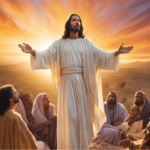 “Of That Day and Hour”: Understanding Mark 13:32 and The Jewish Wedding Context
“But of that day and that hour knoweth no man, no, not the angels which are in heaven, neither the Son, but the Father.” — Mark 13:32
At first glance, the verse seems straightforward. If Jesus does not know the hour, how can He be God? The objection assumes that “knowing” here refers strictly to possessing information.
But Scripture itself shows that the issue is not knowledge but authority and declaration.
This becomes clear when the verse is read in context. Jesus is speaking about His return immediately after describing events leading up to the end. He is not denying omniscience. He is explaining the role and order.
In ancient Jewish weddings, the groom did not announce when he would retrieve his bride. That decision belonged solely to the father. The son could finish preparing the house, but the father alone declared the moment.
Jesus explicitly uses this imagery elsewhere:
“In my Father’s house are many mansions… I go to prepare a place for you.” — John 14:2–3
When Jesus says the Father knows the hour, He is speaking within this cultural framework. The timing belongs to the Father’s authority—not because the Son lacks knowledge, but because it is not His role to announce it.
This same principle appears elsewhere in Scripture.
 “Knowing” as Declaration, Not Ignorance: The Word Became Flesh
Paul uses the word “know” in a similar way:
“For I determined not to know anything among you, save Jesus Christ, and him crucified.” — 1 Corinthians 2:2
Paul did not mean he lacked information. He meant that Christ crucified was the only message he would proclaim. Likewise, Jesus is not saying He lacks awareness of the hour—He is saying He is not the one authorized to declare it.
Some attempt to reduce Jesus to a mere messenger by redefining Logos as an impersonal command or spoken word.
“In the beginning was the Word, and the Word was with God, and the Word was God.” — John 1:1
John does not describe an abstract idea. He describes a Person. The Word is with God and is God. This Word later becomes flesh—not an order becoming human, but God entering creation.
Early manuscripts—including ancient codices used by the earliest Christians—preserve this reading consistently, undermining attempts to reinterpret the passage as metaphor alone.
 Jesus Seen Standing Where Only God Stands: God Is Not a Man—And Yet He Became One
Stephen’s vision seals the argument:
“Behold, I see the heavens opened, and the Son of man standing on the right hand of God.” — Acts 7:56
The “right hand” in Jewish thought represents power, authority, and divine rule—not spatial separation. Stephen immediately follows this vision with a prayer directed to Jesus using language reserved for Yahweh:
“Into thine hand I commit my spirit.” — Psalm 31:5
Stephen applies this directly to Jesus at his death—something no faithful Jew would do unless he recognized Jesus as divine.
“God is not a man, that he should lie; neither the son of man, that he should repent.” — Numbers 23:19
This verse is often misused to deny the incarnation. But the verse does not say God cannot take on humanity. It says God does not lie or change as fallen humans do.
Jesus Himself acknowledges His prophetic role in His humanity:
“It cannot be that a prophet perish out of Jerusalem.” — Luke 13:33
Calling Himself a prophet does not negate His divinity. It affirms His mission within human history.
 Recognized as the Prophet—and More: Unity Does Not Mean Identity
“This is of a truth that prophet that should come into the world.” — John 6:14
People recognized Jesus according to what they could perceive at the time. But Scripture unfolds progressively. John begins his Gospel by declaring Christ’s divinity, then shows how people gradually come to understand who He truly is.
Jesus prays:
“That they all may be one; as thou, Father, art in me, and I in thee.” — John 17:21
This unity is relational, not ontological. Believers are not God, yet they are one in purpose and mission. Likewise, the Father and the Son are distinct persons, sharing divine nature.
 Why These Arguments Always Collapse
Throughout the discussion, one pattern repeats: verses are isolated, context is ignored, and assumptions are imported into the text. But Scripture interprets Scripture. When read consistently, the Bible does not contradict itself—it clarifies itself.
Jesus is not diminished by Mark 13:32. He is revealed more clearly.
If you want to see how this same flawed reasoning is used repeatedly—and why it always fails—read this next article: Can God Be Lower Than Angels? Exposing Shaykh Uthman’s Bad Logic.
It connects directly to this discussion and exposes the deeper issue: importing foreign assumptions into Scripture instead of letting the text speak for itself.
WATCH THE VIDEO
















Recent Comments