
100 Jews DISRESPECT Jesus (Christian Apologist Reacts)!
The video follows a simple but powerful idea: walk through a heavily Jewish community and ask people one question — “Who is Jesus to you?” The responses reveal something deeper than disagreement. They reveal how worldview, tradition, and authority shape belief.
What unfolds is not hostility, but a mixture of indifference, tradition, curiosity, and theological distance.
 Asking the Question Most People Avoid: The Messiah Question
Many of the people approached in New York’s Jewish community responded politely but cautiously. Some declined to talk altogether. Others admitted they had rarely thought about Jesus.
Several described Jesus simply as a historical Jewish figure who eventually “went his own way.” Others said Judaism focuses on the Torah alone and does not engage with Christianity.
This moment reveals an important reality: for many religious people, beliefs about Jesus are not rejected after investigation — they are never seriously considered in the first place.
That alone should challenge Christians to think more intentionally about how conversations are started.
One recurring theme involved expectations about the Messiah. Some participants mentioned a belief held within parts of the Orthodox community that a rabbi who died in 1994 may return as the Messiah.
That idea closely mirrors the concept of a future return — something Christians recognize immediately.
This creates an interesting tension. Critics often argue that Jesus cannot be the Messiah because He did not fulfill certain expectations, yet some communities still hold messianic hope in someone who fulfilled none of those expectations either.
That contrast exposes how traditions can sometimes shape interpretation more than Scripture itself.
 Scripture Discussion: Starting From Common Ground
One of the strongest moments in the interaction came when the conversation shifted to shared texts — the Torah.
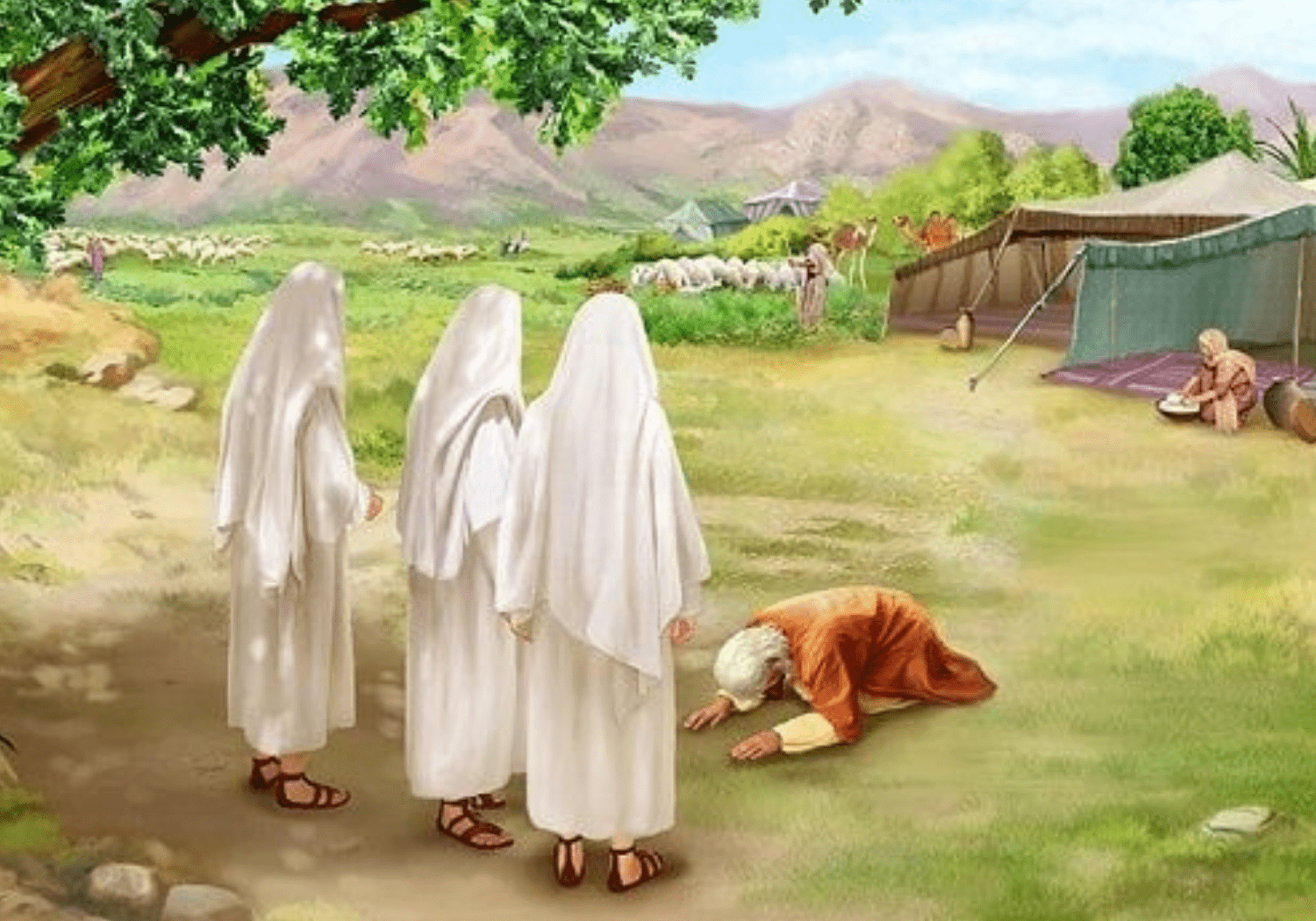
Instead of quoting the New Testament to people who do not accept it, the discussion moved to Genesis, where Abraham encounters God in visible form.
This is an example of wise apologetics: begin with what both sides recognize as authoritative.
The conversation then becomes about what the text actually says, not about competing authorities.
“And the LORD appeared unto him…Behold now, three men stood by him…” — Genesis 18:1-2
These passages raise important questions about how God reveals Himself and whether divine manifestation in human form is truly foreign to the Hebrew Scriptures.
 “Jesus Started a New Religion” and The “Son of God” Objection
Another common response was the claim that Jesus created a new religion separate from Judaism.
But historically, Jesus did not present Himself as abandoning the Hebrew Scriptures. He consistently framed His mission as fulfillment, not replacement.
Christianity did not begin as a rejection of Judaism but as the belief that the promised Messiah had come. Share on X“Think not that I am come to destroy the law, or the prophets: I am not come to destroy, but to fulfil.” — Matthew 5:17
Some interviewees objected to the idea that Jesus claimed to be the Son of God. Yet this language already exists in the Hebrew Scriptures in reference to Israel and the Messiah.
“Israel is my son, even my firstborn.”— Exodus 4:22
“Thou art my Son; this day have I begotten thee.”— Psalm 2:7
The concept itself is not foreign to Jewish Scripture — the disagreement lies in application.
 Observing Shabbat and Jewish Life
One of the most meaningful parts of the experience was observing preparations for Shabbat. People rushed to finish errands, buy flowers, prepare meals, and gather for worship.
There was something deeply admirable about the reverence for rest, family, and devotion to God. Even in theological disagreement, there was much to respect and learn.
Shabbat was described as a time to disconnect from worldly concerns and remember one’s relationship with God.
That reminder alone speaks powerfully to modern believers who rarely slow down.
“Remember the sabbath day, to keep it holy.” — Exodus 20:8
During the numerous interviews, there were unexpected moments — running into familiar faces, reconnecting with people, and even meeting a former student in a coffee shop.
Those moments reinforced how small the world can feel when conversations about faith begin.
Another striking moment was hearing how strongly some people identified with their tradition while admitting they had never truly examined the claims about Jesus.
That highlights an important lesson for Christians: conversations about faith must be patient, thoughtful, and grounded in Scripture.
 Why These Conversations Matter
Listening to dozens of perspectives made one thing clear — people often reject a version of Christianity they have never fully explored.
The goal of conversations like these is not argument, but clarity. When discussions return to Scripture itself, the focus shifts from tradition to truth.
“And ye shall know the truth, and the truth shall make you free.” — John 8:32
Seeing how different people respond to Jesus reminds us that belief is often shaped by upbringing, community, and authority. But Scripture continually calls people back to examine God’s Word for themselves.
Respectful conversations can open doors that debates never will. Share on XIf you’d like to see more interactions like these, watch the next video.
This continues exploring conversations about faith, Scripture, and how people respond when confronted with Biblical claims about Jesus. It’s a powerful reminder that asking honest questions can lead to meaningful spiritual conversations.
WATCH THE VIDEO
















Recent Comments